Ship simulation at HR Wallingford
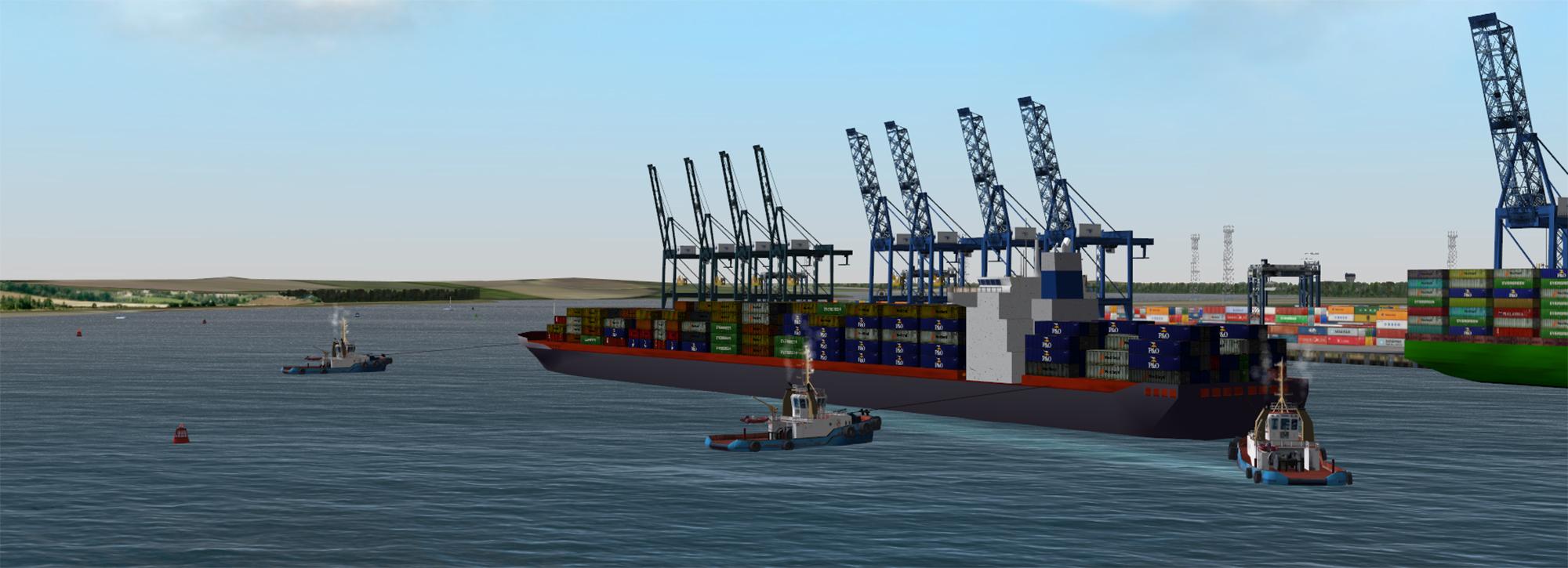
Ship simulation at HR Wallingford combines proven maritime expertise with our own in‑house ship simulation system, developed, maintained and used by our people. This gives us full control over how vessels and environments are modelled, and the confidence to tailor every study to the challenges that our clients face.
What ship simulation helps achieve
Clients use our ship simulation studies to:
- understand navigational risk and operational limits
- test port and channel designs before construction
- explore safe operating procedures
- support safety cases and regulatory discussions
- build shared understanding between designers, operators and stakeholders
Simulation brings people together around shared evidence, helping decisions move forward with confidence.
Our Ship Simulation Centres
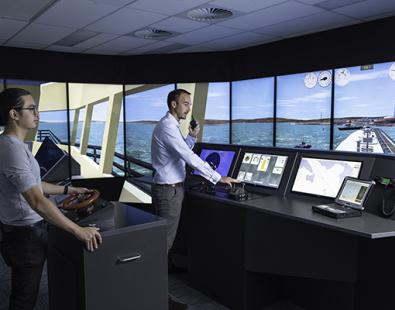
We operate 12 full‑bridge, real‑time ship simulators across our Ship Simulation Centres in the UK and Australia. Using HR Wallingford‑developed software, these simulators have supported hundreds of projects worldwide.
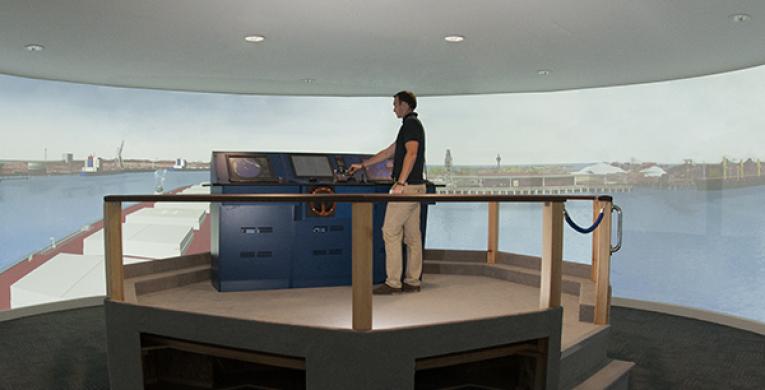
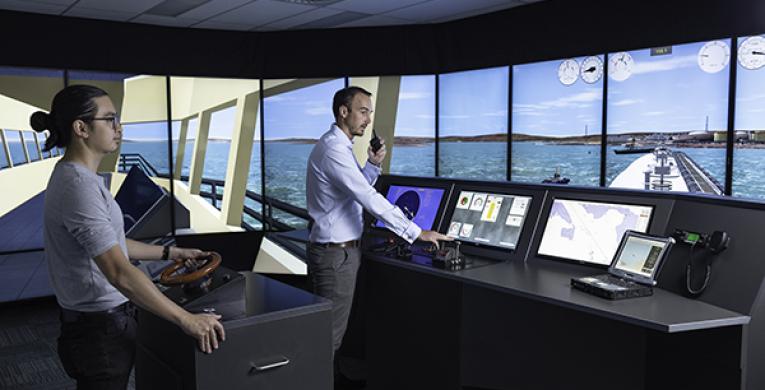
Simulators can be run individually or combined, allowing realistic interaction between ships and tugs within the same simulated environment. Because we develop the simulation software ourselves, we can adapt models, scenarios and behaviours to reflect site‑specific conditions and project needs.
In‑house simulation software, developed by our people
All ship simulation at HR Wallingford is powered by software we develop and maintain in‑house. This allows us to model vessel behaviour with a high level of realism, understand how results are generated, and explain outcomes clearly to clients and stakeholders.
Our simulation system uses advanced techniques to represent the spatial and temporal behaviour of floating marine structures. This includes merchant ships, military vessels, small craft and tugs, as well as non‑propelled structures such as floating wind turbines.
The hydrodynamic models simulate full six‑degree‑of‑freedom vessel motion, capturing response to:
- Waves, wind and currents
- Shallow and confined water effects
- Vessel‑to‑vessel interaction and close‑quarters manoeuvring
By developing the software ourselves, we are able to extend and refine these capabilities as projects demand.
Expert consultancy, embedded in every study
Ship simulation at HR Wallingford is delivered as a consultancy service, not just a technical exercise.
Our people work alongside clients to design, plan and run simulation studies that focus on real‑world questions. Software configuration, vessel models and environmental conditions are selected to address the specific risks and decisions facing each project.
Our teams include:
- Naval architects
- Engineers
- Metocean scientists
- Master mariners and pilots
- Software and simulation specialists
Continual development and real‑world verification
Our people are continually developing new modelling capabilities and improving existing ones. We verify and refine our vessel models using data collected from real‑world vessels, alongside insights from our internal research programmes.
This ongoing development and validation ensure our simulation software remains robust, transparent and grounded in real operating conditions, giving clients confidence in the results and the decisions informed by them.
Designed around real operations
Our full‑bridge simulators reflect real operating environments as closely as possible. Pilots, masters and tug operators work on representative bridge layouts, supported by high‑definition visual scenes and real controls.
Close collaboration between our software developers, metocean scientists, engineers and experienced mariners ensures simulations are both technically sound and operationally credible.
How our Ship Simulator's helped ports across the world
Capt. Sachin Srivastava describes how ship simulation benefits the Adani Group
Ship Simulation Centre supports safety in harbour
Get in touch
Ian Cruickshank