Nuclear energy
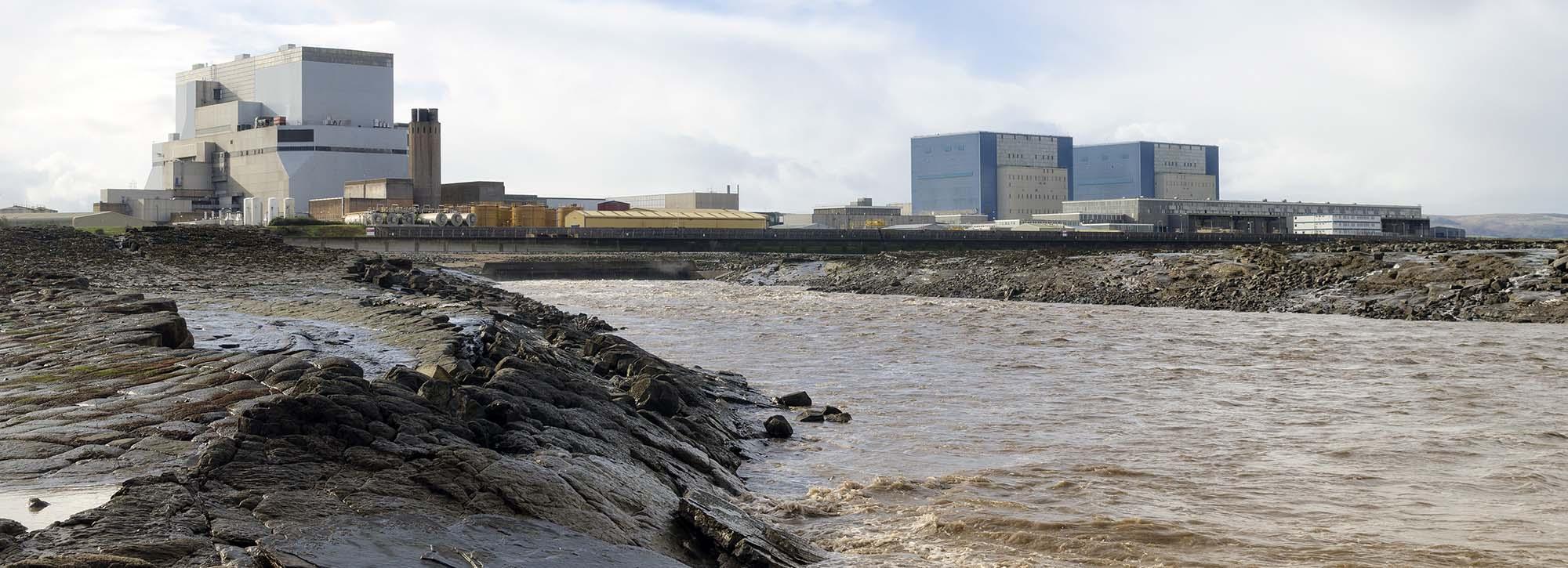
Nuclear energy plays a critical role in achieving net‑zero, but sites face complex environmental and hydraulic challenges in river and coastal locations. We support developers, regulators and operators by assessing water‑related hazards to inform design parameters, improve resilience and guide safe, sustainable project delivery. We give clients the confidence to plan, build and operate nuclear facilities that provide baseload energy while protecting communities, infrastructure and the environment.
Understanding climate and sector pressures
Nuclear sites are increasingly exposed to climate‑driven pressures such as sea‑level rise, coastal change, extreme weather and long‑term water availability. These challenges shape site selection and definition, environmental permitting and operational resilience. With growing global demand for dependable low‑carbon power, the sector must demonstrate that new and existing assets can withstand future conditions throughout their full lifecycle.
Addressing complex client challenges
Developers and operators must navigate stringent safety and environmental regulations, demonstrate robust hazard assessments and prove resilience to flooding, erosion, sediment movement and water‑quality risks. Projects also require confidence in cooling‑water design, outfalls, intake structures and interactions with or impact on sensitive water environments. These challenges are technical, high‑stakes and essential to long‑term operational safety.
How HR Wallingford supports nuclear programmes
Our people bring deep experience in hydraulics, coastal processes and water‑environment science. We combine numerical modelling, physical modelling, field data collection, decision‑support tools and research‑driven best practice to provide critical engineering solutions. Our teams help clients understand site behaviour under extreme conditions, design robust water‑related infrastructure, and meet regulatory expectations with clear, evidence‑based assessments.
Delivering resilient and sustainable outcomes
Our work improves safety, strengthens environmental performance and supports informed investment decisions. We help organisations reduce risk, safeguard communities and deliver resilient assets that operate with confidence. By providing clarity on water‑related hazards from planning to operation, we enable the nuclear sector to contribute to a secure and sustainable energy future.
Nuclear sector expertise
Modelling of flooding, waves, sediment transport and sea level rise to understand long term site risk.
Assessment and optimisation of intake and outfall structures to ensure safe and efficient performance, including scour protection design and assessment of sediment and fish entrapment issues.
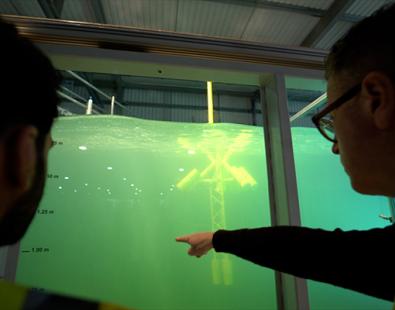
Large scale physical model testing to validate designs (such as scour protection, intake structures or breakwaters) for resilience, safety and operability.
High resolution models to test scenarios, improve design decisions and support regulatory submissions, both to understand site-specific hydrodynamic patterns and optimise flows in the cooling arrangement (CFD).
In situ data collection on waves, currents, sediment and water quality to support impact assessments.
Evidence based inputs for EIA, including hydrodynamics, morphology, thermal plume dispersion and ecological considerations.
Scenario testing to evaluate future conditions and strengthen long term operational resilience.
Clear, defensible technical reporting aligned with regulatory expectations for nuclear projects.
Design of marine offloading facilities including assessment of weather related downtime , mooring design and manoeuvring studies.
Assessment and design support for SMR coastal or riverside sites, including cooling water systems, flood resilience, and marine logistics such as offloading facilities required for modular reactor transport.
Get in touch
Iain Gunn