Secondary nav 2022

  • Equipment
  • Software
  • Training

Main navigation 2022

  • About
    • About HR Wallingford
    • Our leadership
    • Our people
    • Our impact
      • Annual report & financial statements
      • Gender pay
      • Social impact
      • Sustainability
    • Our story
    • News
    • Insight articles
    • Policies
  • Projects
  • Expertise
    • Coastal & marine sustainability
      • Coastal hazards & resilience
      • Coastal morphology & sediment dynamics
      • Dredging and sediment management
      • Marine & coastal environment
      • Ports, harbours and shipping
      • Subsea engineering
      • Waterfronts, marinas and resorts
    • Energy transition
      • Fixed offshore wind
      • Floating offshore wind
      • Liquified gas & transition fuels
      • Nuclear
      • Wave, tidal, solar & hydropower
    • Water & climate resilience
      • Dams & reservoirs
      • Freshwater environment
      • Integrated flood management
      • Surface water systems
      • Water management for climate resilient development
      • Water supply & drought resilience
  • Facilities
    • Explore our facilities
    • Ship simulation
      • Australia Ship Simulation Centre
      • UK Ship Simulation Centre
    • Physical modelling
      • Fast Flow Facility
      • Tsunami simulator
      • Volumetric flow flume
      • Wave basins
      • Wave flumes
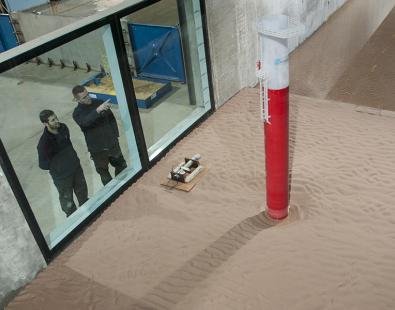
      • Erosion rate measurement
      • Water rescue training
  • Careers
    • Careers overview
    • Working at HR Wallingford
    • Job opportunities
  • Contact
  • About
    • About HR Wallingford
    • Our leadership
    • Our people
    • Our impact
      • Annual report & financial statements
      • Gender pay
      • Social impact
      • Sustainability
    • Our story
    • News
    • Insight articles
    • Policies
  • Projects
  • Expertise
    • Coastal & marine sustainability
      • Coastal hazards & resilience
      • Coastal morphology & sediment dynamics
      • Dredging and sediment management
      • Marine & coastal environment
      • Ports, harbours and shipping
      • Subsea engineering
      • Waterfronts, marinas and resorts
    • Energy transition
      • Fixed offshore wind
      • Floating offshore wind
      • Liquified gas & transition fuels
      • Nuclear
      • Wave, tidal, solar & hydropower
    • Water & climate resilience
      • Dams & reservoirs
      • Freshwater environment
      • Integrated flood management
      • Surface water systems
      • Water management for climate resilient development
      • Water supply & drought resilience
  • Facilities
    • Explore our facilities
    • Ship simulation
      • Australia Ship Simulation Centre
      • UK Ship Simulation Centre
    • Physical modelling
      • Fast Flow Facility
      • Tsunami simulator
      • Volumetric flow flume
      • Wave basins
      • Wave flumes
      • Erosion rate measurement
      • Water rescue training
  • Careers
    • Careers overview
    • Working at HR Wallingford
    • Job opportunities
  • Contact
  1. Home >
  2. Facilities >
  3. Physical modelling >
  4. Volumetric flow flume

Volumetric flow flume

Share
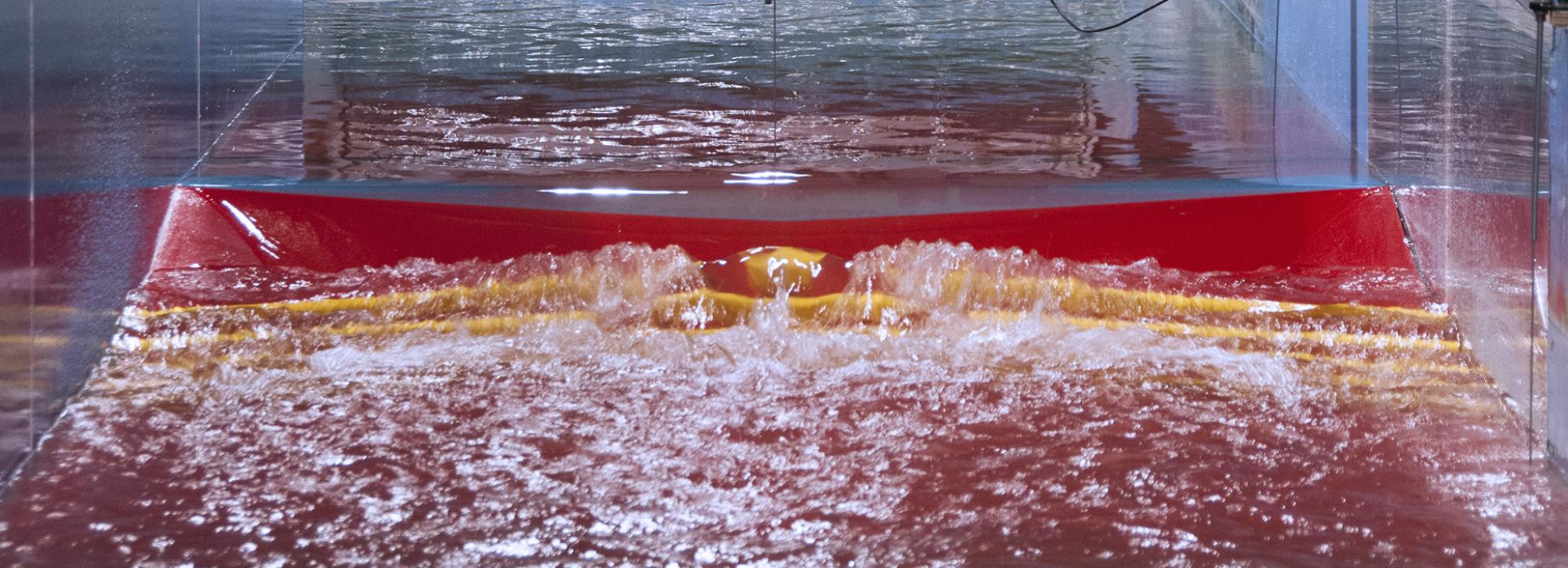
View of a fish pass test in our volumetric flow flume

Our volumetric flow flume is unique in the UK in terms of its size, operating depth and flow measurement accuracy, as it uses the volume-time approach to measure flow rates, generally acknowledged to be the most accurate means available. The flume is used for a wide range of research and consultancy projects.

Technical specification

The flume has a flow capacity of 220 l/s and the ability to measure flow rates volumetrically up to 170 l/s using a 36 m3 volumetric tank. This has been certified by the British Standards Institute as having an overall accuracy of ±0.215%. Flow rates can also be measured by means of an electromagnetic flow meter for studies where the accuracy provided by the volumetric tank is not required (typical accuracy within ±1%).

The flume is 2.4 m wide by 25 m long by 0.9 m deep (with maximum working depth of 0.7 m). A tailgate at the downstream end of the flume allows control of the flow depth. Flow rates are controlled by valves and stabilised by baffles and a high head tank.

Applications for our volumetric flow flume

  • Hydrometry: gauging structures such as weirs and flumes
  • Fish passes
  • River structures
  • Flow meter accuracy evaluation
  • Bank protection and erosion studies
  • Scour around structures.

Get in touch

Tom Rigden

Facilities manager

Contact Profile
Headshot of Physical modelling manager, Tom Rigden

Explore more

  • All
  • Project
  • Expertise
  • News
  • Insight
  • Facility
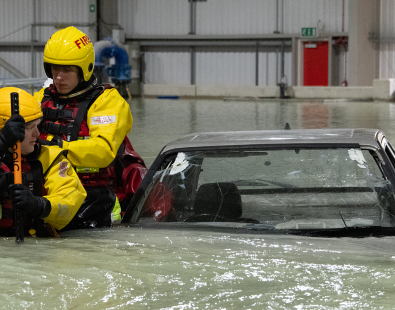
Emergency services in a water rescue training

Water rescue training

Emergency services in a water rescue training

Water rescue training

Erosion rate measurement

Erosion rate measurement

Erosion rate measurement

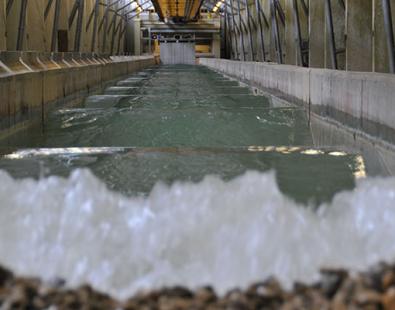
View of a wave generated in our wave flume

Wave flumes

View of a wave generated in our wave flume

Wave flumes

View of a wave generated in our wave flume

Wave flumes

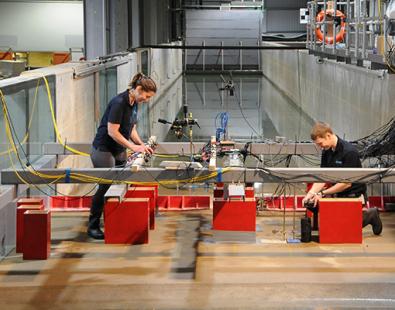
Photo of two people working on the tsunami simulator

Tsunami simulator

Photo of two people working on the tsunami simulator

Tsunami simulator

Photo of two people working on the tsunami simulator

Tsunami simulator

Photo of two people working on the tsunami simulator

Tsunami simulator

We are global leaders and independent experts in how to live and work sustainably with water

Social media

  • BlueSky
  • LinkedIn
  • YouTube

Expertise

  • Coastal & marine
  • Energy transition
  • Water & climate
  • Software solutions
  • Equipment & technology

Company

  • About
  • Careers
  • News
  • Insights
  • Sustainability

Legal

  • Privacy & data protection
  • Policies
  • Modern slavery statement
  • Terms & conditions
  • Sitemap
© 2026 HR Wallingford
Contact