Secondary nav 2022

  • Equipment
  • Software
  • Training

Main navigation 2022

  • About
    • About HR Wallingford
    • Our leadership
    • Our people
    • Our impact
      • Annual report & financial statements
      • Gender pay
      • Social impact
      • Sustainability
    • Our story
    • News
    • Insight articles
    • Policies
  • Projects
  • Expertise
    • Coastal & marine sustainability
      • Coastal hazards & resilience
      • Coastal morphology & sediment dynamics
      • Dredging and sediment management
      • Marine & coastal environment
      • Ports, harbours and shipping
      • Subsea engineering
      • Waterfronts, marinas and resorts
    • Energy transition
      • Fixed offshore wind
      • Floating offshore wind
      • Liquified gas & transition fuels
      • Nuclear
      • Wave, tidal, solar & hydropower
    • Water & climate resilience
      • Dams & reservoirs
      • Freshwater environment
      • Integrated flood management
      • Surface water systems
      • Water management for climate resilient development
      • Water supply & drought resilience
  • Facilities
    • Explore our facilities
    • Ship simulation
      • Australia Ship Simulation Centre
      • UK Ship Simulation Centre
    • Physical modelling
      • Fast Flow Facility
      • Tsunami simulator
      • Volumetric flow flume
      • Wave basins
      • Wave flumes
      • Erosion rate measurement
      • Water rescue training
  • Careers
    • Careers overview
    • Working at HR Wallingford
    • Job opportunities
  • Contact
  • About
    • About HR Wallingford
    • Our leadership
    • Our people
    • Our impact
      • Annual report & financial statements
      • Gender pay
      • Social impact
      • Sustainability
    • Our story
    • News
    • Insight articles
    • Policies
  • Projects
  • Expertise
    • Coastal & marine sustainability
      • Coastal hazards & resilience
      • Coastal morphology & sediment dynamics
      • Dredging and sediment management
      • Marine & coastal environment
      • Ports, harbours and shipping
      • Subsea engineering
      • Waterfronts, marinas and resorts
    • Energy transition
      • Fixed offshore wind
      • Floating offshore wind
      • Liquified gas & transition fuels
      • Nuclear
      • Wave, tidal, solar & hydropower
    • Water & climate resilience
      • Dams & reservoirs
      • Freshwater environment
      • Integrated flood management
      • Surface water systems
      • Water management for climate resilient development
      • Water supply & drought resilience
  • Facilities
    • Explore our facilities
    • Ship simulation
      • Australia Ship Simulation Centre
      • UK Ship Simulation Centre
    • Physical modelling
      • Fast Flow Facility
      • Tsunami simulator
      • Volumetric flow flume
      • Wave basins
      • Wave flumes
      • Erosion rate measurement
      • Water rescue training
  • Careers
    • Careers overview
    • Working at HR Wallingford
    • Job opportunities
  • Contact
  1. Home >
  2. Expertise >
  3. Coastal & marine sustainability >
  4. Marine & coastal environment

Marine & coastal environment

Share

Evidence‑led science for resilient marine and coastal environments

Marine and coastal environments face increasing pressure from climate change, development and competing uses. We support regulators, developers, operators and communities to understand environmental risks and manage impacts across the full project lifecycle. Using world‑leading hydrodynamics, environmental modelling and marine data, our teams deliver evidence‑led assessments that protect ecosystems, support regulation and enable sustainable, resilient use of marine and coastal environments.

Responding to growing pressure on marine and coastal systems

Coasts and seas are dynamic environments that support ecosystems, communities and economic activity. Climate change, sea level rise, extreme weather, coastal development and offshore infrastructure are increasing pressure on these systems. New developments can influence coastal processes, sediments, water quality and ecosystems, while also being affected by their surroundings. Organisations need sound scientific evidence to balance environmental protection with sustainable use of marine and coastal resources.

Understanding complex environmental interactions and risks

Understanding how physical processes, habitats and human activities interact is central to effective environmental management. Clients face challenges such as assessing cumulative impacts, predicting sediment and water quality changes, protecting sensitive habitats and managing uncertainty over long project lifecycles. These challenges are amplified in estuaries and coastal zones, where natural variability, climate impacts and human pressures combine.

Applying integrated science, modelling and monitoring

We bring together hydrodynamics, geomorphology, water quality and marine ecology to provide a holistic understanding of marine and coastal environments. Our teams apply advanced numerical and physical models, targeted field measurements and long term monitoring to assess baseline conditions, predict change and test management scenarios. We support environmental appraisal, formal environmental impact assessment and post consent monitoring, using tools that model interactions between marine infrastructure and the surrounding environment - including plume dispersion, underwater sound and ecological response.

Supporting sustainable outcomes & environmental resilience

Our evidence‑led approach helps organisations identify potential environmental risks early, develop proportionate mitigation and design interventions that work with natural processes. By improving understanding of climate‑driven change and environmental sensitivity, we support resilient project design, smoother consenting processes and enhanced environmental performance. The result is marine and coastal development that protects ecosystems, supports communities and delivers long‑term sustainability.
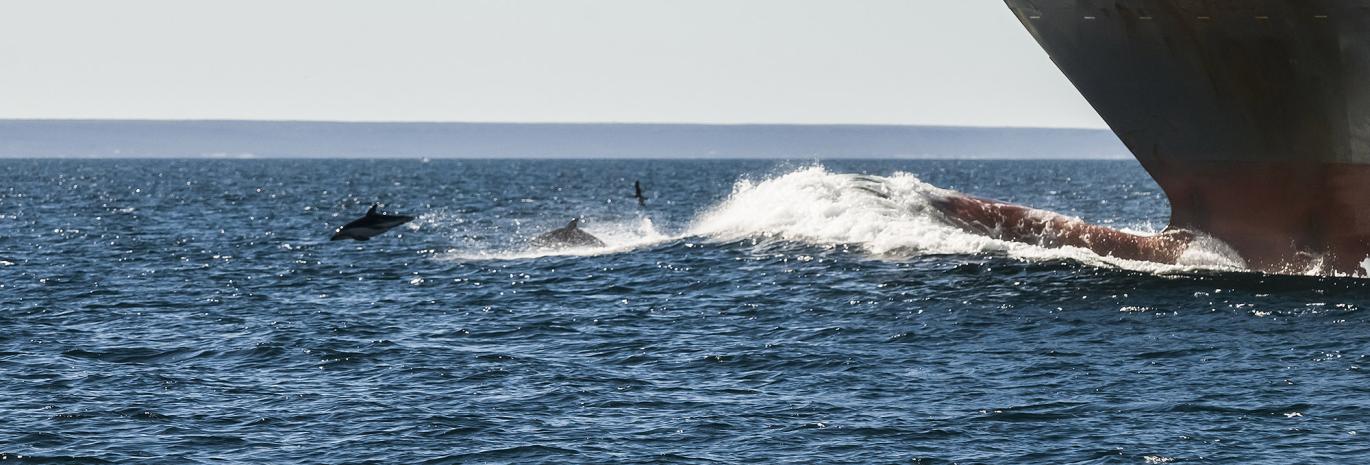
Marine & coastal environment expertise

Marine & coastal environmental assessment

Assess baseline conditions, pressures and potential impacts across physical, chemical and biological marine environments.

Environmental impact assessment

Deliver specialist technical assessment to support marine and coastal EIA, consent and regulatory approval.

Hydrodynamic & water quality modelling

Model currents, waves, stratification, sediment and water quality processes to evaluate environmental change and risk.

Sediment transport & morphology

Predict erosion, accretion, scour and seabed change to support sustainable marine and coastal management.

Plume & dispersion modelling

Model thermal, saline, sediment and contaminant dispersion in marine and coastal waters.

Underwater sound & vibration

Assess underwater sound and vibration propagation from activities such as piling, dredging and construction.

Habitat & ecological assessment

Evaluate habitats and ecological receptors using field surveys, modelling and impact analysis.

Monitoring & marine surveys

Design and deliver targeted physical and environmental monitoring programmes to reduce uncertainty and validate predictions.

Climate change & environmental resilience

Assess climate driven risks to marine and coastal environments and inform adaptation planning.

Mitigation & enhancement design

Define mitigation, compensation and enhancement measures that protect and improve marine environments.

Get in touch

Tom Matthewson
Director of Markets & Research
Contact Profile

Explore more

  • All
  • Project
  • Expertise
  • News
  • Insight
  • Facility

From ecosystems to insurance: nature’s role in reducing coastal flooding

Aerial view of Felixstowe at sunrise, showcase of nature positive dredging

Dredged material doing good

infographics showing energy islands scheme

Energy islands’ sustainable credentials rest on good advice

infographics showing energy islands scheme

Energy islands’ sustainable credentials rest on good advice

City skyline of Kuala Lumpur Malayasia

D-MOSS country case study: Malaysia

A forest burned by bush fire with a road running through it

Securing vital healthcare supplies during natural disasters

View of a tropical storm on a beach with palm trees

COP26 analysis: financing climate adaptation needs to be taken seriously

Could a vital spark revive coastal shipping in UK?

Could a vital spark revive coastal shipping in UK?

View of desert in Yemen

Yemen embraces pioneering space technology to manage water crisis

Flooding advances: learning to live with rising waters

View of a red LNG tanker moored at a port

Ports can thrive in a low carbon future

We are global leaders and independent experts in how to live and work sustainably with water

Social media

  • BlueSky
  • LinkedIn
  • YouTube

Expertise

  • Coastal & marine
  • Energy transition
  • Water & climate
  • Software solutions
  • Equipment & technology

Company

  • About
  • Careers
  • News
  • Insights
  • Sustainability

Legal

  • Privacy & data protection
  • Policies
  • Modern slavery statement
  • Terms & conditions
  • Sitemap
© 2026 HR Wallingford
Contact