Secondary nav 2022

  • Equipment
  • Software
  • Training

Main navigation 2022

  • About
    • About HR Wallingford
    • Our leadership
    • Our people
    • Our impact
      • Annual report & financial statements
      • Gender pay
      • Social impact
      • Sustainability
    • Our story
    • News
    • Insight articles
    • Policies
  • Projects
  • Expertise
    • Coastal & marine sustainability
      • Coastal hazards & resilience
      • Coastal morphology & sediment dynamics
      • Dredging and sediment management
      • Marine & coastal environment
      • Ports, harbours and shipping
      • Subsea engineering
      • Waterfronts, marinas and resorts
    • Energy transition
      • Fixed offshore wind
      • Floating offshore wind
      • Liquified gas & transition fuels
      • Nuclear
      • Wave, tidal, solar & hydropower
    • Water & climate resilience
      • Dams & reservoirs
      • Freshwater environment
      • Integrated flood management
      • Surface water systems
      • Water management for climate resilient development
      • Water supply & drought resilience
  • Facilities
    • Explore our facilities
    • Ship simulation
      • Australia Ship Simulation Centre
      • UK Ship Simulation Centre
    • Physical modelling
      • Fast Flow Facility
      • Tsunami simulator
      • Volumetric flow flume
      • Wave basins
      • Wave flumes
      • Erosion rate measurement
      • Water rescue training
  • Careers
    • Careers overview
    • Working at HR Wallingford
    • Job opportunities
  • Contact
  • About
    • About HR Wallingford
    • Our leadership
    • Our people
    • Our impact
      • Annual report & financial statements
      • Gender pay
      • Social impact
      • Sustainability
    • Our story
    • News
    • Insight articles
    • Policies
  • Projects
  • Expertise
    • Coastal & marine sustainability
      • Coastal hazards & resilience
      • Coastal morphology & sediment dynamics
      • Dredging and sediment management
      • Marine & coastal environment
      • Ports, harbours and shipping
      • Subsea engineering
      • Waterfronts, marinas and resorts
    • Energy transition
      • Fixed offshore wind
      • Floating offshore wind
      • Liquified gas & transition fuels
      • Nuclear
      • Wave, tidal, solar & hydropower
    • Water & climate resilience
      • Dams & reservoirs
      • Freshwater environment
      • Integrated flood management
      • Surface water systems
      • Water management for climate resilient development
      • Water supply & drought resilience
  • Facilities
    • Explore our facilities
    • Ship simulation
      • Australia Ship Simulation Centre
      • UK Ship Simulation Centre
    • Physical modelling
      • Fast Flow Facility
      • Tsunami simulator
      • Volumetric flow flume
      • Wave basins
      • Wave flumes
      • Erosion rate measurement
      • Water rescue training
  • Careers
    • Careers overview
    • Working at HR Wallingford
    • Job opportunities
  • Contact
  1. Home >
  2. Facilities >
  3. Physical modelling >
  4. Tsunami simulator

Tsunami simulator

Share
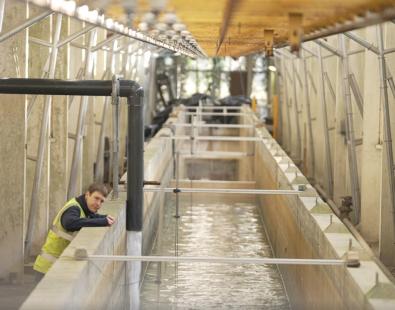
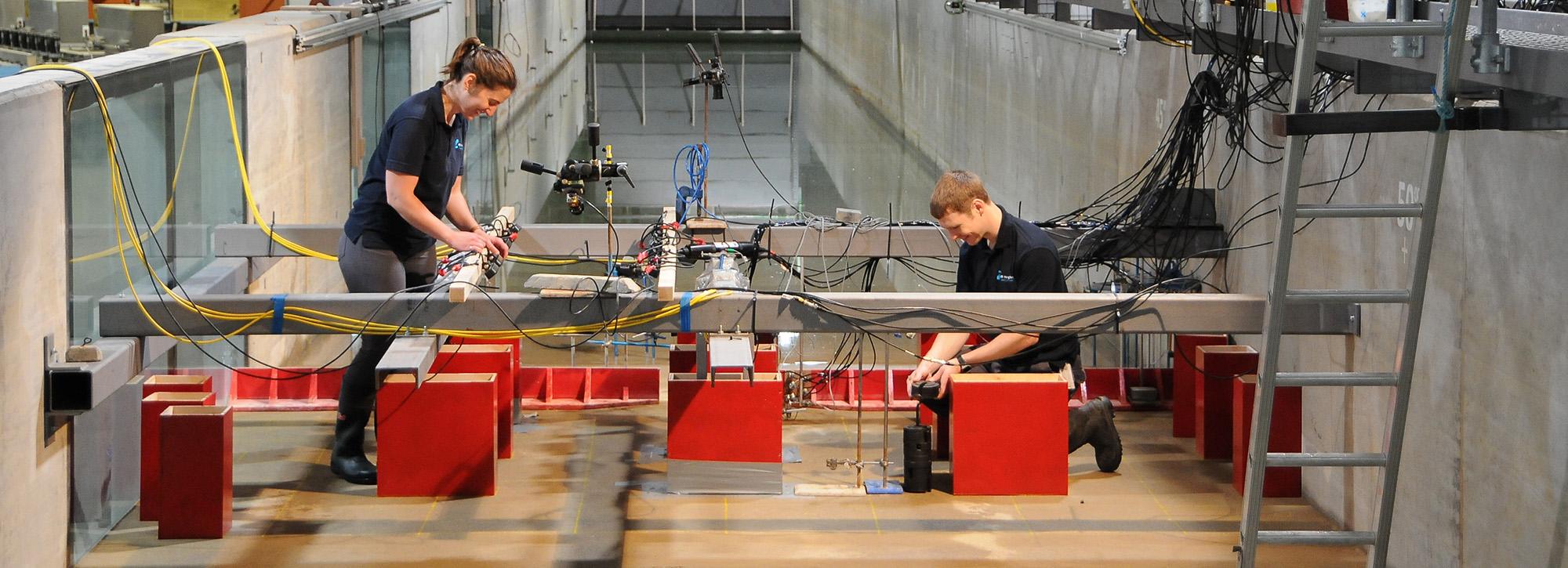
View of two people working in our tsunami simulator in our modelling facilities

Modelling tsunami waves correctly is essential in trying to save lives when faced with these hazards. Since 2004, five major tsunamis have devastated coastlines around the world, killing around 300,000 people. Yet relatively little is known about the giant waves created by seismic movements. How do they come ashore? How do they affect coast defences? What's the best way to protect coastal communities against them?

To help answer some of these questions, we developed the largest specialist tsunami simulator in Europe to create various types of these destructive waves. 

Installed in a 75 m long and 4 m wide channel in our Fast Flow Facility, our tsunami simulator uses 70,000 litres of water to simulate a tsunami. At a scale of 1:50, it generates both crest-led and trough-led tsunamis, and enables, for the first time, the simulation of full tsunami impact on urban areas, through modelling in detail the effects that tsunamis have on coast defences, and how water is channelled around clusters of buildings. This provides the most accurate testing of the forces acting on buildings.

The tsunami simulator can also be used to evaluate whether flood defences are effective against tsunamis, or might amplify their destructiveness by allowing flood waters to build up in front of defences and then, when they fail, suddenly inundate areas behind, causing more devastation to areas previously thought to be safe. 

The unique feature of our latest tsunami simulator is that it makes it possible to generate the full duration of a tsunami wave, for instance with a 20 minute wave duration scaled to almost three minutes in the laboratory.
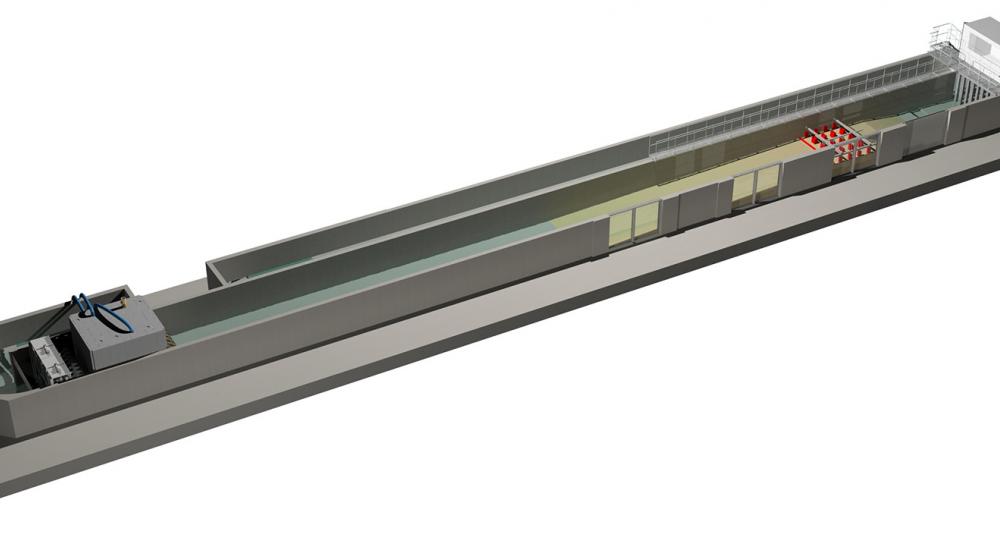
Overview of our tsunami simulator

How does it work?

The tsunami simulator works by lifting a body of water using a pneumatic pump and a vacuum tank. The tsunami is created in four stages:
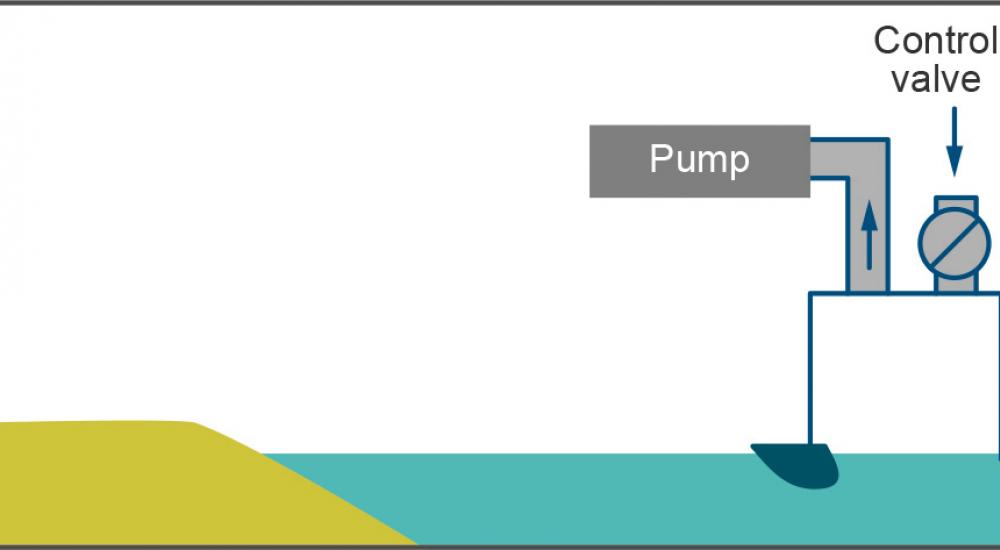
Graph showing the first stage of setting up the tsunami simulator

Stage One: With the bathymetry formed and the flume filled with water the test will start while the water is still.
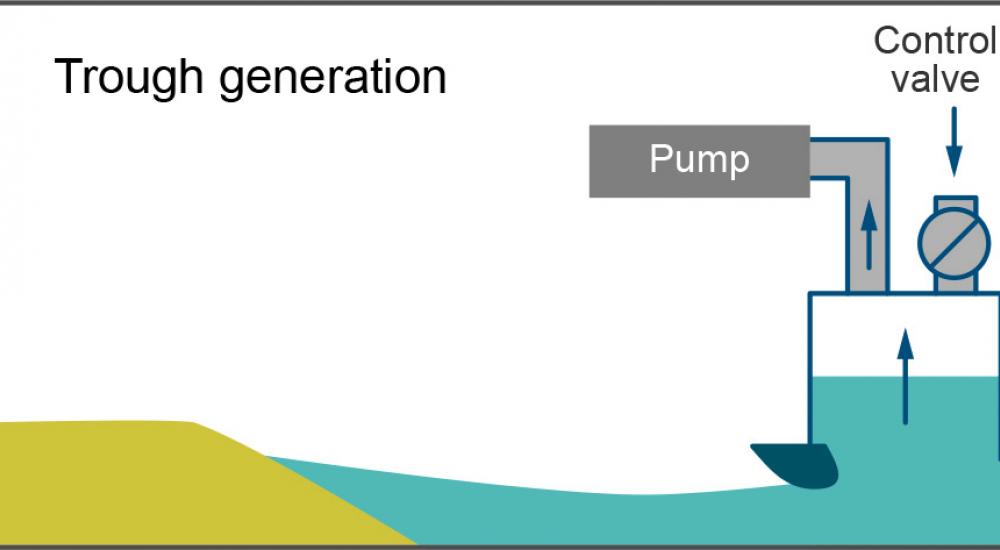
Graph showing stage 2 of setting up the tsunami simulator

Stage Two: A high pressure air pump draws air out of the tank, reducing the pressure and drawing water from the flume up into the tsunami simulator. This simulates the retreat of a trough-led tsunami, when water at the coast initially rushes out to sea.
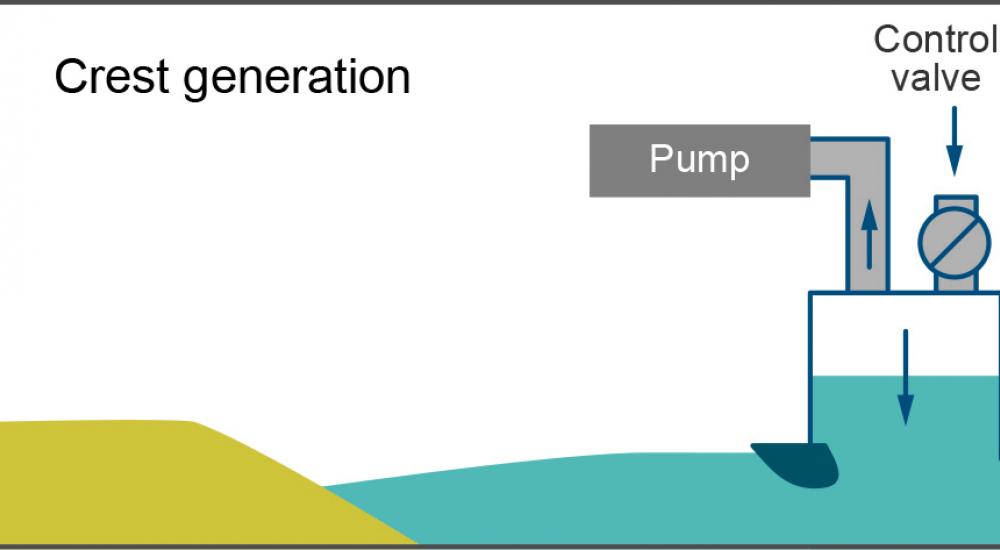
Stage Three: Once the retreating water reaches the desired level, the control system adjusts the air inlet valve so that the water inside the tank falls. This generates the crest of the tsunami that races towards the coast. The ‘flow shaper’ at the tank outlet helps water leave smoothly, allowing the control system to shape the wave to match a prototype profile.
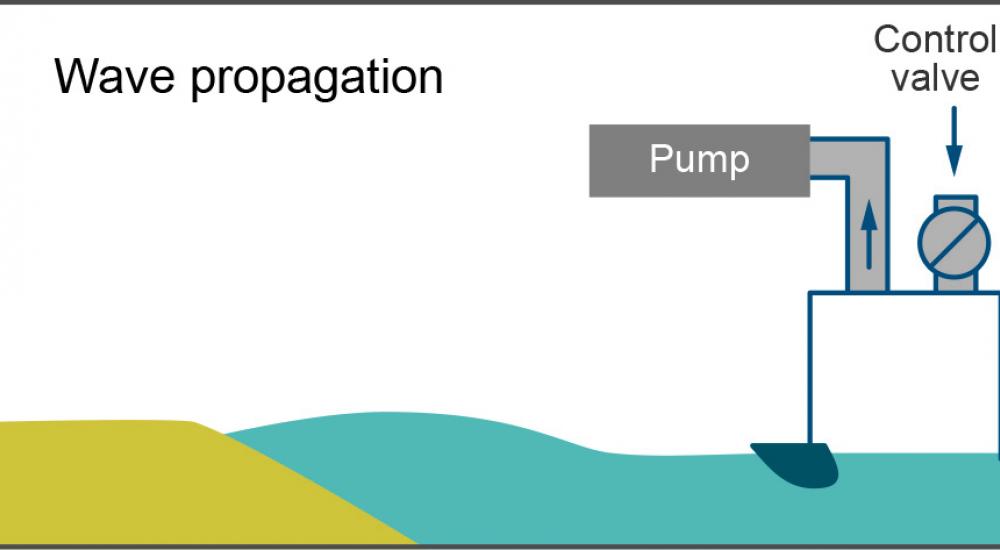
Graph showing stage 4 of setting up the tsunami simulator

Stage Four: The wave propagates along the flume towards the test section. This could be run-up measurements, single buildings, coastal defences or multiple building arrays.

Get in touch

Ian Chandler
Principal Scientist
Contact Profile

Explore more

  • All
  • Project
  • Expertise
  • News
  • Insight
  • Facility

New IMarEST Technical Forum to be held at HR Wallingford

New IMarEST Technical Forum to be held at HR Wallingford

Plastic pollution could persist at ocean surfaces for over a century

New study reveals over half of plastic bottles in the Thames end up in the North Sea

Garden demonstrating flood resilience opens in our business park

SuDS feature in front of building in Howbery Park

Ofwat to support the new Rainwater Management Platform

Funding secured from The Crown Estate to develop a Deep Water Testing Facility

View of Fast Flow Facilities, where tsunamis are being recreated a scale

New film released – Tsunamis: towards the next breakthrough

View of Fast Flow Facilities, where tsunamis are being recreated a scale

New film released – Tsunamis: towards the next breakthrough

Two engineers looking on physical model of a tsunami

Two decades after 2004 Indian Ocean Tsunami, experts call for dedicated facility

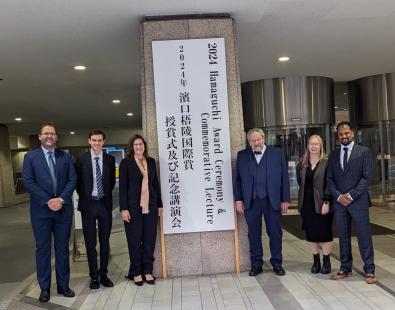
People standing at the entrance of  2024 Hamaguchi  Awards.

Prestigious award recognises advances to improve protection from tsunamis

Decade of data delivered by our Fast Flow Facility

We are global leaders and independent experts in how to live and work sustainably with water

Social media

  • BlueSky
  • LinkedIn
  • YouTube

Expertise

  • Coastal & marine
  • Energy transition
  • Water & climate
  • Software solutions
  • Equipment & technology

Company

  • About
  • Careers
  • News
  • Insights
  • Sustainability

Legal

  • Privacy & data protection
  • Policies
  • Terms & conditions
  • Sitemap
© 2026 HR Wallingford
Contact