Floating offshore wind in deep water: assessing underwater noise from piled anchors
HR Wallingford supported a floating offshore wind (FLOW) developer to understand underwater noise from anchor pile installation. By modelling different installation scenarios, we enabled informed choices that reduce risks to marine mammals while supporting safe, efficient wind farm design.


Managing environmental risks from offshore wind expansion
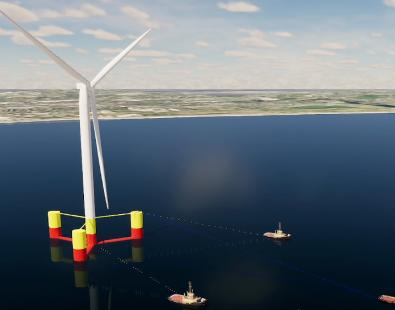
Floating offshore wind is moving into deeper waters to access stronger, more consistent wind resources. This brings new engineering requirements, including the need for robust mooring systems anchored securely to the seabed.
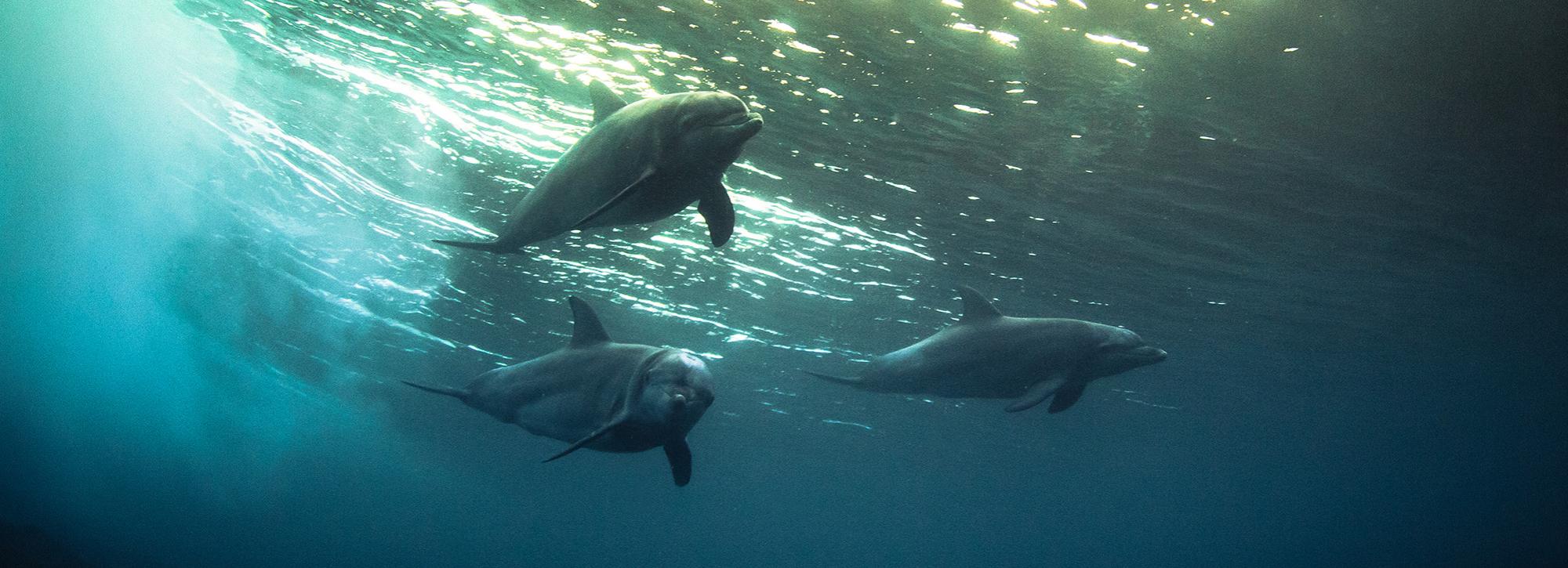
One approach uses piled anchors, installed using percussive (hammer) or vibratory methods. These activities generate underwater noise that can affect marine mammals. At higher levels, noise can lead to injury. At lower levels, it may still disrupt feeding, migration and behaviour, with potential long-term effects on populations.
Developers must therefore balance engineering requirements with environmental protection. The objective of this study was to understand how different installation approaches influence underwater noise levels and what this means for marine mammals.
Using modelling to guide lower impact installation approaches
Using our underwater noise modelling system, Unacorda, we were able to predict how sound propagates during pile installation. Our team modelled a range of realistic scenarios, including different pile diameters, installation methods, seabed types and installation durations.
We adopted a simplified, consistent modelling framework to allow meaningful comparison between options. This approach gave the developer clear insight into relative impacts, rather than isolated technical outputs.
Sound source levels were calculated using established empirical relationships, accounting for factors such as pile size, hammer energy and water depth. We adjusted these to reflect deep water conditions, where equipment is fully submerged, improving confidence in the results.
Recognising that sediment properties influence how quickly the noise is attenuated, we tested how sound travels in locations with different seabed types. We also assessed how installation choices affect the distance over which marine mammals may experience behavioural disturbance or risk of injury.
This approach allowed us to connect engineering decisions directly with environmental outcomes, supporting more balanced and informed design choices.
Supporting better decisions for people, nature and infrastructure
The study provided a structured, evidence-based comparison of installation options, helping the developer identify approaches that reduce environmental impact while remaining practical and effective.
- Environmental value Insight into how piling method, energy and seabed conditions affect noise propagation helps reduce risks to marine mammals and supports more responsible offshore development
- Economic value Early understanding of trade-offs between installation speed, energy and environmental constraints supports more efficient project planning and reduces the risk of redesign or delay
- Social value Transparent, evidence-based assessment strengthens confidence among regulators and stakeholders, supporting sustainable growth in offshore renewables
Key findings included the importance of piling energy in determining impact, the benefits of vibratory methods in some scenarios, and the significant influence of seabed conditions on noise propagation.
Contact our project lead
Tom Benson