Secondary nav 2022

  • Equipment
  • Software
  • Training

Main navigation 2022

  • About
    • About HR Wallingford
    • Our leadership
    • Our people
    • Our impact
      • Annual report & financial statements
      • Gender pay
      • Social impact
      • Sustainability
    • Our story
    • News
    • Insight articles
    • Policies
  • Projects
  • Expertise
    • Coastal & marine sustainability
      • Coastal hazards & resilience
      • Coastal morphology & sediment dynamics
      • Dredging and sediment management
      • Marine & coastal environment
      • Ports, harbours and shipping
      • Subsea engineering
      • Waterfronts, marinas and resorts
    • Energy transition
      • Fixed offshore wind
      • Floating offshore wind
      • Liquified gas & transition fuels
      • Nuclear
      • Wave, tidal, solar & hydropower
    • Water & climate resilience
      • Dams & reservoirs
      • Freshwater environment
      • Integrated flood management
      • Surface water systems
      • Water management for climate resilient development
      • Water supply & drought resilience
  • Facilities
    • Explore our facilities
    • Ship simulation
      • Australia Ship Simulation Centre
      • UK Ship Simulation Centre
    • Physical modelling
      • Fast Flow Facility
      • Tsunami simulator
      • Volumetric flow flume
      • Wave basins
      • Wave flumes
      • Erosion rate measurement
      • Water rescue training
  • Careers
    • Careers overview
    • Working at HR Wallingford
    • Job opportunities
  • Contact
  • About
    • About HR Wallingford
    • Our leadership
    • Our people
    • Our impact
      • Annual report & financial statements
      • Gender pay
      • Social impact
      • Sustainability
    • Our story
    • News
    • Insight articles
    • Policies
  • Projects
  • Expertise
    • Coastal & marine sustainability
      • Coastal hazards & resilience
      • Coastal morphology & sediment dynamics
      • Dredging and sediment management
      • Marine & coastal environment
      • Ports, harbours and shipping
      • Subsea engineering
      • Waterfronts, marinas and resorts
    • Energy transition
      • Fixed offshore wind
      • Floating offshore wind
      • Liquified gas & transition fuels
      • Nuclear
      • Wave, tidal, solar & hydropower
    • Water & climate resilience
      • Dams & reservoirs
      • Freshwater environment
      • Integrated flood management
      • Surface water systems
      • Water management for climate resilient development
      • Water supply & drought resilience
  • Facilities
    • Explore our facilities
    • Ship simulation
      • Australia Ship Simulation Centre
      • UK Ship Simulation Centre
    • Physical modelling
      • Fast Flow Facility
      • Tsunami simulator
      • Volumetric flow flume
      • Wave basins
      • Wave flumes
      • Erosion rate measurement
      • Water rescue training
  • Careers
    • Careers overview
    • Working at HR Wallingford
    • Job opportunities
  • Contact
  1. Home >
  2. Projects >
  3. Fatigue research to optimise offshore wind design
Fatigue research to optimise offshore wind design

Share

Offshore wind turbines, a vital part of global net zero ambitions, must be able to withstand continuous exposure to wind and wave forces throughout their 20–25-year design life. Our research project aims to accurately assess the fatigue life of the substructures, which will help optimise design and potentially lead to costs savings.

The offshore wind sector operates in an environment which is harsh and complex, requiring turbines to withstand forces from wind and waves, and potentially currents too. Over time, damage accumulates from the wave loads that repeatedly hit the turbine, and this fatigue can potentially lead to mechanical failure of steel components.

Accurate estimates of fatigue life are not only vital to ensure safety but could also potentially reduce material costs. Such savings are crucial for the offshore wind sector where margins are narrower than for more established energy industries.

To make certain that fatigue analysis ensures the safety of steel structures, design codes and standards have been adapted over time. Methods of fatigue analysis currently used in design consider an accumulation of damage, based on the stress range and number of cycles.

However, there is considerable uncertainty in the actual stress magnitude and number of cycles that a structural component may experience over its design life. We are therefore developing hi-fidelity techniques that can reduce the uncertainty related to the estimated wave loads that are used in the fatigue analysis of offshore fixed and floating wind structures.

Our approach

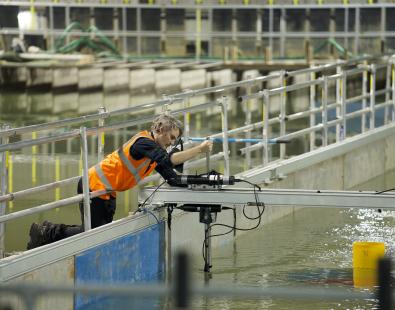
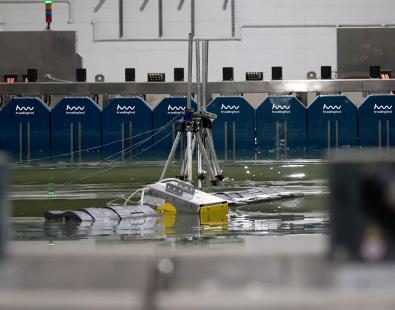
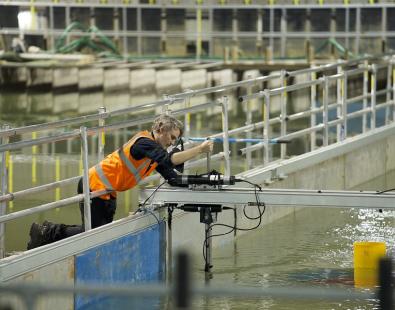
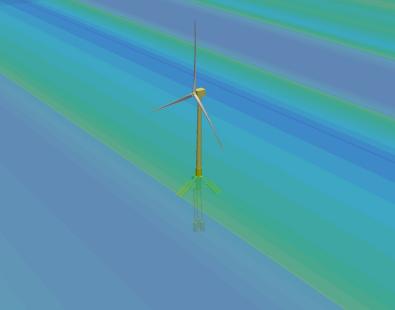
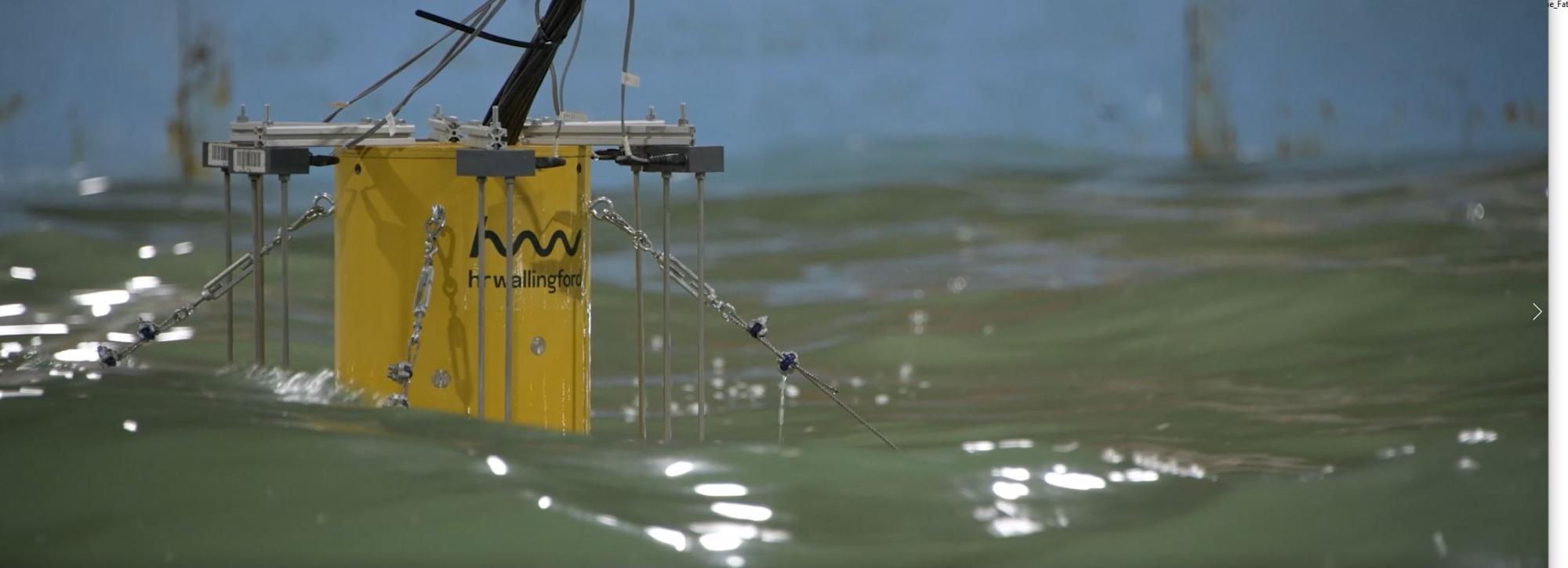
In our modelling hall, we have run physical tests that captured the wave loads hitting a 1:40 scale model of an International Energy Agency reference monopile for a 15 MW offshore turbine. This data will serve as a benchmark for validating and calibrating our computational fluid dynamics (CFD) model, ensuring confidence in the simulated wave conditions and ultimately enabling a reliable estimation of the structure's fatigue life.

We are using high-performance computing to analyse the long time series wave data that we have captured. After calculating the wave loads, we will conduct finite element analysis – the standard method to calculate the corresponding stress within the structure.

We will these use this data to calculate the accumulation of the damage within the structure, which then can be used to assess the fatigue life of any offshore structure, be that floating or fixed.

Ideally placed

We are in a unique position to deliver this research, which combines our capability and expertise on:

  • Numerical CFD modelling of fixed and floating structures in random seas
  • Physical modelling of nearshore and offshore structures
  • Probabilistic design and statistical analysis of storm sequencing over the design life of an asset

Contact our project lead

Sina Haeri

Technical Director - CFD
Contact Profile
Headshot of CFD expert sitting at his desk, Sina Haeri

Explore more

  • All
  • Project
  • Expertise
  • News
  • Insight
  • Facility
View of test of new wave energy generator on physical models

Fetch Energy trials wave power prototypes in our labs

Funding secured from The Crown Estate to develop a Deep Water Testing Facility

Gigawatt scale FLOW won’t float without wet storage, says JIP

research Diarmid Xu on facility to test siesmic work for windfarm

Seismic work to help protect windfarms in earthquake zones

View of testing ECOwind

ECOWind begins investigating marine impact of offshore wind growth

Laboratory tests aim to improve stability of wind farm cable protection systems

screenshot of computer image of floating wind turbine in sea

Partnership to investigate floating wind turbine offshore storage areas

Numerical modelling output of floating wind foundation design – the Stinger Keel

Modelling tackles deep-sea floating wind challenges

view of a breaking wave

CFD simulations inform Bombora’s design of wave energy product, mWave™

Panoramic view of a wind farm behind natural sand dunes

The ‘Star Wars’ dunes that march through offshore windfarms

View of physical model set up to test scour protection

ScottishPower Renewables commissions scour protection modelling for East Anglia One

Is tidal power on a collision course with marine wildlife?

We are global leaders and independent experts in how to live and work sustainably with water

Social media

  • BlueSky
  • LinkedIn
  • YouTube

Expertise

  • Coastal & marine
  • Energy transition
  • Water & climate
  • Software solutions
  • Equipment & technology

Company

  • About
  • Careers
  • News
  • Insights
  • Sustainability

Legal

  • Privacy & data protection
  • Policies
  • Modern slavery statement
  • Terms & conditions
  • Sitemap
© 2026 HR Wallingford
Contact