Secondary nav 2022

  • Equipment
  • Software
  • Training

Main navigation 2022

  • About
    • About HR Wallingford
    • Our leadership
    • Our people
    • Our impact
      • Annual report & financial statements
      • Gender pay
      • Social impact
      • Sustainability
    • Our story
    • News
    • Insight articles
    • Policies
  • Projects
  • Expertise
    • Coastal & marine sustainability
      • Coastal hazards & resilience
      • Coastal morphology & sediment dynamics
      • Dredging and sediment management
      • Marine & coastal environment
      • Ports, harbours and shipping
      • Subsea engineering
      • Waterfronts, marinas and resorts
    • Energy transition
      • Fixed offshore wind
      • Floating offshore wind
      • Liquified gas & transition fuels
      • Nuclear
      • Wave, tidal, solar & hydropower
    • Water & climate resilience
      • Dams & reservoirs
      • Freshwater environment
      • Integrated flood management
      • Surface water systems
      • Water management for climate resilient development
      • Water supply & drought resilience
  • Facilities
    • Explore our facilities
    • Ship simulation
      • Australia Ship Simulation Centre
      • UK Ship Simulation Centre
    • Physical modelling
      • Fast Flow Facility
      • Tsunami simulator
      • Volumetric flow flume
      • Wave basins
      • Wave flumes
      • Erosion rate measurement
      • Water rescue training
  • Careers
    • Careers overview
    • Working at HR Wallingford
    • Job opportunities
  • Contact
  • About
    • About HR Wallingford
    • Our leadership
    • Our people
    • Our impact
      • Annual report & financial statements
      • Gender pay
      • Social impact
      • Sustainability
    • Our story
    • News
    • Insight articles
    • Policies
  • Projects
  • Expertise
    • Coastal & marine sustainability
      • Coastal hazards & resilience
      • Coastal morphology & sediment dynamics
      • Dredging and sediment management
      • Marine & coastal environment
      • Ports, harbours and shipping
      • Subsea engineering
      • Waterfronts, marinas and resorts
    • Energy transition
      • Fixed offshore wind
      • Floating offshore wind
      • Liquified gas & transition fuels
      • Nuclear
      • Wave, tidal, solar & hydropower
    • Water & climate resilience
      • Dams & reservoirs
      • Freshwater environment
      • Integrated flood management
      • Surface water systems
      • Water management for climate resilient development
      • Water supply & drought resilience
  • Facilities
    • Explore our facilities
    • Ship simulation
      • Australia Ship Simulation Centre
      • UK Ship Simulation Centre
    • Physical modelling
      • Fast Flow Facility
      • Tsunami simulator
      • Volumetric flow flume
      • Wave basins
      • Wave flumes
      • Erosion rate measurement
      • Water rescue training
  • Careers
    • Careers overview
    • Working at HR Wallingford
    • Job opportunities
  • Contact
  1. Home >
  2. Projects >
  3. Proving the stability of Reef cubes® for offshore wind scour protection at Rampion
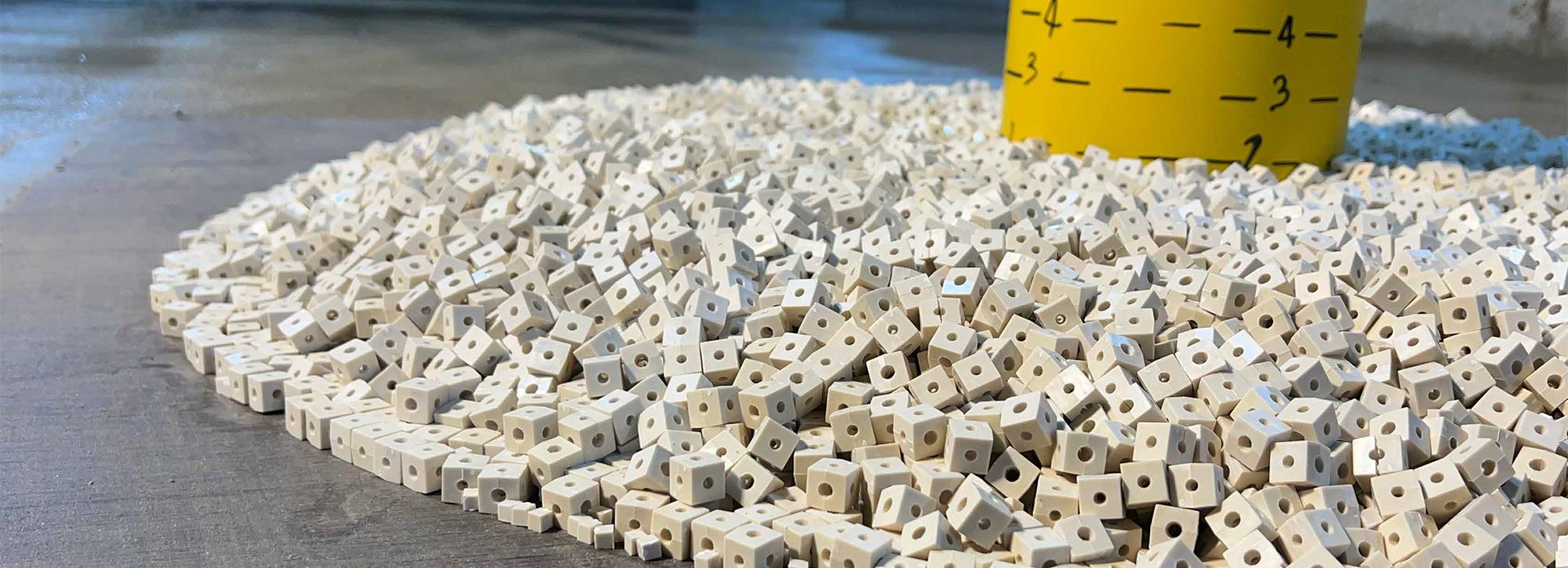
Proving the stability of Reef cubes® for offshore wind scour protection at Rampion

Share

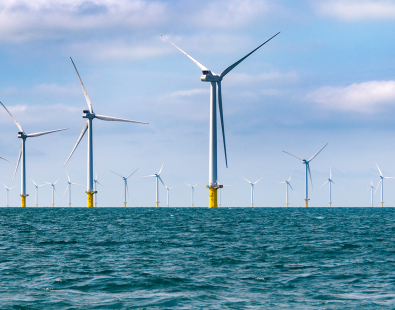
HR Wallingford worked with ARC marine® to physically test Reef cubes® for scour protection at Rampion Offshore Wind Farm. The work confirmed stability under realistic wave and current conditions, supporting safe offshore deployment while enabling environmental enhancement alongside clean energy infrastructure.

SDG9 - Industry
Partners
ARC marine®
Funding
Part-funded by UKRI through EU Horizon funding
Location
Rampion Offshore Wind farm, UK

Why scour protection matters for offshore wind

Offshore wind plays a critical role in delivering low‑carbon energy, but turbine foundations must be protected against seabed erosion to remain safe and reliable over time. Scour protection is therefore a fundamental requirement for offshore wind infrastructure.

Traditionally, scour protection has focused on engineering performance, with limited consideration of environmental value. At Rampion Offshore Wind Farm, there was an opportunity to take a more integrated approach by using Reef cubes®, designed to provide physical protection while also creating habitat for marine life.

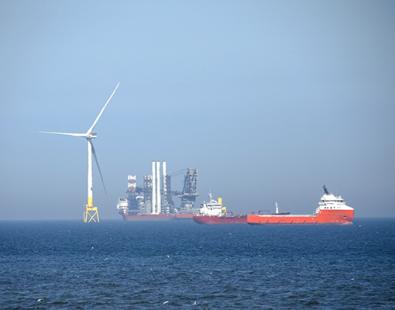
Before deployment, independent evidence was needed to demonstrate that the proposed Reef cubes® layout would remain stable under site‑specific wave and current conditions. Getting this right was important to reduce technical risk, protect investment, and ensure confidence that environmental enhancement could be delivered without compromising infrastructure performance.

The key objective was to provide robust, evidence‑based assurance to inform offshore installation decisions.
How physical modelling reduced offshore deployment risk

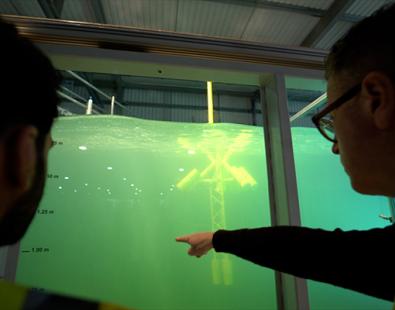
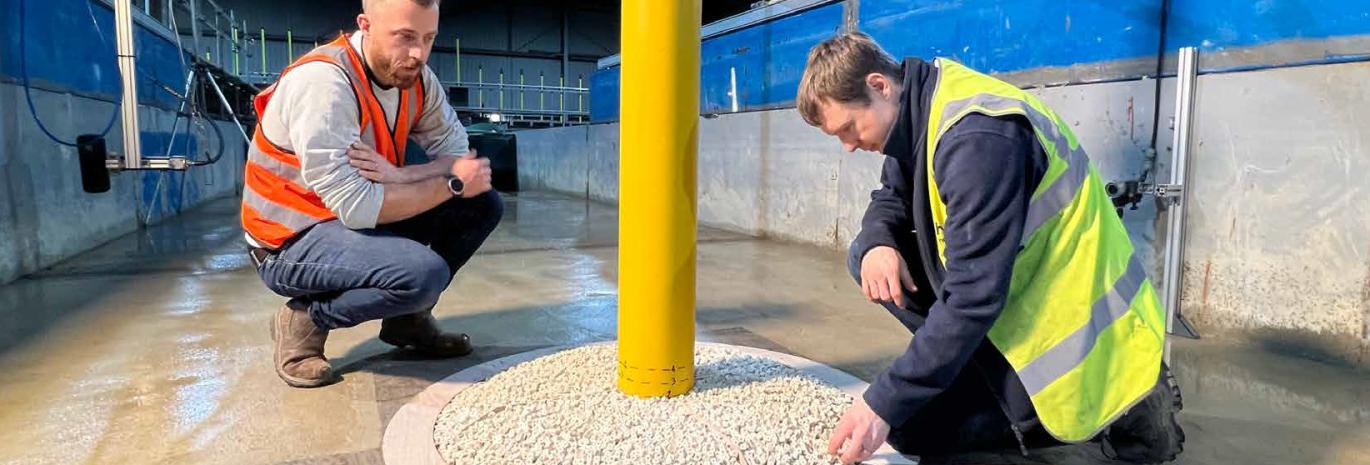
We carried out physical modelling to test the stability of the proposed Reef cubes® scour protection under conditions representative of the Rampion site.

The modelling was undertaken in a purpose‑built flume at HR Wallingford, using a scale of 1:31. Combined wave and current conditions were applied to replicate the hydrodynamic forces expected offshore, ensuring the testing reflected real seabed and loading behaviour.

Our approach focused on decision‑relevant evidence rather than laboratory outputs for their own sake. We designed the tests to directly assess whether the Reef cubes® would remain stable, how they interacted with each other and the seabed, and whether any movement could affect performance.

By combining controlled physical testing with expert judgement, we reduced uncertainty at a critical project stage. This enabled the project team to make informed, confident decisions that balanced engineering reliability with environmental ambition and long‑term resilience.

Supporting nature inclusive infrastructure at sea

The physical modelling demonstrated that the Reef cubes® remained stable under representative wave and current conditions at Rampion. This reduced risk ahead of offshore installation and supported confident progression of the design.

From an economic perspective, the work helped protect value by testing performance before deployment. Environmentally, it supports nature‑inclusive infrastructure that combines scour protection with marine habitat creation. Socially, it contributes to wider confidence that offshore wind can be delivered in a way that works with natural systems while supporting the transition to clean energy.

Contact our project lead

Ian Chandler
Principal Scientist
Contact Profile

Explore more

  • All
  • Project
  • Expertise
  • News
  • Insight
  • Facility

Fixed offshore wind

View of the Stinger Keel model in HR Wallingford's Fast Flow Facility

Floating offshore wind

Screenshot of wave modelling in Telemac with orange, yellow and blue colours

Wave, tidal, solar & hydro power

Numerical modelling output for scour at an offshore wind farm cable

Subsea engineering

Offshore wind

We are global leaders and independent experts in how to live and work sustainably with water

Social media

  • BlueSky
  • LinkedIn
  • YouTube

Expertise

  • Coastal & marine
  • Energy transition
  • Water & climate
  • Software solutions
  • Equipment & technology

Company

  • About
  • Careers
  • News
  • Insights
  • Sustainability

Legal

  • Privacy & data protection
  • Policies
  • Modern slavery statement
  • Terms & conditions
  • Sitemap
© 2026 HR Wallingford
Contact