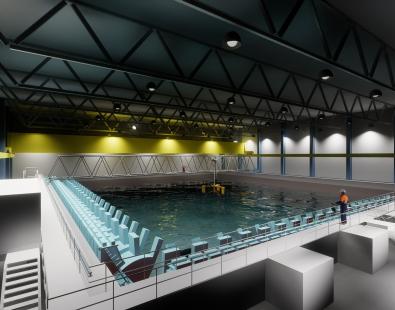
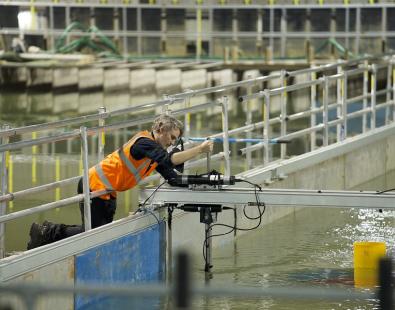
Proving the stability of Reef cubes® for offshore wind scour protection at Rampion
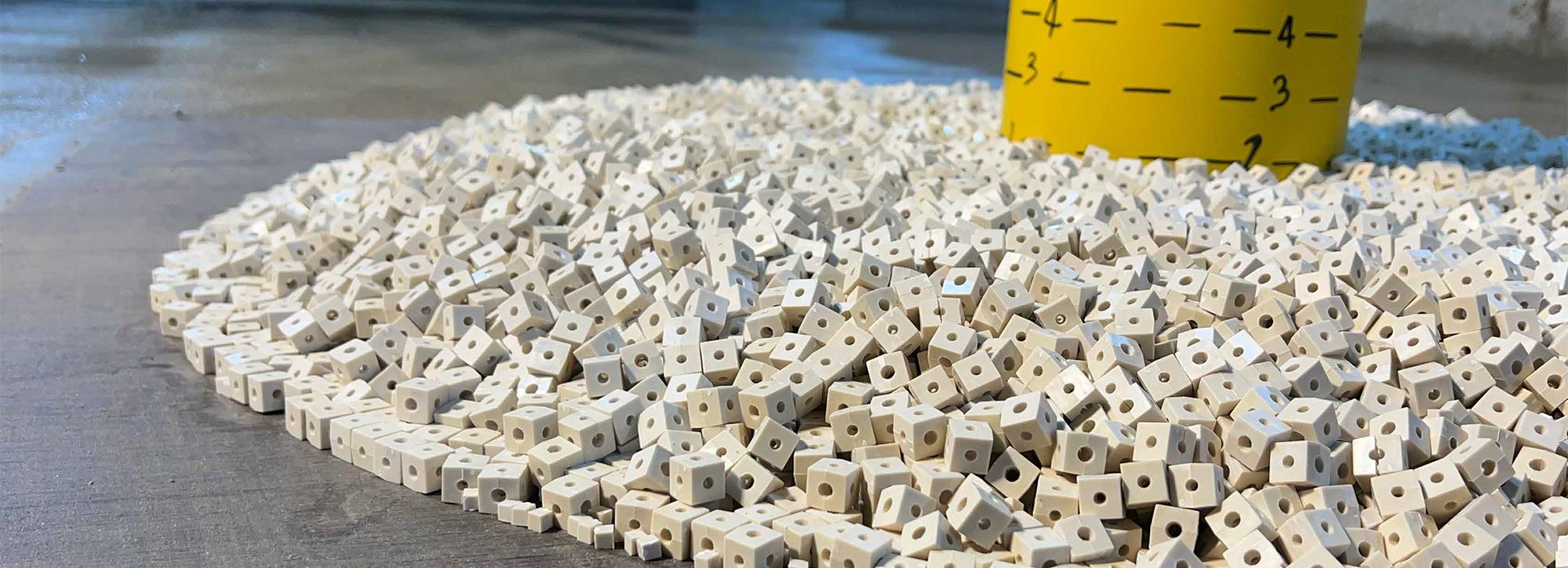
HR Wallingford worked with ARC marine® to physically test Reef cubes® for scour protection at Rampion Offshore Wind Farm. The work confirmed stability under realistic wave and current conditions, supporting safe offshore deployment while enabling environmental enhancement alongside clean energy infrastructure.


Why scour protection matters for offshore wind
Offshore wind plays a critical role in delivering low‑carbon energy, but turbine foundations must be protected against seabed erosion to remain safe and reliable over time. Scour protection is therefore a fundamental requirement for offshore wind infrastructure.
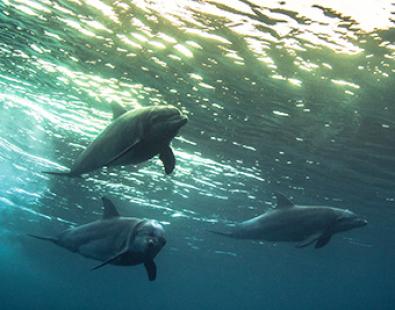
Traditionally, scour protection has focused on engineering performance, with limited consideration of environmental value. At Rampion Offshore Wind Farm, there was an opportunity to take a more integrated approach by using Reef cubes®, designed to provide physical protection while also creating habitat for marine life.
Before deployment, independent evidence was needed to demonstrate that the proposed Reef cubes® layout would remain stable under site‑specific wave and current conditions. Getting this right was important to reduce technical risk, protect investment, and ensure confidence that environmental enhancement could be delivered without compromising infrastructure performance.
The key objective was to provide robust, evidence‑based assurance to inform offshore installation decisions.
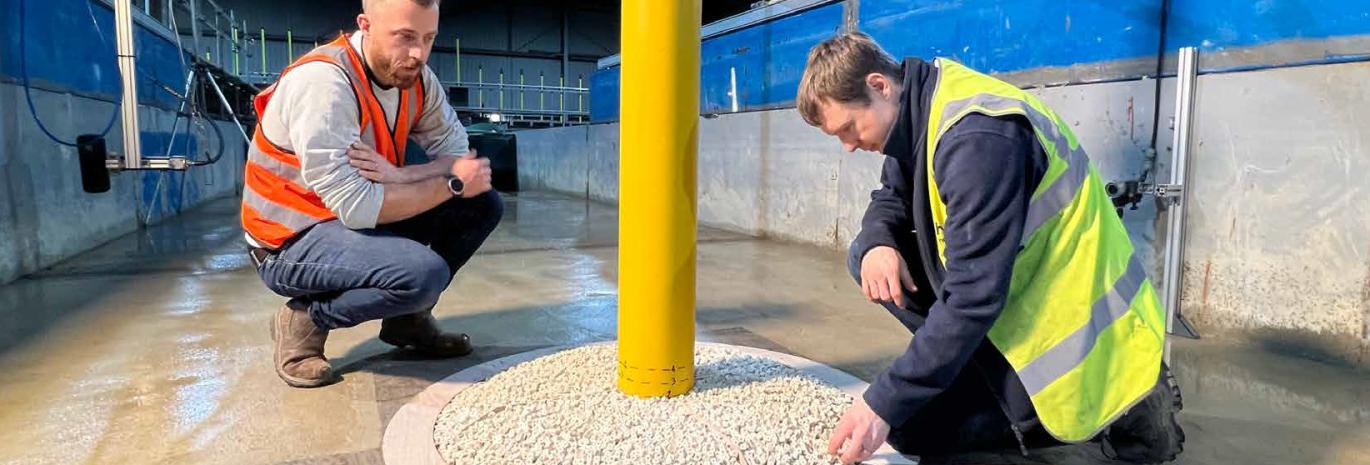
How physical modelling reduced offshore deployment risk
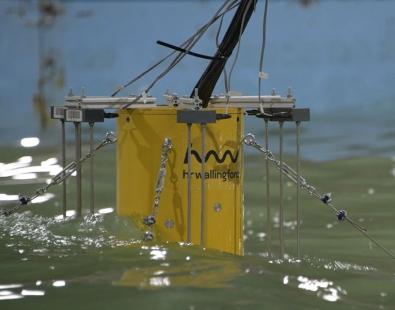
We carried out physical modelling to test the stability of the proposed Reef cubes® scour protection under conditions representative of the Rampion site.
The modelling was undertaken in a purpose‑built flume at HR Wallingford, using a scale of 1:31. Combined wave and current conditions were applied to replicate the hydrodynamic forces expected offshore, ensuring the testing reflected real seabed and loading behaviour.
Our approach focused on decision‑relevant evidence rather than laboratory outputs for their own sake. We designed the tests to directly assess whether the Reef cubes® would remain stable, how they interacted with each other and the seabed, and whether any movement could affect performance.
By combining controlled physical testing with expert judgement, we reduced uncertainty at a critical project stage. This enabled the project team to make informed, confident decisions that balanced engineering reliability with environmental ambition and long‑term resilience.
Supporting nature inclusive infrastructure at sea
The physical modelling demonstrated that the Reef cubes® remained stable under representative wave and current conditions at Rampion. This reduced risk ahead of offshore installation and supported confident progression of the design.
From an economic perspective, the work helped protect value by testing performance before deployment. Environmentally, it supports nature‑inclusive infrastructure that combines scour protection with marine habitat creation. Socially, it contributes to wider confidence that offshore wind can be delivered in a way that works with natural systems while supporting the transition to clean energy.
Contact our project lead
Ian Chandler