Secondary nav 2022

  • Equipment
  • Software
  • Training

Main navigation 2022

  • About
    • About HR Wallingford
    • Our leadership
    • Our people
    • Our impact
      • Annual report & financial statements
      • Gender pay
      • Social impact
      • Sustainability
    • Our story
    • News
    • Insight articles
    • Policies
  • Projects
  • Expertise
    • Coastal & marine sustainability
      • Coastal hazards & resilience
      • Coastal morphology & sediment dynamics
      • Dredging and sediment management
      • Marine & coastal environment
      • Ports, harbours and shipping
      • Subsea engineering
      • Waterfronts, marinas and resorts
    • Energy transition
      • Fixed offshore wind
      • Floating offshore wind
      • Liquified gas & transition fuels
      • Nuclear
      • Wave, tidal, solar & hydropower
    • Water & climate resilience
      • Dams & reservoirs
      • Freshwater environment
      • Integrated flood management
      • Surface water systems
      • Water management for climate resilient development
      • Water supply & drought resilience
  • Facilities
    • Explore our facilities
    • Ship simulation
      • Australia Ship Simulation Centre
      • UK Ship Simulation Centre
    • Physical modelling
      • Fast Flow Facility
      • Tsunami simulator
      • Volumetric flow flume
      • Wave basins
      • Wave flumes
      • Erosion rate measurement
      • Water rescue training
  • Careers
    • Careers overview
    • Working at HR Wallingford
    • Job opportunities
  • Contact
  • About
    • About HR Wallingford
    • Our leadership
    • Our people
    • Our impact
      • Annual report & financial statements
      • Gender pay
      • Social impact
      • Sustainability
    • Our story
    • News
    • Insight articles
    • Policies
  • Projects
  • Expertise
    • Coastal & marine sustainability
      • Coastal hazards & resilience
      • Coastal morphology & sediment dynamics
      • Dredging and sediment management
      • Marine & coastal environment
      • Ports, harbours and shipping
      • Subsea engineering
      • Waterfronts, marinas and resorts
    • Energy transition
      • Fixed offshore wind
      • Floating offshore wind
      • Liquified gas & transition fuels
      • Nuclear
      • Wave, tidal, solar & hydropower
    • Water & climate resilience
      • Dams & reservoirs
      • Freshwater environment
      • Integrated flood management
      • Surface water systems
      • Water management for climate resilient development
      • Water supply & drought resilience
  • Facilities
    • Explore our facilities
    • Ship simulation
      • Australia Ship Simulation Centre
      • UK Ship Simulation Centre
    • Physical modelling
      • Fast Flow Facility
      • Tsunami simulator
      • Volumetric flow flume
      • Wave basins
      • Wave flumes
      • Erosion rate measurement
      • Water rescue training
  • Careers
    • Careers overview
    • Working at HR Wallingford
    • Job opportunities
  • Contact
  1. Home >
  2. Expertise >
  3. Coastal & marine sustainability >
  4. Coastal hazards & resilience

Coastal hazards & resilience

Share
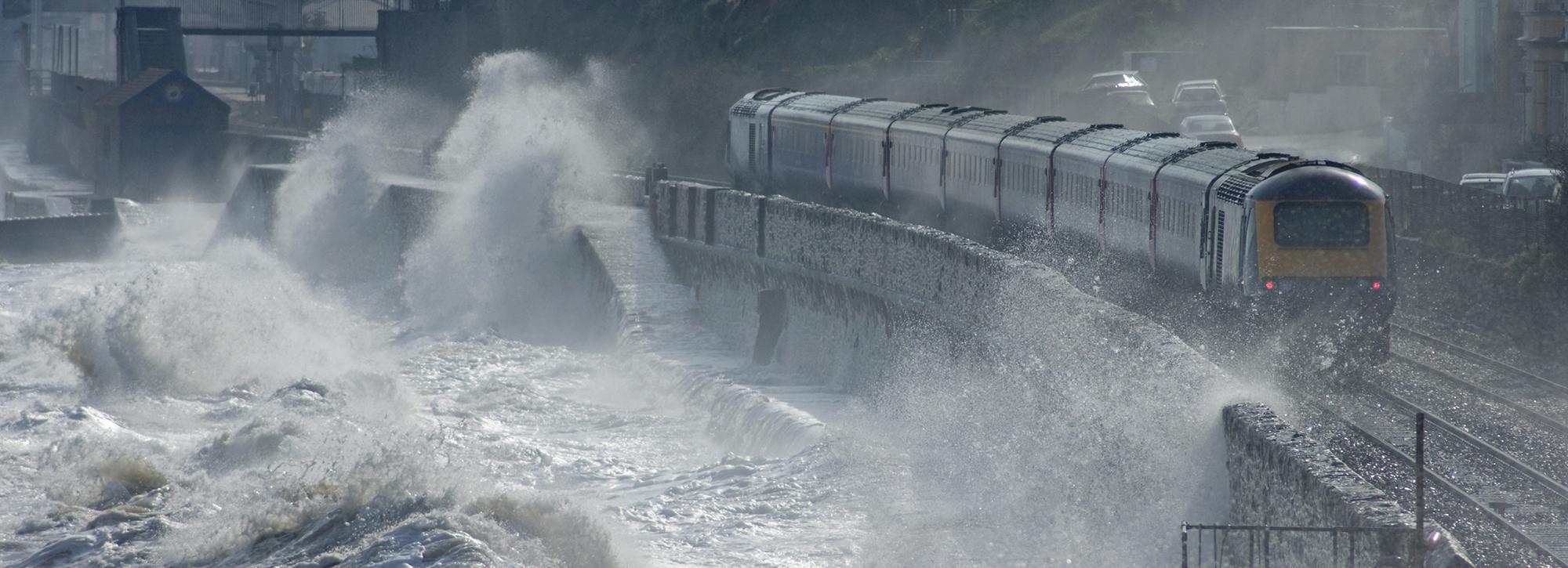
Waves overtopping the sea wall at Dawlish

Working with coastal processes to protect people, places and nature.

Around 40% of the world’s population lives near the coast, where rising sea levels and more extreme storms are increasing flood and erosion risk. We help clients understand, manage and adapt to these hazards through integrated coastal engineering, modelling and decision support. Our work strengthens resilience, protects communities and infrastructure, and supports sustainable coastal management in the face of climate uncertainty.

Climate and sector pressures shaping coastal risk

Coastal environments are dynamic, complex and increasingly stressed by climate change. Sea level rise, higher storm surges, cyclones and storm clusters are accelerating flooding and erosion. Existing defences may face growing performance and maintenance challenges, while future conditions may exceed historic design assumptions. At the same time, clients must respond to policy, environmental and social expectations for sustainable, adaptable solutions that work with natural processes.

Challenges facing coastal owners and decision‑makers

Coastal authorities, developers and infrastructure owners need to manage risk across multiple time horizons. They need to balance immediate safety with long‑term adaptability, often under significant uncertainty. Key challenges include understanding coastal processes, managing ageing assets, assessing environmental impacts, selecting appropriate hard, soft and eco-engineering options, and justifying investment through robust, transparent evidence.

Applying science‑led coastal engineering and decision support

We bring together decades of international experience, world‑class physical modelling facilities, advanced numerical modelling and extensive coastal data and research. Our teams investigate waves and water levels using joint probability and extreme value analysis, assess storm surge, sediment transport and coastal morphology, and evaluate mitigation measures ranging from conventional defences to beach nourishment, sand engines, managed realignment and eco‑engineering approaches. Transparent decision‑support frameworks help clients compare options, quantify uncertainty and identify adaptive pathways, supporting strategic assessments, masterplanning, scheme appraisal and detailed design.

Outcomes that build resilience and confidence

Our integrated approach delivers safer coastlines, more resilient infrastructure and solutions that perform under future extremes. Clients gain clarity, confidence and flexibility to adapt over time - protecting people, supporting nature and enabling sustainable coastal development.
 

Expertise in coastal hazards & resilience

Coastal engineering design

Design coastal defences and structures at concept, preliminary and detailed stages to ensure safety, constructability and resilience under extreme loading.

Extreme event prediction & forecasting

Predict and forecast waves, storm surge and water levels, including cyclonic events, to support preparedness, emergency planning and resilient design.

Joint probability & extreme value analysis

Deliver state‑of‑the‑art joint probability and extreme value analysis to support response‑based design under extreme coastal conditions.

Coastal hazard & risk assessment 

Assess flooding and erosion risk for present and future climates to support strategic planning and investment decisions.

Climate change impact assessment

Evaluate how climate change affects coastal environments and infrastructure performance over time.

Large-scale spatio-temporal risk analysis

Apply advanced spatio‑temporal statistical models to quantify correlated coastal hazard risk across asset portfolios and clustered storm events.

Numerical & physical modelling

Model hydrodynamics and sediment processes, including physical testing of structures under extreme conditions.

AI-accelerated surrogate modelling

Use AI‑based surrogate models to replicate complex simulations, enabling rapid probabilistic analysis and large‑scale scenario testing.

Sand nourishment & sand engines

Design and evaluate nourishment and sand engine schemes that enhance protection while allowing natural coastal adjustment.

Scour & sediment management

Assess and mitigate scour and sedimentation risks around coastal structures and navigation assets.

Eco-engineering for coastal infrastructure

Eco‑engineering solutions that reduce coastal risk while enhancing ecosystems and asset performance.

Decision support & adaptation planning

Tools and frameworks to evaluate options, manage uncertainty and develop adaptive coastal resilience strategies.

Monitoring & asset management 

Shoreline forecasting, beach management plans and monitoring strategies to support performance and maintenance planning.

Get in touch

Simon Everitt

Coastal Business Development Lead
Contact Profile

Explore more

  • All
  • Project
  • Expertise
  • News
  • Insight
  • Facility

The Thames Barrier – a gateway to innovation

The Thames Barrier – a gateway to innovation

Screenshot of a numerical simulation of an moored hydrogen carrier ship

Designing marine facilities for hydrogen: a risky business?

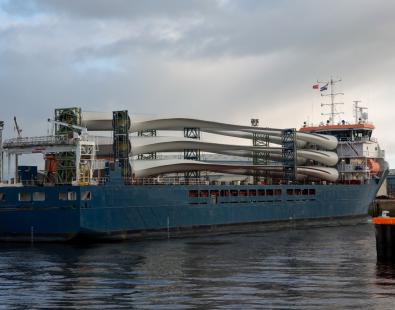
Ship with wind turbines moored at a port

Developing ports for floating offshore wind is an unprecedented opportunity

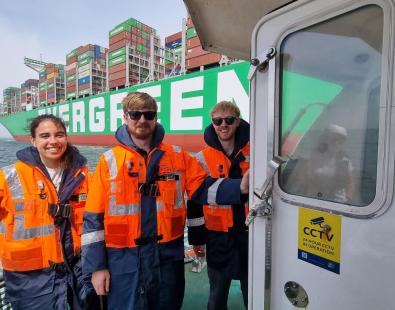
Three graduates with life safety jackets on boats on Port of Felixstowe.

First-hand port experience for our ship simulation graduates

Fogging to eliminate mosquitos

Games people play

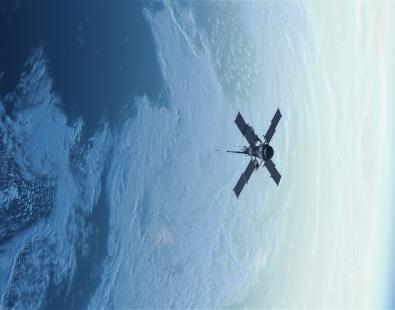
Picture of a satellite in space around the Earth

Flood-impact forecasting: the new frontier for EO

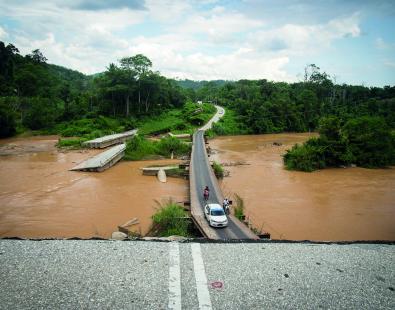
View of a bridge destroyed by flooding in Eastern Malaysia

Malaysia raises the bar for tropical flood forecasting

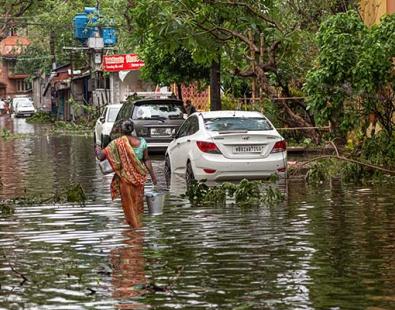
Flooding advances: learning to live with rising waters

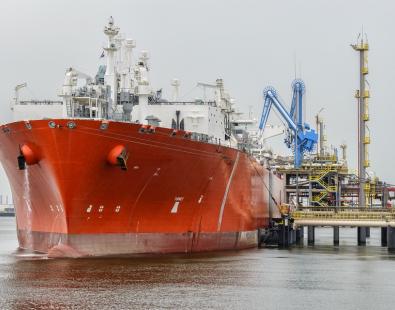
View of a red LNG tanker moored at a port

Ports can thrive in a low carbon future

View of waves crashing on modelled breakwater

Preparing ports for climate change: prevention is better than cure

Aerial view of a reservoir with water

Space technology helps boost dam safety

We are global leaders and independent experts in how to live and work sustainably with water

Social media

  • BlueSky
  • LinkedIn
  • YouTube

Expertise

  • Coastal & marine
  • Energy transition
  • Water & climate
  • Software solutions
  • Equipment & technology

Company

  • About
  • Careers
  • News
  • Insights
  • Sustainability

Legal

  • Privacy & data protection
  • Policies
  • Modern slavery statement
  • Terms & conditions
  • Sitemap
© 2026 HR Wallingford
Contact