Liquified gas & transition fuels
Liquefied gases and transition fuels, including LNG, ammonia and hydrogen, remain critical as energy systems move towards net zero. Their marine transport, storage and handling introduce complex safety, environmental and operational challenges. We support owners, operators, contractors and regulators to plan, design and operate terminals safely and efficiently, combining world‑leading hydrodynamics, modelling and engineering expertise to reduce risk, optimise assets and enable future‑ready infrastructure.
Responding to energy transition and supply pressures
The global shift to net‑zero energy systems is reshaping fuel supply chains and coastal infrastructure. In the near and medium term, liquefied natural gas and other transition fuels continue to play a vital role in energy security. At the same time, investment in lower‑carbon fuels such as ammonia, hydrogen and synthetic fuels is accelerating. These changes bring heightened expectations around safety, environmental performance, resilience and regulatory assurance, alongside growing public scrutiny.
Managing the unique challenges of liquefied and transition fuels
Liquefied gas and transition fuel terminals present a diverse set of risks and uncertainties. Operators must make informed decisions about where to locate new facilities, how to manage safety zones, and how different fuels behave during release, dispersion or marine transfer. Unfamiliar properties - such as ammonia toxicity or novel hydrogen carriers - require robust evidence and specialist expertise. Clients must also plan for long‑term adaptability, including fuel switching, co‑handling, integration with green production and responsible decommissioning.
Applying world‑leading hydrodynamics and engineering expertise
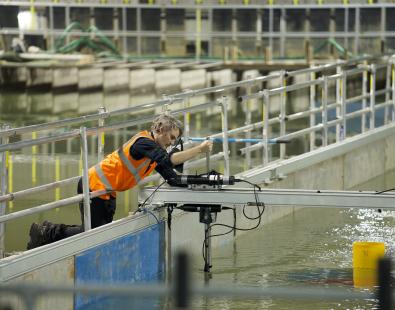
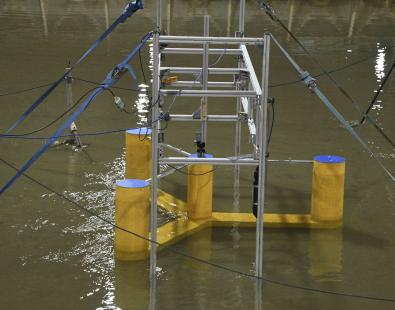
We bring decades of experience in complex liquid and gas terminal design, expanded to address both conventional liquefied gases and emerging low‑carbon fuels. Our teams apply advanced numerical models, real‑time navigation simulation, physical hydraulic modelling and detailed metocean analysis to design safe terminals and optimise operations. We assess dispersion pathways in air and water, plume behaviour, environmental interactions and underwater noise. Our port operations simulation and forecasting systems provide reliable decision support from concept through operation, building confidence in both established and unfamiliar fuel systems.
Enabling resilient, transition‑ready assets
Our work supports safe deployment today and long‑term scalability tomorrow. We help organisations plan transition pathways, model future demand scenarios and design infrastructure that can adapt as technologies, standards and markets evolve. By evaluating options to improve efficiency, reduce emissions, repurpose existing terminals and strengthen climate resilience, we help protect communities, ecosystems and long‑term investment value while supporting a smoother transition to low‑carbon energy systems.
Transitional fuels expertise
Assess siting options for liquefied gas and transition fuel terminals using metocean analysis, surveys and environmental baselining to identify safe and resilient locations.
Advise on investigation of waves, currents, winds, bathymetry, ground conditions and sediments to understand local conditions and project risks.
Provide design data for operational and extreme events using deep expertise and advanced numerical modelling approaches.
Engineering design of terminal layouts, breakwaters, navigation channels and trestles for tanker vessels supported by hydrodynamic modelling and navigation simulation.
CFD and physical modelling to optimise intake and outfall systems, addressing recirculation, cooling and environmental performance.
Model dispersion of liquefied and transition fuels to define risk zones, support safety planning and regulatory compliance.
Design protection against erosion, sedimentation, storm impacts, climate change effects and extreme events, including tsunami hazards.
Assess plume dispersion, dredging impacts, thermal discharge and underwater noise using integrated hydrodynamic and environmental models.
Use our PortOps system to optimise vessel scheduling, storage capacity, facility performance and supply chain constraints.
Apply world leading navigation simulation and marine traffic modelling to assess manoeuvring risk and safe operability.
Provide operational forecasting for metocean conditions, vessel response, mooring loads and under keel clearance.
Evaluate pathways to scale up low carbon fuels, future proof facilities and integrate alternative fuels or production systems.
Support safe decommissioning of ageing assets and adapting LNG or petrochemical terminals for hydrogen or ammonia use.
Get in touch
Iain Gunn