Floating offshore wind towing research to feed into collaboration
We are supplying data from our trials to the TOWIN project, which is led by SINTEF and executed by a group of research institutes and universities, with support from classification societies and industry partners.
The partners will be researching if and how existing towing procedures can be altered to make them quicker and cheaper, while remaining safe. Current procedures have largely been adapted from oil and gas operations, but these be may be more stringent than needed for FOWTs, which have significant differences from oil and gas structures in terms of geometry, mass, and operational requirements.
The project will investigate whether towing speeds and weather limits can be increased, to make towing time quicker for installing and maintaining FOWTs. By providing the floating offshore wind industry with a better understanding of towing dynamics, validated numerical methods, and standardised guidelines, the research may lead to reduction in time resources for installation and the levelized cost of energy (LCOE) for FOWTs.
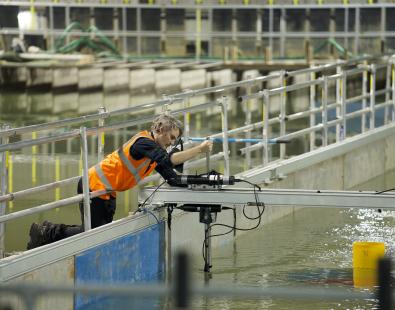
For our in-kind contribution to the project, we are sharing data from physical modelling trials that we conducted in our UK laboratories, funded via our internal research programme. We have already used this data to enhance the hydrodynamic response of floating turbines in our navigation simulator.
We began by developing a generic modelling framework for novel floating offshore wind (FLOW) structures during tow-out operations based on their physical characteristics, and worked collaboratively with UK port clients to use these models in high level navigation simulation studies and hazard assessments.
Physical modelling trials provided the data to validate the assumptions used in the modelling framework and, secondly, to enhance our understanding of the response of FLOW structures to towing forces and environmental effects – winds, waves, currents, shallow and confined waters, etc.
The TOWIN Joint Industry Project began in December 2025 and will continue until 2027.
Find our more on the project website
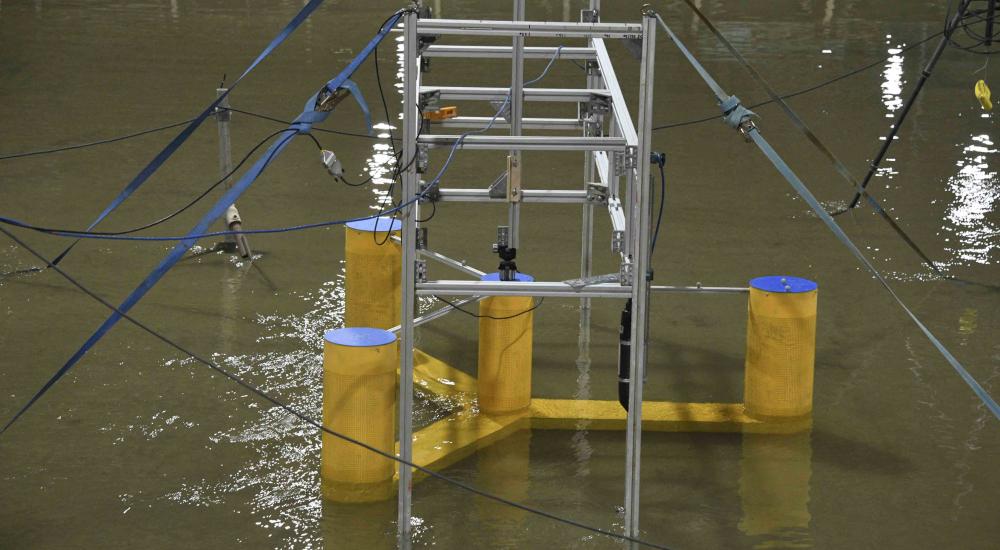
Trials in our modelling hall.
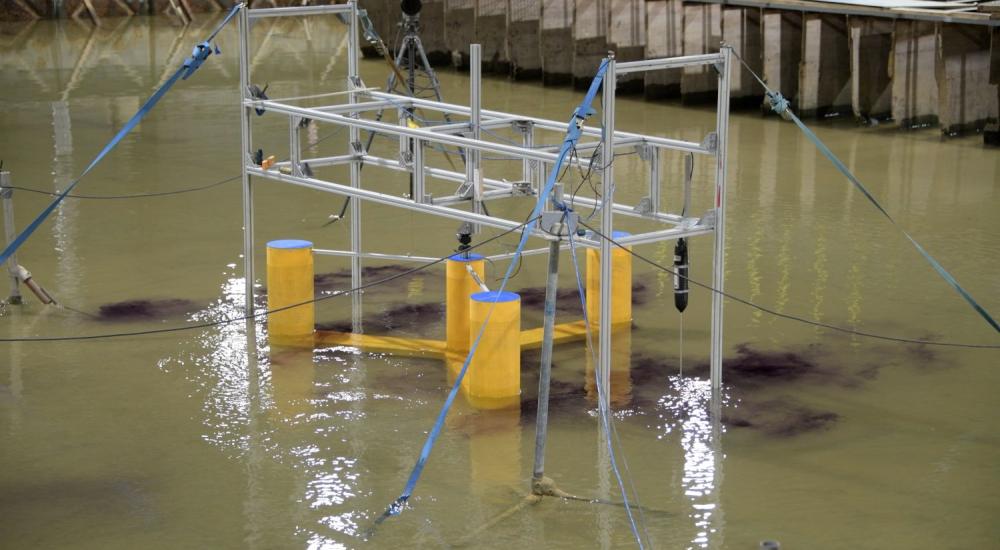
Trials in our modelling hall with dye showing currents.
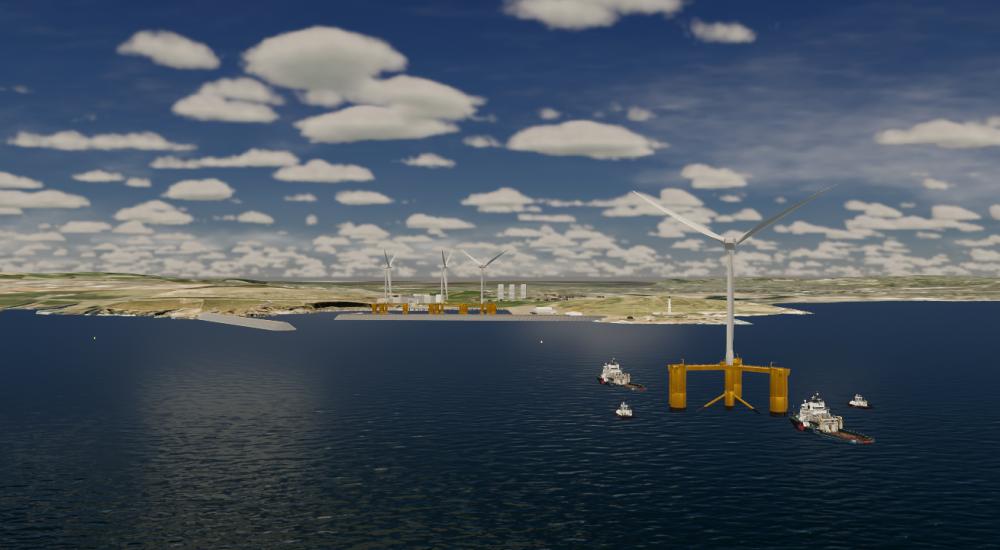
Image from our navigation simulation
Want to know more?
Get in touch
Helen Wilcox