Secondary nav 2022

  • Equipment
  • Software
  • Training

Main navigation 2022

  • About
    • About HR Wallingford
    • Our leadership
    • Our people
    • Our impact
      • Annual report & financial statements
      • Gender pay
      • Social impact
      • Sustainability
    • Our story
    • News
    • Insight articles
    • Policies
  • Projects
  • Expertise
    • Coastal & marine sustainability
      • Coastal hazards & resilience
      • Coastal morphology & sediment dynamics
      • Dredging and sediment management
      • Marine & coastal environment
      • Ports, harbours and shipping
      • Subsea engineering
      • Waterfronts, marinas and resorts
    • Energy transition
      • Fixed offshore wind
      • Floating offshore wind
      • Liquified gas & transition fuels
      • Nuclear
      • Wave, tidal, solar & hydropower
    • Water & climate resilience
      • Dams & reservoirs
      • Freshwater environment
      • Integrated flood management
      • Surface water systems
      • Water management for climate resilient development
      • Water supply & drought resilience
  • Facilities
    • Explore our facilities
    • Ship simulation
      • Australia Ship Simulation Centre
      • UK Ship Simulation Centre
    • Physical modelling
      • Fast Flow Facility
      • Tsunami simulator
      • Volumetric flow flume
      • Wave basins
      • Wave flumes
      • Erosion rate measurement
      • Water rescue training
  • Careers
    • Careers overview
    • Working at HR Wallingford
    • Job opportunities
  • Contact
  • About
    • About HR Wallingford
    • Our leadership
    • Our people
    • Our impact
      • Annual report & financial statements
      • Gender pay
      • Social impact
      • Sustainability
    • Our story
    • News
    • Insight articles
    • Policies
  • Projects
  • Expertise
    • Coastal & marine sustainability
      • Coastal hazards & resilience
      • Coastal morphology & sediment dynamics
      • Dredging and sediment management
      • Marine & coastal environment
      • Ports, harbours and shipping
      • Subsea engineering
      • Waterfronts, marinas and resorts
    • Energy transition
      • Fixed offshore wind
      • Floating offshore wind
      • Liquified gas & transition fuels
      • Nuclear
      • Wave, tidal, solar & hydropower
    • Water & climate resilience
      • Dams & reservoirs
      • Freshwater environment
      • Integrated flood management
      • Surface water systems
      • Water management for climate resilient development
      • Water supply & drought resilience
  • Facilities
    • Explore our facilities
    • Ship simulation
      • Australia Ship Simulation Centre
      • UK Ship Simulation Centre
    • Physical modelling
      • Fast Flow Facility
      • Tsunami simulator
      • Volumetric flow flume
      • Wave basins
      • Wave flumes
      • Erosion rate measurement
      • Water rescue training
  • Careers
    • Careers overview
    • Working at HR Wallingford
    • Job opportunities
  • Contact
  1. Home >
  2. Projects >
  3. TE2100: managing flood risk on the Thames Estuary
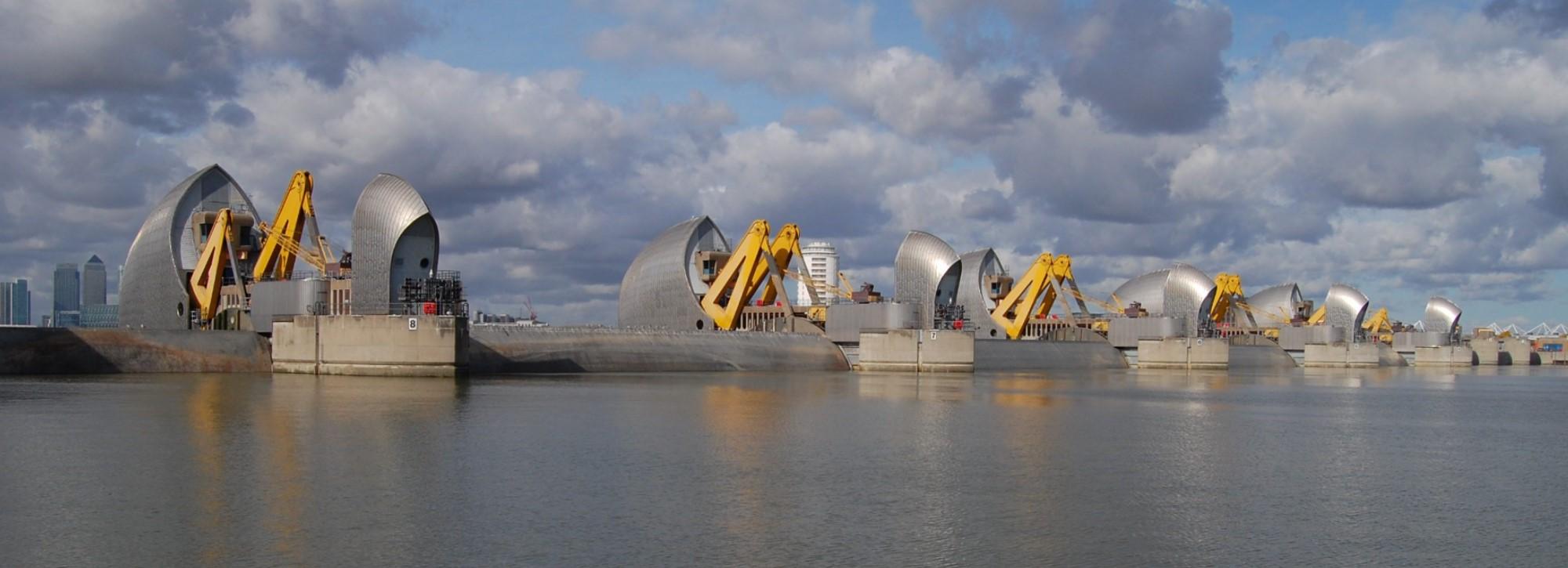
TE2100: managing flood risk on the Thames Estuary

Share

In order to plan for the future changes in flood risk and the need to upgrade the flood management system, we worked with the Environment Agency on the Thames Estuary 2100 project (TE2100) to develop a plan for managing flood risk on the Thames estuary over the next 100 years.

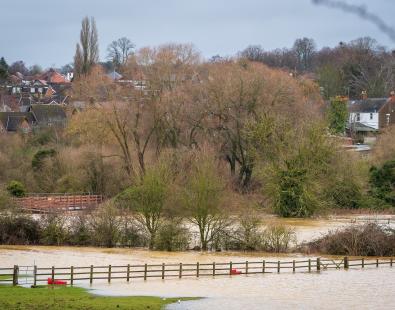
Flood risk on the Thames Estuary is increasing. Climate change is causing increases in sea level and river flows, and new development is taking place on the floodplain.  Recent and ongoing developments include the Olympic Park, Canary Wharf and the Thames Gateway Port.

In addition, the major flood management system for the tidal Thames is deteriorating. Many of the defences were built following the 1953 floods, and will reach the end of their design lives during the next 50 years. The system includes the Thames Barrier, over 300 km of fixed defences and numerous smaller structures. To plan for the expected future changes in flood risk and the need to upgrade the flood management system, the Environment Agency has undertaken the Thames Estuary 2100 project (TE2100) in which a plan was developed for managing flood risk on the Thames estuary over the next 100 years.

We undertook a range of studies to improve the understanding of the estuary including flood risk, sediment transport and estuary morphology. We assessed the joint probability of flooding from different sources and developed a flood risk model that takes account of the condition and deterioration of the defences.

Working with the Environment Agency’s in-house team, HR Wallingford then developed flood risk management options for a range of different climate change scenarios. Each option includes a sequence of interventions at different times throughout the century, depending on the rate of climate change.

We developed a programme of studies to assess the feasibility of the options. Studies undertaken by HR Wallingford during this phase including flood modelling to determine flood defence levels, design of habitat creation areas, outline designs of potential new barriers and barrages, and predictions of morphological change in the estuary. We used these results to refine the options and develop the final options for appraisal.

The selected option is a combination of improvements to the existing flood management system followed by a major improvement to the system later in the twenty-first century.  This will either include a new Thames Barrier or upgrading of the existing Thames Barrier. 

We then assisted the Environment Agency with public consultation and finalisation of the Plan during 2010 to 2012. The Plan was approved by the government in 2012 and is now being implemented. We produced a range of guidance and information documents to assist with the implementation of the Plan during the period 2012 to 2015.  We have also continued to advise on the requirements of the Plan for existing and planned developments along the Thames estuary.

Want to know more?

Embedding new science into practice – lessons from the development and application of a Performance-based Asset Management System, FLOODrisk 2008

Get in touch

John Baugh

Principal Scientist
Contact Profile

Explore more

  • All
  • Project
  • Expertise
  • News
  • Insight
  • Facility

Garden demonstrating flood resilience opens in our business park

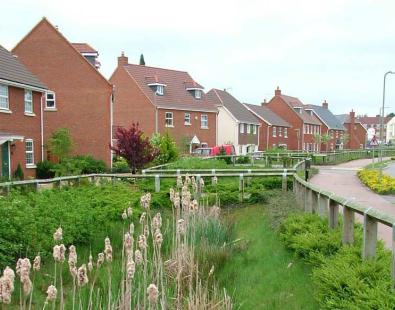
SuDS feature in front of building in Howbery Park

Ofwat to support the new Rainwater Management Platform

View of Fast Flow Facilities, where tsunamis are being recreated a scale

New film released – Tsunamis: towards the next breakthrough

flooded river in Northampton village after heavy rains

Northamptonshire project celebrated for Digital Excellence at the Flood & Coast Awards 2024

Manchester Prize selects Sapphire to help rivers sparkle

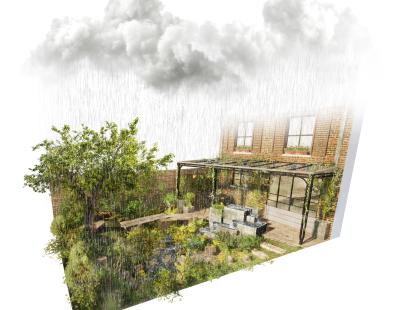
View of a flood resilient garden under rainy day

A flood resilient garden to support a changing climate

View of suds gardens in new housing developments

OFWAT Innovation Fund will help SuDS sink in

Artistic view of the Flood resilient garden rain

Chelsea’s Flood Resilient Garden to take root at HR Wallingford

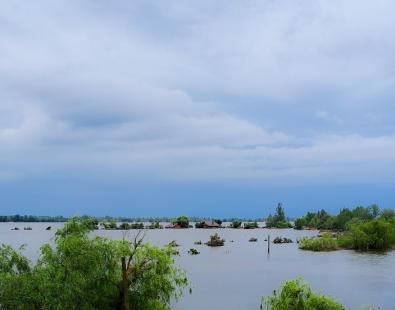
View of flooded area after breach of dam Kakhovka, Ukraine

Rapid study of Kakhovka Dam breach impacts will support biodiversity’s recovery

Group of people waiting to enter the BE Flood Smart building at Howbery Park

Be Flood Smart launches at HR Wallingford

Screenshot of Bahamas Storm Surge Atlas

Storm Surge Atlas brings hope to hurricane-hit islands

Testing the Hadley FloodSAFE house in our flood testing facilities

Innovative FloodSafe house moves in

We are global leaders and independent experts in how to live and work sustainably with water

Social media

  • BlueSky
  • LinkedIn
  • YouTube

Expertise

  • Coastal & marine
  • Energy transition
  • Water & climate
  • Software solutions
  • Equipment & technology

Company

  • About
  • Careers
  • News
  • Insights
  • Sustainability

Legal

  • Privacy & data protection
  • Policies
  • Modern slavery statement
  • Terms & conditions
  • Sitemap
© 2026 HR Wallingford
Contact