Graham Siggers
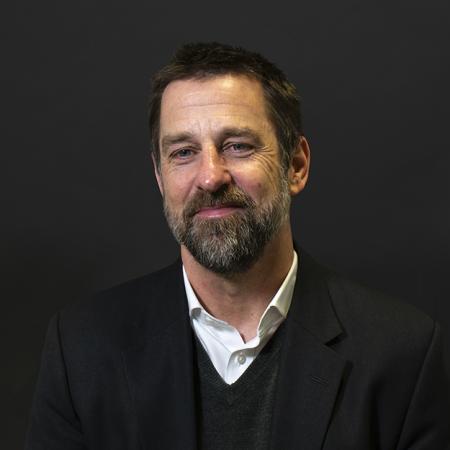
Graham Siggers leads HR Wallingford’s Coasts & Oceans division, delivering evidence‑based modelling and engineering solutions that strengthen resilience across coastal, estuarine and offshore environments.
Biography
Graham Siggers is Director of Coasts & Oceans at HR Wallingford, responsible for leading multidisciplinary teams delivering research, consultancy, and innovation across the coastal, estuarine, and offshore environment. He oversees programmes spanning hydrodynamics, metocean analysis, coastal resilience, and large scale numerical modelling.
Graham began his career after completing a degree in marine physics, followed by work at sea as a Field Geophysicist QC. He went on to obtain a Master of Science from Imperial College London, where he strengthened his expertise in fluid dynamics, coastal processes, and numerical modelling. He subsequently joined the Centre for Geophysical Flows at the University of Bristol as a Postgraduate Researcher.
His consultancy career started at Babtie Group as a coastal modeller, where he gained experience in hydrodynamic and coastal modelling. He later broadened his technical scope at Binnie Black & Veatch, contributing to coastal engineering design, flood risk studies, and project delivery. Following a period at ABPmer, he joined HR Wallingford in 2003.
Since then, Graham has played a central role in advancing coastal and ocean engineering capabilities, guiding the development of modelling tools and supporting government, infrastructure operators, and industry clients in understanding environmental risk. He is recognised for combining scientific rigour with practical engineering insight, ensuring evidence based solutions to complex physical challenges. His leadership continues to shape HR Wallingford’s contribution to coastal and marine resilience.

Get to know Graham
What do you enjoy most about working at HR Wallingford?
I value working alongside some of the brightest minds in oceanography and coastal engineering. There is an open culture of scientific challenge and discussion at every level, which creates an environment where ideas can be tested, improved and applied. That collaborative approach helps us understand clients’ challenges and develop solutions that support sustainable ways of living and working with water.
What advice would you give to someone considering a career in this field?
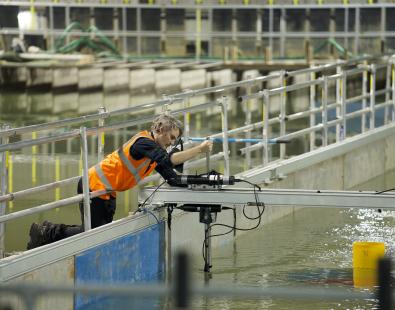
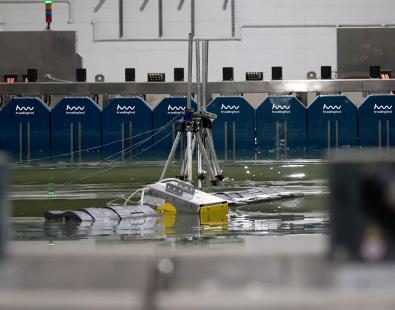
If you enjoy applied mathematics or physical processes, and want to use computer models or physical scale models to solve problems linked to coasts, estuaries and rivers, this is an excellent path. I’d encourage anyone interested to visit our large campus on the River Thames in Oxfordshire, UK. You’ll find a unique mix of world class facilities, collaborative teams and a great riverside setting.