Modelling the burial and exposure of unexploded ordnance

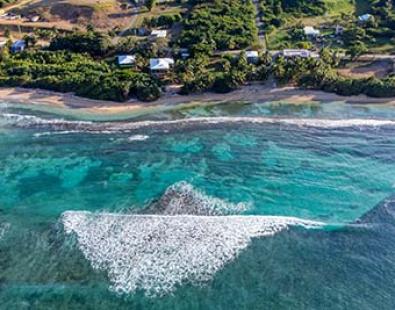
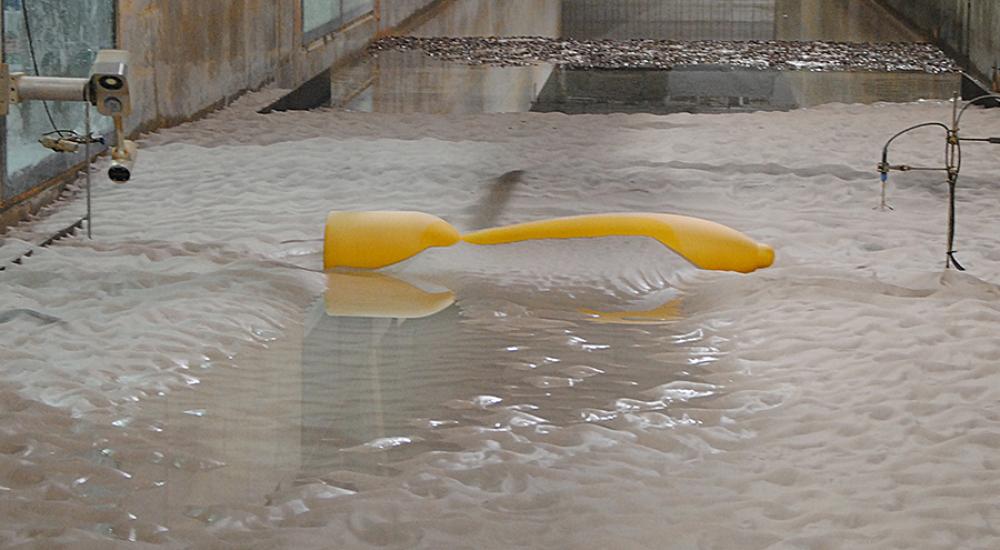
Significant amounts of unexploded ordnance (UXO) and discarded military munitions are present on or beneath the seabed. The action of waves and currents causes them to become buried due to scour, settlement, and sediment accretion, or exposed when the bed sediment undergoes rapid or severe erosion. Prediction of UXO burial and exposure requires information on waves and currents, and seabed changes caused by hydrodynamic forcing mechanisms.
Our research with Corvus Works under the USA’s Munitions Response Program of the Strategic Environmental Research and Development Program developed software tools that enable site managers to simulate the burial, re-exposure, and mobilization of seafloor objects.
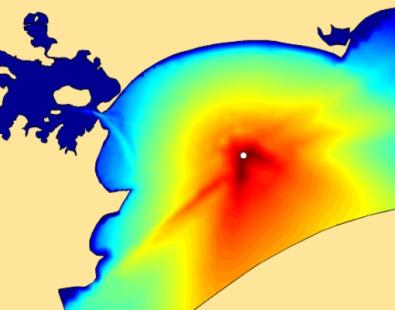
During our research, we used large-scale hydrodynamic and sediment transport models and simulated the environmental conditions on the former Fort Pierce Naval Amphibious Training Base in Florida for the year 2016, including atmospheric and hydrodynamic variables of Hurricane Matthew.
These simulations generated essential data for the application of a new scour burial model DRAMBUIE 3.0, and for the design and testing of site management tool, UXOmob. The software provides site managers accurate predictions at sensible spatial and temporal scales within an acceptable timeframe, typically within a few days, allowing them to make informed decisions regarding ongoing monitoring, significantly reducing the frequency of repeated and expensive surveys for those locations where the risk of object migration is low under the prevailing environmental conditions.
Site visit photographs
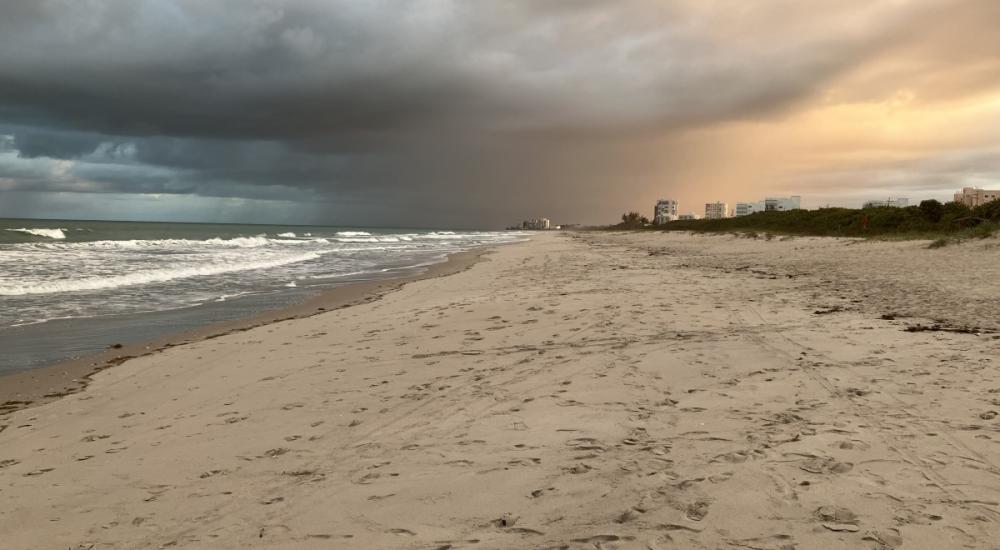
Avalon Beach, looking south

Middle beach looking north

Round Island Park, looking south

South Beach Park lower beach, looking south
Burial of discrete exemplar UXOs in South Beach

Instantaneous burial depths before and after the passage of Matthew 2016, shown by the colour contours. Initial and final positions of UXOs, shown by the dashed and solid red circles, respectively.

Location of UXOs relative to the beachface
Contact our project lead
Richard Whitehouse