Secondary nav 2022

  • Equipment
  • Software
  • Training

Main navigation 2022

  • About
    • About HR Wallingford
    • Our leadership
    • Our people
    • Our impact
      • Annual report & financial statements
      • Gender pay
      • Social impact
      • Sustainability
    • Our story
    • News
    • Insight articles
    • Policies
  • Projects
  • Expertise
    • Coastal & marine sustainability
      • Coastal hazards & resilience
      • Coastal morphology & sediment dynamics
      • Dredging and sediment management
      • Marine & coastal environment
      • Ports, harbours and shipping
      • Subsea engineering
      • Waterfronts, marinas and resorts
    • Energy transition
      • Fixed offshore wind
      • Floating offshore wind
      • Liquified gas & transition fuels
      • Nuclear
      • Wave, tidal, solar & hydropower
    • Water & climate resilience
      • Dams & reservoirs
      • Freshwater environment
      • Integrated flood management
      • Surface water systems
      • Water management for climate resilient development
      • Water supply & drought resilience
  • Facilities
    • Explore our facilities
    • Ship simulation
      • Australia Ship Simulation Centre
      • UK Ship Simulation Centre
    • Physical modelling
      • Fast Flow Facility
      • Tsunami simulator
      • Volumetric flow flume
      • Wave basins
      • Wave flumes
      • Erosion rate measurement
      • Water rescue training
  • Careers
    • Careers overview
    • Working at HR Wallingford
    • Job opportunities
  • Contact
  • About
    • About HR Wallingford
    • Our leadership
    • Our people
    • Our impact
      • Annual report & financial statements
      • Gender pay
      • Social impact
      • Sustainability
    • Our story
    • News
    • Insight articles
    • Policies
  • Projects
  • Expertise
    • Coastal & marine sustainability
      • Coastal hazards & resilience
      • Coastal morphology & sediment dynamics
      • Dredging and sediment management
      • Marine & coastal environment
      • Ports, harbours and shipping
      • Subsea engineering
      • Waterfronts, marinas and resorts
    • Energy transition
      • Fixed offshore wind
      • Floating offshore wind
      • Liquified gas & transition fuels
      • Nuclear
      • Wave, tidal, solar & hydropower
    • Water & climate resilience
      • Dams & reservoirs
      • Freshwater environment
      • Integrated flood management
      • Surface water systems
      • Water management for climate resilient development
      • Water supply & drought resilience
  • Facilities
    • Explore our facilities
    • Ship simulation
      • Australia Ship Simulation Centre
      • UK Ship Simulation Centre
    • Physical modelling
      • Fast Flow Facility
      • Tsunami simulator
      • Volumetric flow flume
      • Wave basins
      • Wave flumes
      • Erosion rate measurement
      • Water rescue training
  • Careers
    • Careers overview
    • Working at HR Wallingford
    • Job opportunities
  • Contact
  1. Home >
  2. Projects >
  3. Combating land degradation in Central Asia
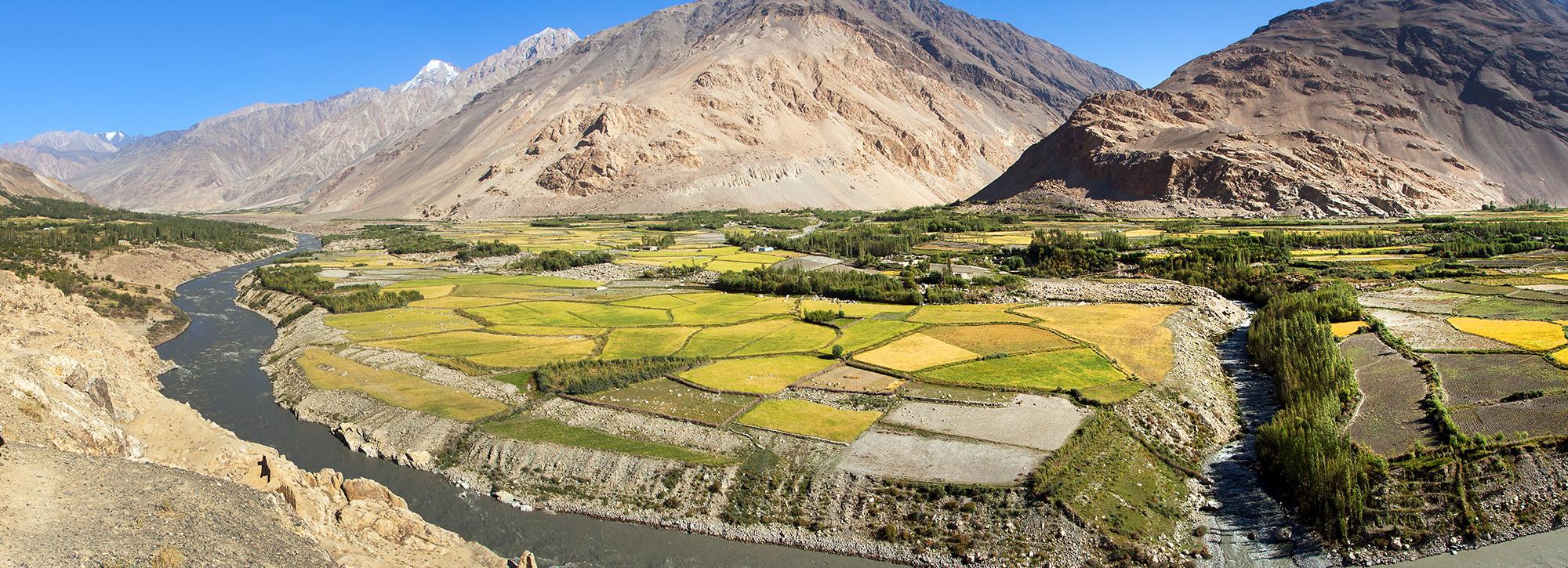
Combating land degradation in Central Asia

Share

Central Asia is facing severe land degradation, affecting 20% of its land and threatening food security, biodiversity, and socioeconomic stability. We assessed the drivers, impacts, and potential solutions for sustainable land management in the region.

The region’s agricultural sector, vital for livelihoods, is suffering from soil salinisation, erosion, and reduced productivity due to unsustainable farming practices and climate change. With over 30% of the population directly affected, the challenge is to reverse land degradation while promoting sustainable agricultural practices. Increased water scarcity and transboundary water management issues exacerbate the situation, highlighting the need for cooperative strategies across the five Central Asian countries. The opportunity lies in developing local capacity for sustainable land management practices, integrating gender perspectives, and establishing sustainable financing mechanisms to empower local communities, ensuring long-term ecological and economic resilience.

We carried out a comprehensive assessment of land degradation hotspots in Central Asia, focussing on the drivers, socioeconomic impacts, and viable restoration pathways. Our approach integrated scientific research and traditional knowledge, aiming to empower local communities with sustainable land use practices that align with environmental and economic goals. This work was funded by the World Bank and led by Metroeconomica. 

Key recommendations

Short-term
  • Raise awareness of land degradation in local languages.
  • Develop gender-sensitive training programs for sustainable land management.
  • Implement targeted land restoration strategies focussing on sustainable agricultural practices and soil management.
  • Enhance water management, promote crop diversification, and restore native vegetation.
Medium-term
  • Integrate land degradation topics into educational curricula.
  • Establish peer-to-peer learning networks for stakeholders in agriculture.
  • Collaborate with local governments and international partners to ensure scalability and sustainability.
Long-term
  • Harmonise regional policies on sustainable land management.
  • Develop frameworks for sustainable financing, including a regional carbon market.

These interventions aim to mitigate the effects of land degradation, empower local communities, and promote sustainable agricultural practices that boost productivity and ecological health.

The project is expected to deliver significant economic, social, and environmental benefits. By implementing sustainable land management practices, agricultural productivity can improve, potentially increasing crop yields by 15% in affected areas. This will enhance food security for approximately 21 million people, decrease poverty levels, and restore vital ecosystem services, contributing to carbon sequestration and biodiversity conservation. The establishment of a regional carbon market will further incentivize sustainable practices, ensuring ongoing financial support for restoration initiatives and fostering regional cooperation in water and land management. Ultimately, this project aligns with the goal of living and working sustainably with water in Central Asia.

Contact our project lead

Gina Tsarouchi

Principal engineer and project manager
Contact Profile

Explore more

  • All
  • Project
  • Expertise
  • News
  • Insight
  • Facility

National leakage centre scoped out

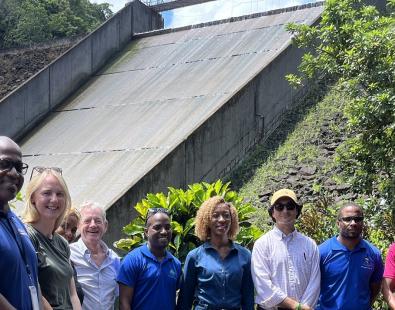
People with John Compton dam

Project to ensure future water security for Saint Lucia

Manchester Prize selects Sapphire to help rivers sparkle

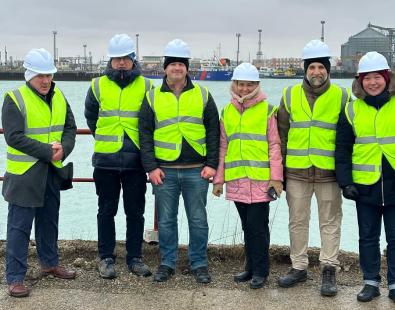
HR Wallingford and World Bank staff in high visibility jackets standing for a picture in Port of Aktau on Caspian sea

Caspian Sea water levels study to inform Aktau Port adaptation

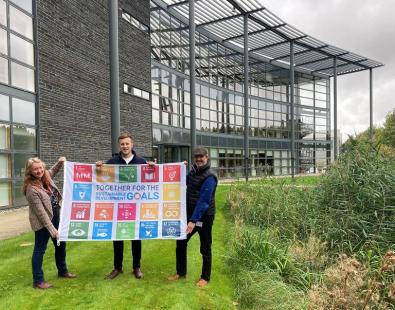
Three people holding SDG flag in front of office building in Howbery Park, Oxfordshire

Flag raised in support of UN Sustainable Development Goals

Screenshot of Bahamas Storm Surge Atlas

Storm Surge Atlas brings hope to hurricane-hit islands

Testing the Hadley FloodSAFE house in our flood testing facilities

Innovative FloodSafe house moves in

Diagram of national leakage centre

National leakage centre receives funding

Flood protection approach draws on statistical method from medicine

Picture of a satellite in space around the Earth

Space data to secure vital healthcare supply chains

Chalk stream west stow

Project to assess optimal ways of protecting precious chalk streams

Web-based tool to efficiently target water leaks

We are global leaders and independent experts in how to live and work sustainably with water

Social media

  • BlueSky
  • LinkedIn
  • YouTube

Expertise

  • Coastal & marine
  • Energy transition
  • Water & climate
  • Software solutions
  • Equipment & technology

Company

  • About
  • Careers
  • News
  • Insights
  • Sustainability

Legal

  • Privacy & data protection
  • Policies
  • Modern slavery statement
  • Terms & conditions
  • Sitemap
© 2026 HR Wallingford
Contact