Secondary nav 2022

  • Equipment
  • Software
  • Training

Main navigation 2022

  • About
    • About HR Wallingford
    • Our leadership
    • Our people
    • Our impact
      • Annual report & financial statements
      • Gender pay
      • Social impact
      • Sustainability
    • Our story
    • News
    • Insight articles
    • Policies
  • Projects
  • Expertise
    • Coastal & marine sustainability
      • Coastal hazards & resilience
      • Coastal morphology & sediment dynamics
      • Dredging and sediment management
      • Marine & coastal environment
      • Ports, harbours and shipping
      • Subsea engineering
      • Waterfronts, marinas and resorts
    • Energy transition
      • Fixed offshore wind
      • Floating offshore wind
      • Liquified gas & transition fuels
      • Nuclear
      • Wave, tidal, solar & hydropower
    • Water & climate resilience
      • Dams & reservoirs
      • Freshwater environment
      • Integrated flood management
      • Surface water systems
      • Water management for climate resilient development
      • Water supply & drought resilience
  • Facilities
    • Explore our facilities
    • Ship simulation
      • Australia Ship Simulation Centre
      • UK Ship Simulation Centre
    • Physical modelling
      • Fast Flow Facility
      • Tsunami simulator
      • Volumetric flow flume
      • Wave basins
      • Wave flumes
      • Erosion rate measurement
      • Water rescue training
  • Careers
    • Careers overview
    • Working at HR Wallingford
    • Job opportunities
  • Contact
  • About
    • About HR Wallingford
    • Our leadership
    • Our people
    • Our impact
      • Annual report & financial statements
      • Gender pay
      • Social impact
      • Sustainability
    • Our story
    • News
    • Insight articles
    • Policies
  • Projects
  • Expertise
    • Coastal & marine sustainability
      • Coastal hazards & resilience
      • Coastal morphology & sediment dynamics
      • Dredging and sediment management
      • Marine & coastal environment
      • Ports, harbours and shipping
      • Subsea engineering
      • Waterfronts, marinas and resorts
    • Energy transition
      • Fixed offshore wind
      • Floating offshore wind
      • Liquified gas & transition fuels
      • Nuclear
      • Wave, tidal, solar & hydropower
    • Water & climate resilience
      • Dams & reservoirs
      • Freshwater environment
      • Integrated flood management
      • Surface water systems
      • Water management for climate resilient development
      • Water supply & drought resilience
  • Facilities
    • Explore our facilities
    • Ship simulation
      • Australia Ship Simulation Centre
      • UK Ship Simulation Centre
    • Physical modelling
      • Fast Flow Facility
      • Tsunami simulator
      • Volumetric flow flume
      • Wave basins
      • Wave flumes
      • Erosion rate measurement
      • Water rescue training
  • Careers
    • Careers overview
    • Working at HR Wallingford
    • Job opportunities
  • Contact
  1. Home >
  2. Projects >
  3. Water supply resilience for Addis Ababa

Water supply resilience for Addis Ababa

Share

As part of the Ethiopia Water Resilience Diagnostic initiative, our aim was to enhance water supply resilience for Addis Ababa and surrounding regions, addressing critical water shortages and infrastructure inefficiencies to support sustainable urban growth and development.

Ethiopia’s Upper Awash basin is home to over 8 million people, and faces severe water supply challenges due to rapid population growth, increased industrial demands, and inadequate infrastructure. 

Addis Ababa, Ethiopia’s capital city, relies on water supply from the Upper Awash, but the region struggles with a high water deficit. Domestic demand in Addis Ababa is projected to surpass sustainable supply levels by 2030. Additionally, climate change introduces uncertainties affecting water availability, further stressing an already vulnerable system. Strategic investments and integrated water resource management are urgently needed.

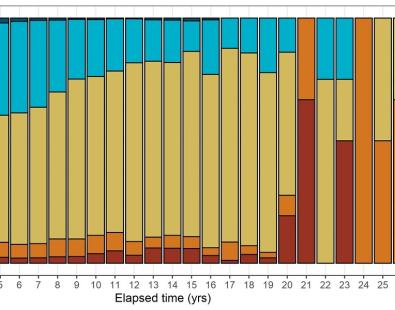
We aimed to identify and prioritise interventions that enhance resilience, align with multisectoral goals, and ensure sustainable water access for both urban and rural populations, while also addressing deteriorating water quality. To tackle these interconnected challenges, the project employed the Decision-Making Under Deep Uncertainty (DMDU) methodology, evaluating over 60,000 potential future scenarios related to climate and demand uncertainties. By identifying critical uncertainties and modelling 14 policy levers, the team assessed the performance of various interventions under diverse future conditions.

Key interventions included large-scale water supply projects like the Gerbi and Sibilu dams, Non-Revenue Water reduction strategies, and wastewater reclamation initiatives. The aim was not merely to implement these interventions but to create an adaptive roadmap that enhances the region’s resilience to future water supply challenges. The interventions were prioritised by their potential impact on water availability, reliability of supply, and overall system robustness, ensuring that the chosen strategies align with both immediate needs and long-term sustainability goals. By focussing on an integrated, multisectoral approach, our aim was to improve water access and foster collaboration among stakeholders, thereby enhancing institutional capacity and governance in water management.

The expected impact of this initiative is significant, with potential economic, social, and environmental benefits. By implementing the prioritised interventions, it is anticipated that Addis Ababa can achieve a more reliable water supply, reducing the annual water deficit from over 60% to below 40% by 2030. This will bolster economic activities in the region and improve public health by ensuring better water quality and availability for residents. Furthermore, enhancing water resource management contributes to the sustainability of groundwater systems, promoting ecological health and resilience against climate change. Overall, these outcomes support Ethiopia’s goal of sustainable water management, fostering a resilient future for its growing urban populations.

This World Bank funded project was led by Arup in collaboration with HR Wallingford, NexSys Analytics 
and Echnoserve.

Contact our project lead

Gina Tsarouchi

Principal engineer and project manager
Contact Profile

Explore more

  • All
  • Project
  • Expertise
  • News
  • Insight
  • Facility

National leakage centre scoped out

People with John Compton dam

Project to ensure future water security for Saint Lucia

Manchester Prize selects Sapphire to help rivers sparkle

HR Wallingford and World Bank staff in high visibility jackets standing for a picture in Port of Aktau on Caspian sea

Caspian Sea water levels study to inform Aktau Port adaptation

Three people holding SDG flag in front of office building in Howbery Park, Oxfordshire

Flag raised in support of UN Sustainable Development Goals

Screenshot of Bahamas Storm Surge Atlas

Storm Surge Atlas brings hope to hurricane-hit islands

Testing the Hadley FloodSAFE house in our flood testing facilities

Innovative FloodSafe house moves in

Diagram of national leakage centre

National leakage centre receives funding

Flood protection approach draws on statistical method from medicine

Picture of a satellite in space around the Earth

Space data to secure vital healthcare supply chains

Chalk stream west stow

Project to assess optimal ways of protecting precious chalk streams

Web-based tool to efficiently target water leaks

We are global leaders and independent experts in how to live and work sustainably with water

Social media

  • BlueSky
  • LinkedIn
  • YouTube

Expertise

  • Coastal & marine
  • Energy transition
  • Water & climate
  • Software solutions
  • Equipment & technology

Company

  • About
  • Careers
  • News
  • Insights
  • Sustainability

Legal

  • Privacy & data protection
  • Policies
  • Modern slavery statement
  • Terms & conditions
  • Sitemap
© 2026 HR Wallingford
Contact