Secondary nav 2022

  • Equipment
  • Software
  • Training

Main navigation 2022

  • About
    • About HR Wallingford
    • Our leadership
    • Our people
    • Our impact
      • Annual report & financial statements
      • Gender pay
      • Social impact
      • Sustainability
    • Our story
    • News
    • Insight articles
    • Policies
  • Projects
  • Expertise
    • Coastal & marine sustainability
      • Coastal hazards & resilience
      • Coastal morphology & sediment dynamics
      • Dredging and sediment management
      • Marine & coastal environment
      • Ports, harbours and shipping
      • Subsea engineering
      • Waterfronts, marinas and resorts
    • Energy transition
      • Fixed offshore wind
      • Floating offshore wind
      • Liquified gas & transition fuels
      • Nuclear
      • Wave, tidal, solar & hydropower
    • Water & climate resilience
      • Dams & reservoirs
      • Freshwater environment
      • Integrated flood management
      • Surface water systems
      • Water management for climate resilient development
      • Water supply & drought resilience
  • Facilities
    • Explore our facilities
    • Ship simulation
      • Australia Ship Simulation Centre
      • UK Ship Simulation Centre
    • Physical modelling
      • Fast Flow Facility
      • Tsunami simulator
      • Volumetric flow flume
      • Wave basins
      • Wave flumes
      • Erosion rate measurement
      • Water rescue training
  • Careers
    • Careers overview
    • Working at HR Wallingford
    • Job opportunities
  • Contact
  • About
    • About HR Wallingford
    • Our leadership
    • Our people
    • Our impact
      • Annual report & financial statements
      • Gender pay
      • Social impact
      • Sustainability
    • Our story
    • News
    • Insight articles
    • Policies
  • Projects
  • Expertise
    • Coastal & marine sustainability
      • Coastal hazards & resilience
      • Coastal morphology & sediment dynamics
      • Dredging and sediment management
      • Marine & coastal environment
      • Ports, harbours and shipping
      • Subsea engineering
      • Waterfronts, marinas and resorts
    • Energy transition
      • Fixed offshore wind
      • Floating offshore wind
      • Liquified gas & transition fuels
      • Nuclear
      • Wave, tidal, solar & hydropower
    • Water & climate resilience
      • Dams & reservoirs
      • Freshwater environment
      • Integrated flood management
      • Surface water systems
      • Water management for climate resilient development
      • Water supply & drought resilience
  • Facilities
    • Explore our facilities
    • Ship simulation
      • Australia Ship Simulation Centre
      • UK Ship Simulation Centre
    • Physical modelling
      • Fast Flow Facility
      • Tsunami simulator
      • Volumetric flow flume
      • Wave basins
      • Wave flumes
      • Erosion rate measurement
      • Water rescue training
  • Careers
    • Careers overview
    • Working at HR Wallingford
    • Job opportunities
  • Contact
  1. Home >
  2. Projects >
  3. DAMSAT

DAMSAT

Share

Minimising the risk of dams failures using remote sensing data.

Funding
UK Space Agency, Global Challenge Research Fund

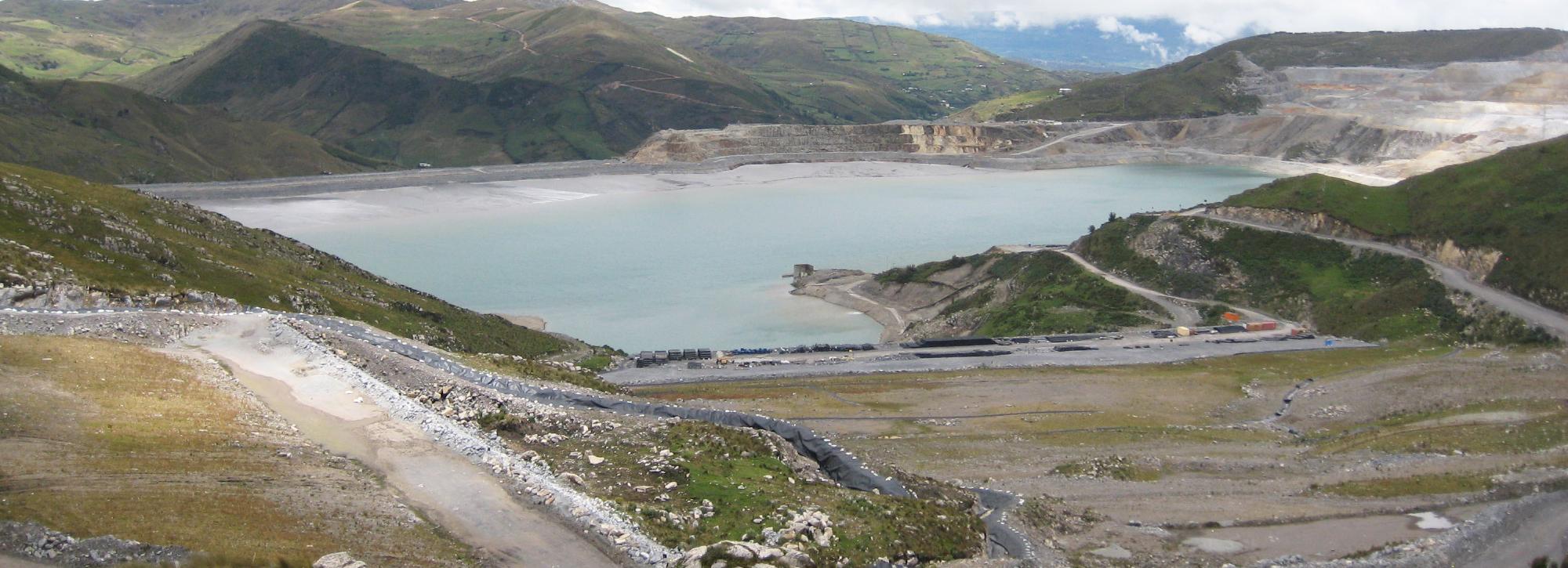
Dam Monitoring from SATellites (DAMSAT) uses satellite technology to remotely monitor water and tailings dams and other tailings deposit areas. It is an International Partnership Programme project, run by the UK Space Agency and funded by the Global Challenge Research Fund.

As part of the project, we developed DAMSAT, a space-based dam monitoring system utilising Earth Observation (EO) and Global Navigation Satellite System technologies, combined with real-time in-situ devices. DAMSAT allows authorities to monitor dams remotely, particularly useful in isolated locations or where there are concerns about dam management.

Exploiting remote sensing data to monitor dams more effectively should allow for quicker action to be taken to avoid dam failures.

Monitoring dams remotely

The rate of failure of tailings dams is higher than for traditional water-retaining dams, owing to several factors including continual raising, and in some cases less rigorous construction methods or supervision than for normal water-retaining dams, especially in low-income countries. The consequences of water dam failures can be equally catastrophic than those of tailings dams, as we have seen with a recent breach at Tiware dam in India.

There is an evident need for a cost-effective means of monitoring both operational and abandoned dams, especially those in remote locations, to help forecast potentially catastrophic failures and minimise their devastating effects. DAMSAT helps by alerting authorities of problems with structures before they fail, thus reducing the risks to those living downstream of dams.

The project :

  • supported the reduction of the social, economic and environmental impacts of water and tailings dams and other storage facilities failures in two areas in Peru, in the regions of Cajamarca and Pasco;
  • influenced the adoption of Earth Observation monitoring tools for dams and tailings storage facilities by engaging with key stakeholders;
  • provided key stakeholders with an operational service to support the decision-making process to reduce the probability of failure of water and tailings dams or other tailings storage facilities, and its potential impacts downstream.

Contributing to UN SDGs

This project contributes towards two of the United Nations Sustainable Development Goals (SDGs):

  • SDG 6.3: Improve water quality by reducing pollution, eliminating dumping and minimizing the release of hazardous chemicals and materials, halving the proportion of untreated wastewater and substantially increasing recycling and safe reuse globally.
  • SDG 1.5 Number of deaths, missing persons and directly affected persons attributed to disasters.

The project involved working with government agencies, multi-national mining companies and local stakeholders in Peru, to test the approach on a number of sites, either operational, closed or abandoned.

Project consortium

The project consortium was made up of

  • UK partners
    Telespazio VEGA, Siemens Corporate Technology, Satellite Applications Cataplut, Oxford Policy Management, and the Smith School of Enterprise and the Environment at the University of Oxford;
     
  • Peruvian partners
    Ciemam SAC, the National Foundation for Hydraulic Engineering, and the National University of Cajamarca (School of Hydraulic Engineering and Faculty of Engineering).

A project funded by

DAMSAT is funded by the UK Space Agency


Contact our project lead

Marta Roca Collell

Principal Engineer
Contact Profile

Explore more

  • All
  • Project
  • Expertise
  • News
  • Insight
  • Facility

National leakage centre scoped out

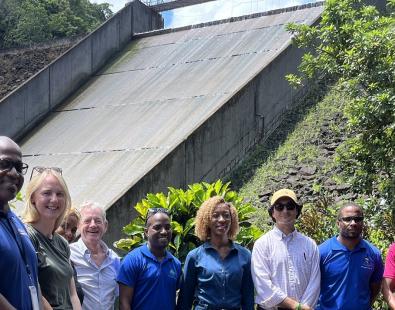
People with John Compton dam

Project to ensure future water security for Saint Lucia

Manchester Prize selects Sapphire to help rivers sparkle

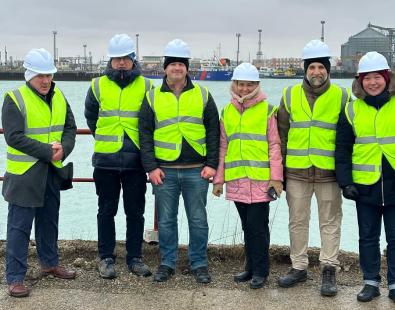
HR Wallingford and World Bank staff in high visibility jackets standing for a picture in Port of Aktau on Caspian sea

Caspian Sea water levels study to inform Aktau Port adaptation

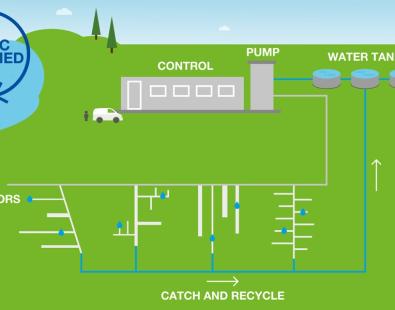
Diagram of national leakage centre

National leakage centre receives funding

Chalk stream west stow

Project to assess optimal ways of protecting precious chalk streams

Aerial view of a reservoir with water

DAMSAT shortlisted for two NCE TechFest awards

Web-based tool to efficiently target water leaks

Picture of Bridge Woods-Ballard and Helen Udale Clarke

Updating the non-statutory standards for SuDS could help drive a culture of delivering high value blue-green infrastructure

Close up of someone's hands under rain in yellow raincoat

New directory to promote UK’s water resilience capabilities worldwide

View of Chew Valley Lake, UK

HR Wallingford updates reservoir emergency plans as legislation changes

close picture of a mosquito on skin

D-MOSS scoops British Expertise International award

We are global leaders and independent experts in how to live and work sustainably with water

Social media

  • BlueSky
  • LinkedIn
  • YouTube

Expertise

  • Coastal & marine
  • Energy transition
  • Water & climate
  • Software solutions
  • Equipment & technology

Company

  • About
  • Careers
  • News
  • Insights
  • Sustainability

Legal

  • Privacy & data protection
  • Policies
  • Modern slavery statement
  • Terms & conditions
  • Sitemap
© 2026 HR Wallingford
Contact