Secondary nav 2022

  • Equipment
  • Software
  • Training

Main navigation 2022

  • About
    • About HR Wallingford
    • Our leadership
    • Our people
    • Our impact
      • Annual report & financial statements
      • Gender pay
      • Social impact
      • Sustainability
    • Our story
    • News
    • Insight articles
    • Policies
  • Projects
  • Expertise
    • Coastal & marine sustainability
      • Coastal hazards & resilience
      • Coastal morphology & sediment dynamics
      • Dredging and sediment management
      • Marine & coastal environment
      • Ports, harbours and shipping
      • Subsea engineering
      • Waterfronts, marinas and resorts
    • Energy transition
      • Fixed offshore wind
      • Floating offshore wind
      • Liquified gas & transition fuels
      • Nuclear
      • Wave, tidal, solar & hydropower
    • Water & climate resilience
      • Dams & reservoirs
      • Freshwater environment
      • Integrated flood management
      • Surface water systems
      • Water management for climate resilient development
      • Water supply & drought resilience
  • Facilities
    • Explore our facilities
    • Ship simulation
      • Australia Ship Simulation Centre
      • UK Ship Simulation Centre
    • Physical modelling
      • Fast Flow Facility
      • Tsunami simulator
      • Volumetric flow flume
      • Wave basins
      • Wave flumes
      • Erosion rate measurement
      • Water rescue training
  • Careers
    • Careers overview
    • Working at HR Wallingford
    • Job opportunities
  • Contact
  • About
    • About HR Wallingford
    • Our leadership
    • Our people
    • Our impact
      • Annual report & financial statements
      • Gender pay
      • Social impact
      • Sustainability
    • Our story
    • News
    • Insight articles
    • Policies
  • Projects
  • Expertise
    • Coastal & marine sustainability
      • Coastal hazards & resilience
      • Coastal morphology & sediment dynamics
      • Dredging and sediment management
      • Marine & coastal environment
      • Ports, harbours and shipping
      • Subsea engineering
      • Waterfronts, marinas and resorts
    • Energy transition
      • Fixed offshore wind
      • Floating offshore wind
      • Liquified gas & transition fuels
      • Nuclear
      • Wave, tidal, solar & hydropower
    • Water & climate resilience
      • Dams & reservoirs
      • Freshwater environment
      • Integrated flood management
      • Surface water systems
      • Water management for climate resilient development
      • Water supply & drought resilience
  • Facilities
    • Explore our facilities
    • Ship simulation
      • Australia Ship Simulation Centre
      • UK Ship Simulation Centre
    • Physical modelling
      • Fast Flow Facility
      • Tsunami simulator
      • Volumetric flow flume
      • Wave basins
      • Wave flumes
      • Erosion rate measurement
      • Water rescue training
  • Careers
    • Careers overview
    • Working at HR Wallingford
    • Job opportunities
  • Contact
  1. Home >
  2. Projects >
  3. Engineering sustainable growth at Al Faw Grand Port

Engineering sustainable growth at Al Faw Grand Port

Share

Al Faw Grand Port is set to transform Iraq’s global trade capacity. For over a decade, HR Wallingford has played a central role in shaping a port that can safely accommodate the world’s largest container vessels, withstand challenging estuarine conditions, and operate efficiently for decades to come. Our work has helped de risk construction, safeguard the environment and give decision makers confidence at every stage of this nationally significant development.

Location
Faw Peninsula, Iraq

A safer, more resilient port layout

Iraq’s ambition to create a major deep‑water port on the Faw Peninsula comes with considerable physical and environmental complexity. The site sits in one of the Gulf’s most sediment‑rich and morphologically dynamic estuaries, where dredging, navigation and long‑term asset performance are tightly interconnected.

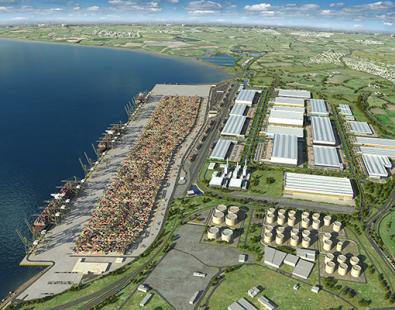
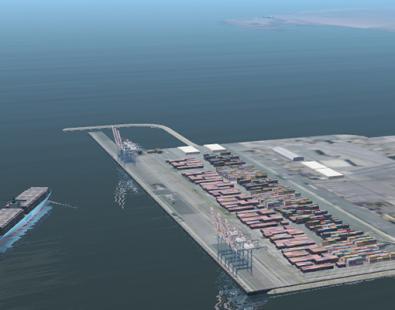
Delivering more than 15 km of breakwaters and a new container terminal required clarity on present day and future wave conditions, sediment movement, and the potential behaviour of over 75 million m³ of dredged material. Ensuring that the port would remain safe, accessible and commercially competitive long into the future was essential.

Our early design insights informed breakwater geometry and armour sizing, ensuring structures capable of withstanding the region’s demanding wave environment. This reduced construction risk and strengthened the long‑term durability of critical coastal defences.

Confidence in terminal operations

By identifying where the highest wave loads would occur at the new container terminal , we helped engineers refine the quay and deck design. This resulted in a terminal better protected against extreme conditions - supporting safe berthing, efficient cargo operations and reduced downtime.

A sustainable, predictable dredging strategy

One of the project’s biggest risks was how large‑scale dredging and disposal could alter seabed levels and affect port access and maintenance dredging requirements. Our modelling provided evidence on:

  • where sediment would travel
  • how disposal sites would behave over time
  • whether dredging would cause unacceptable morphological change

This directly enabled the approval of the capital dredging programme and ensured that disposal plans met both environmental expectations and operational requirements.

Reduced uncertainty during construction

As works progressed, we continued advising on unplanned discharges and operational changes. This support helped the contractor make informed decisions, maintain compliance, and keep the programme on schedule.

Enabling delivery of a globally connected maritime gateway

Our input has helped the Al Faw Grand Port move from ambition to delivery with confidence. Today, the project is progressing with a resilient design, a validated dredging strategy, and a understanding of how the port will perform in one of the Gulf’s most challenging coastal environments. Ultimately, this work supports Iraq’s goal of creating a modern, efficient and globally connected gateway for trade and economic growth.

Contact our project lead

Martin Young
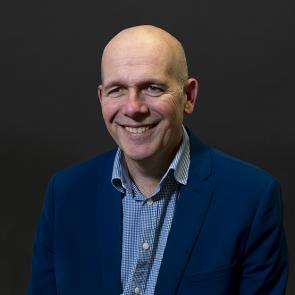
Director of Engineering
Contact Profile

Explore more

  • All
  • Project
  • Expertise
  • News
  • Insight
  • Facility
View of a pilot in front of two computer screens

Richer data helps Thames pilots plan safer passages

View of Port Quasim

Facilitating the growth of Port Qasim

view of the suffolk coast in Sizewell

Sizewell C cooling water system

Greening coastal infrastructure

River floods in city in Peru, South America

Early warning system helps Peru build back better

aerial view of Aberdeen port - courtesy of Aberdeen Harbour Board.

Aberdeen South Harbour: a project of national significance

aerial view of London Gateway Port

London Gateway Port

Developing a mega port for Kuwait

Thames Tideway Tunnel: a super sewer for London

Improving access to Mesaieed Port

Louvre Abu Dhabi

Thirty years working with the Port of Dover

We are global leaders and independent experts in how to live and work sustainably with water

Social media

  • BlueSky
  • LinkedIn
  • YouTube

Expertise

  • Coastal & marine
  • Energy transition
  • Water & climate
  • Software solutions
  • Equipment & technology

Company

  • About
  • Careers
  • News
  • Insights
  • Sustainability

Legal

  • Privacy & data protection
  • Policies
  • Modern slavery statement
  • Terms & conditions
  • Sitemap
© 2026 HR Wallingford
Contact