Secondary nav 2022

  • Equipment
  • Software
  • Training

Main navigation 2022

  • About
    • About HR Wallingford
    • Our leadership
    • Our people
    • Our impact
      • Annual report & financial statements
      • Gender pay
      • Social impact
      • Sustainability
    • Our story
    • News
    • Insight articles
    • Policies
  • Projects
  • Expertise
    • Coastal & marine sustainability
      • Coastal hazards & resilience
      • Coastal morphology & sediment dynamics
      • Dredging and sediment management
      • Marine & coastal environment
      • Ports, harbours and shipping
      • Subsea engineering
      • Waterfronts, marinas and resorts
    • Energy transition
      • Fixed offshore wind
      • Floating offshore wind
      • Liquified gas & transition fuels
      • Nuclear
      • Wave, tidal, solar & hydropower
    • Water & climate resilience
      • Dams & reservoirs
      • Freshwater environment
      • Integrated flood management
      • Surface water systems
      • Water management for climate resilient development
      • Water supply & drought resilience
  • Facilities
    • Explore our facilities
    • Ship simulation
      • Australia Ship Simulation Centre
      • UK Ship Simulation Centre
    • Physical modelling
      • Fast Flow Facility
      • Tsunami simulator
      • Volumetric flow flume
      • Wave basins
      • Wave flumes
      • Erosion rate measurement
      • Water rescue training
  • Careers
    • Careers overview
    • Working at HR Wallingford
    • Job opportunities
  • Contact
  • About
    • About HR Wallingford
    • Our leadership
    • Our people
    • Our impact
      • Annual report & financial statements
      • Gender pay
      • Social impact
      • Sustainability
    • Our story
    • News
    • Insight articles
    • Policies
  • Projects
  • Expertise
    • Coastal & marine sustainability
      • Coastal hazards & resilience
      • Coastal morphology & sediment dynamics
      • Dredging and sediment management
      • Marine & coastal environment
      • Ports, harbours and shipping
      • Subsea engineering
      • Waterfronts, marinas and resorts
    • Energy transition
      • Fixed offshore wind
      • Floating offshore wind
      • Liquified gas & transition fuels
      • Nuclear
      • Wave, tidal, solar & hydropower
    • Water & climate resilience
      • Dams & reservoirs
      • Freshwater environment
      • Integrated flood management
      • Surface water systems
      • Water management for climate resilient development
      • Water supply & drought resilience
  • Facilities
    • Explore our facilities
    • Ship simulation
      • Australia Ship Simulation Centre
      • UK Ship Simulation Centre
    • Physical modelling
      • Fast Flow Facility
      • Tsunami simulator
      • Volumetric flow flume
      • Wave basins
      • Wave flumes
      • Erosion rate measurement
      • Water rescue training
  • Careers
    • Careers overview
    • Working at HR Wallingford
    • Job opportunities
  • Contact
  1. Home >
  2. Projects >
  3. Greening coastal infrastructure
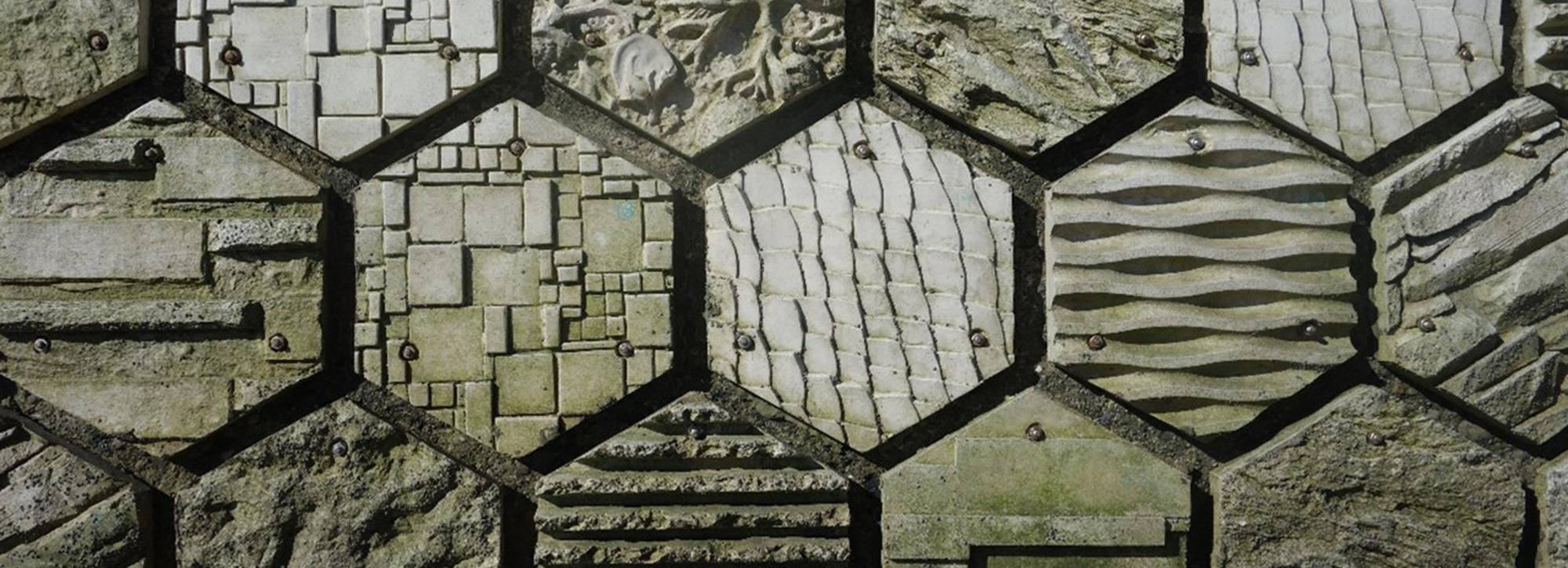
Greening coastal infrastructure

Share

HR Wallingford led the development of new CIRIA guidance to explore how typical hard engineered coastal assets can be adapted to boost biodiversity and enhance ecosystems in the marine environment. Greening coastal infrastructure through eco-engineering shows the value and impact of eco-engineering, and the role it can play as part of a broader asset management strategy.

SDG9 - Industry
Partners
HAEDES, Royal HaskoningDHV.
Funding
CIRIA

Ecological limitations of traditional approaches

Conventionally designed coastal infrastructure, with smooth and level surfaces, offers limited habitat complexity, and can encourage low-diversity opportunistic and invasive species to dominate. 

Over the past two decades, international research has trialled innovative ways to adapt engineered coastal assets to boost biodiversity and ecosystem function in coastal and estuarine ecosystems via ecological enhancement (known as ‘eco-engineering’). 

Despite growing evidence, however, coastal practitioners need further support to inform decision-makers and to facilitate the use of eco-engineered designs over, or in combination with, more traditional approaches.

New approaches can deliver ecological benefits

By implementing evidence-based, cost-effective design enhancements that follow the principles of ecological engineering, it is possible to modify structural designs to encourage marine life, achieve greater biodiversity and species richness, delivering benefits to ecological functioning and service provision.

HR Wallingford developed the CIRIA Greening coastal infrastructure through eco-engineering guidance in collaboration with co-authors, including HAEDES  and Royal HaskoningDHV.

The guide demonstrates the value and impact of eco-engineering, clarifying its role as part of an asset management strategy from an engineering, asset management and biodiversity perspective. It draws on existing research and experience from eco-engineering projects in practice and includes case studies to illustrate the range of potential techniques and approaches that can be used.
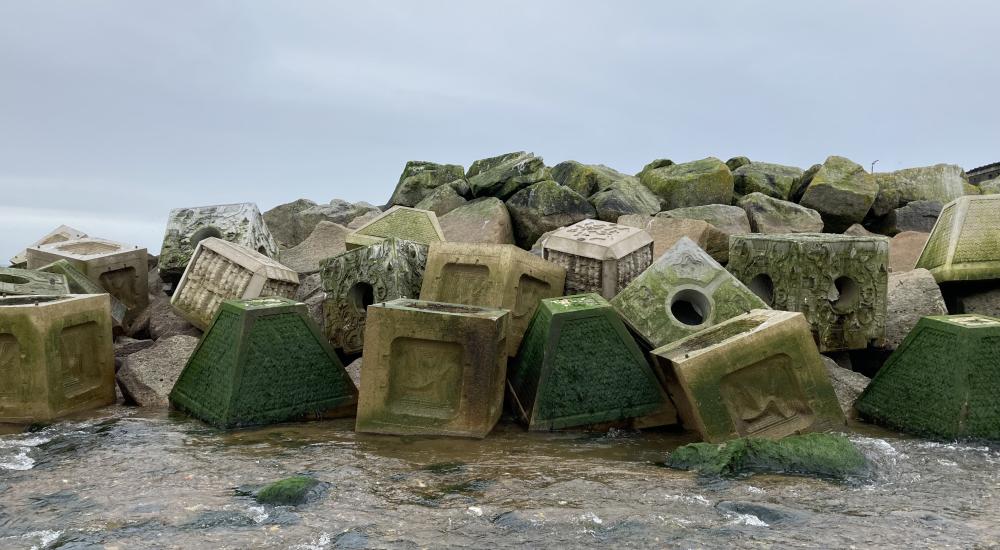
Image courtesy Environment Agency

Practical guidance for practitioners

The guidance provides information for practitioners to build a successful business case for eco-engineering techniques, and long-term monitoring of the ecological and wider co-benefits of greening the grey.   

Coastal practitioners will be able to use the guide to: 

  • Learn more about eco-engineering in a coastal context, the key principles behind it, and how it can be used within coastal infrastructure.
  • Assist in the planning of business cases by detailing key information that should be considered when proposing plans to decision-makers.
  • Learn about the benefits and challenges through real case studies of eco-engineering techniques.
  • Reinforce eco-engineering as an initial option in future coastal protection schemes.

Greening the grey

Eco-engineering techniques are recommended in circumstances where no other more natural, nature-based solutions to coastal flood and erosion risk are considered socially or economically feasible. For example, in urbanised coastal locations, where planned retreat to adapt to our changing climate is not the preferred policy option, use of eco-engineering approaches to ‘green the grey’ could contribute heavily to the UK challenge of increasing the multifunctionality and sustainability of hard structures. 

Using these eco-engineering techniques can enlarge the multifunctional value of coastal protection beside its human safety priorities, by improving biodiversity and other ecosystem services, for example, maintenance of water quality, carbon sequestration and fisheries productivity, as well as social and amenity value. 

The guidance was published in July 2025 and has received endorsement by the UN Ocean Decade, an initiative which provides an international framework for coordination and partnerships that will strengthen marine science solutions for sustainable development.


Banner image courtesy of Blue Cube Marine.
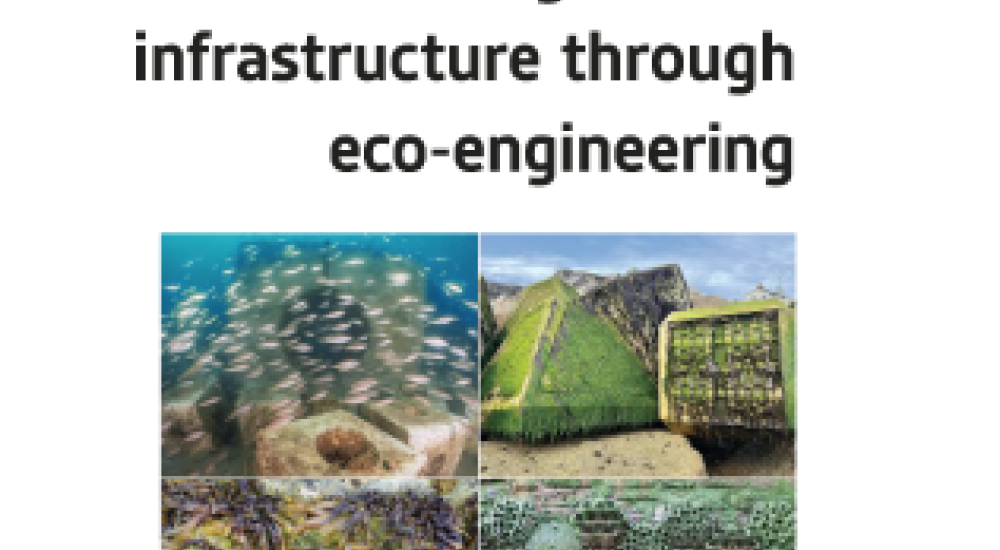
Greening coastal infrastructure through eco-engineering (C820) can be ordered from CIRIA's website. 

Contact our project lead

Marta Roca Collell

Principal Engineer
Contact Profile

Explore more

  • All
  • Project
  • Expertise
  • News
  • Insight
  • Facility

Engineering sustainable growth at Al Faw Grand Port

View of a pilot in front of two computer screens

Richer data helps Thames pilots plan safer passages

picture of white sandy Avalon beach

Modelling the burial and exposure of unexploded ordnance

View of Port Quasim

Facilitating the growth of Port Qasim

view of coral reef along coast

Insuring the benefits of nature-based solutions in the Caribbean

view of the suffolk coast in Sizewell

Sizewell C cooling water system

image of mangrove forest and underwater channel

Nature-based solutions in the Caribbean

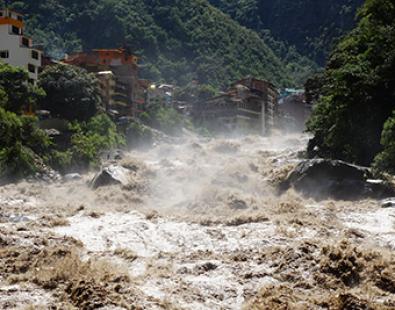
River floods in city in Peru, South America

Early warning system helps Peru build back better

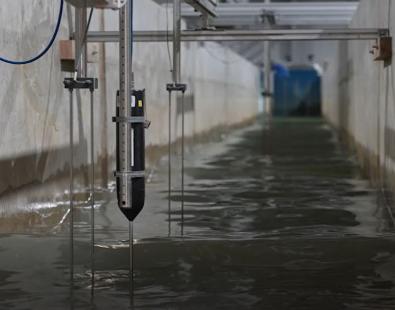
view of a flume physical model with water and instrumentation

Investigating sand-gravel beach morphodynamics to help protect coastlines

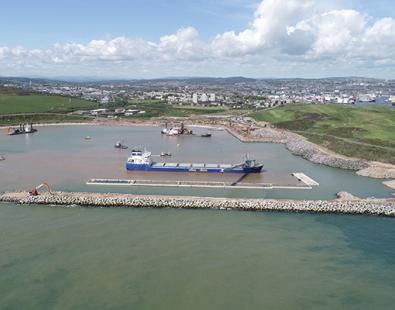
aerial view of Aberdeen port - courtesy of Aberdeen Harbour Board.

Aberdeen South Harbour: a project of national significance

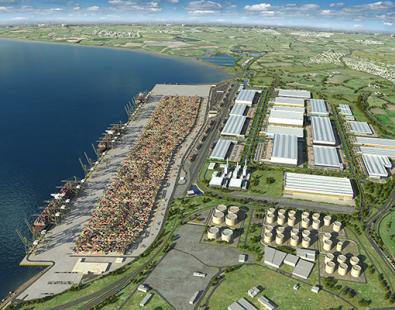
aerial view of London Gateway Port

London Gateway Port

aerial view of London Gateway Port

London Gateway Port

We are global leaders and independent experts in how to live and work sustainably with water

Social media

  • BlueSky
  • LinkedIn
  • YouTube

Expertise

  • Coastal & marine
  • Energy transition
  • Water & climate
  • Software solutions
  • Equipment & technology

Company

  • About
  • Careers
  • News
  • Insights
  • Sustainability

Legal

  • Privacy & data protection
  • Policies
  • Modern slavery statement
  • Terms & conditions
  • Sitemap
© 2026 HR Wallingford
Contact