Secondary nav 2022

  • Equipment
  • Software
  • Training

Main navigation 2022

  • About
    • About HR Wallingford
    • Our leadership
    • Our people
    • Our impact
      • Annual report & financial statements
      • Gender pay
      • Social impact
      • Sustainability
    • Our story
    • News
    • Insight articles
    • Policies
  • Projects
  • Expertise
    • Coastal & marine sustainability
      • Coastal hazards & resilience
      • Coastal morphology & sediment dynamics
      • Dredging and sediment management
      • Marine & coastal environment
      • Ports, harbours and shipping
      • Subsea engineering
      • Waterfronts, marinas and resorts
    • Energy transition
      • Fixed offshore wind
      • Floating offshore wind
      • Liquified gas & transition fuels
      • Nuclear
      • Wave, tidal, solar & hydropower
    • Water & climate resilience
      • Dams & reservoirs
      • Freshwater environment
      • Integrated flood management
      • Surface water systems
      • Water management for climate resilient development
      • Water supply & drought resilience
  • Facilities
    • Explore our facilities
    • Ship simulation
      • Australia Ship Simulation Centre
      • UK Ship Simulation Centre
    • Physical modelling
      • Fast Flow Facility
      • Tsunami simulator
      • Volumetric flow flume
      • Wave basins
      • Wave flumes
      • Erosion rate measurement
      • Water rescue training
  • Careers
    • Careers overview
    • Working at HR Wallingford
    • Job opportunities
  • Contact
  • About
    • About HR Wallingford
    • Our leadership
    • Our people
    • Our impact
      • Annual report & financial statements
      • Gender pay
      • Social impact
      • Sustainability
    • Our story
    • News
    • Insight articles
    • Policies
  • Projects
  • Expertise
    • Coastal & marine sustainability
      • Coastal hazards & resilience
      • Coastal morphology & sediment dynamics
      • Dredging and sediment management
      • Marine & coastal environment
      • Ports, harbours and shipping
      • Subsea engineering
      • Waterfronts, marinas and resorts
    • Energy transition
      • Fixed offshore wind
      • Floating offshore wind
      • Liquified gas & transition fuels
      • Nuclear
      • Wave, tidal, solar & hydropower
    • Water & climate resilience
      • Dams & reservoirs
      • Freshwater environment
      • Integrated flood management
      • Surface water systems
      • Water management for climate resilient development
      • Water supply & drought resilience
  • Facilities
    • Explore our facilities
    • Ship simulation
      • Australia Ship Simulation Centre
      • UK Ship Simulation Centre
    • Physical modelling
      • Fast Flow Facility
      • Tsunami simulator
      • Volumetric flow flume
      • Wave basins
      • Wave flumes
      • Erosion rate measurement
      • Water rescue training
  • Careers
    • Careers overview
    • Working at HR Wallingford
    • Job opportunities
  • Contact
  1. Home >
  2. Projects >
  3. Insuring the benefits of nature-based solutions in the Caribbean
Insuring the benefits of nature-based solutions in the Caribbean

Share

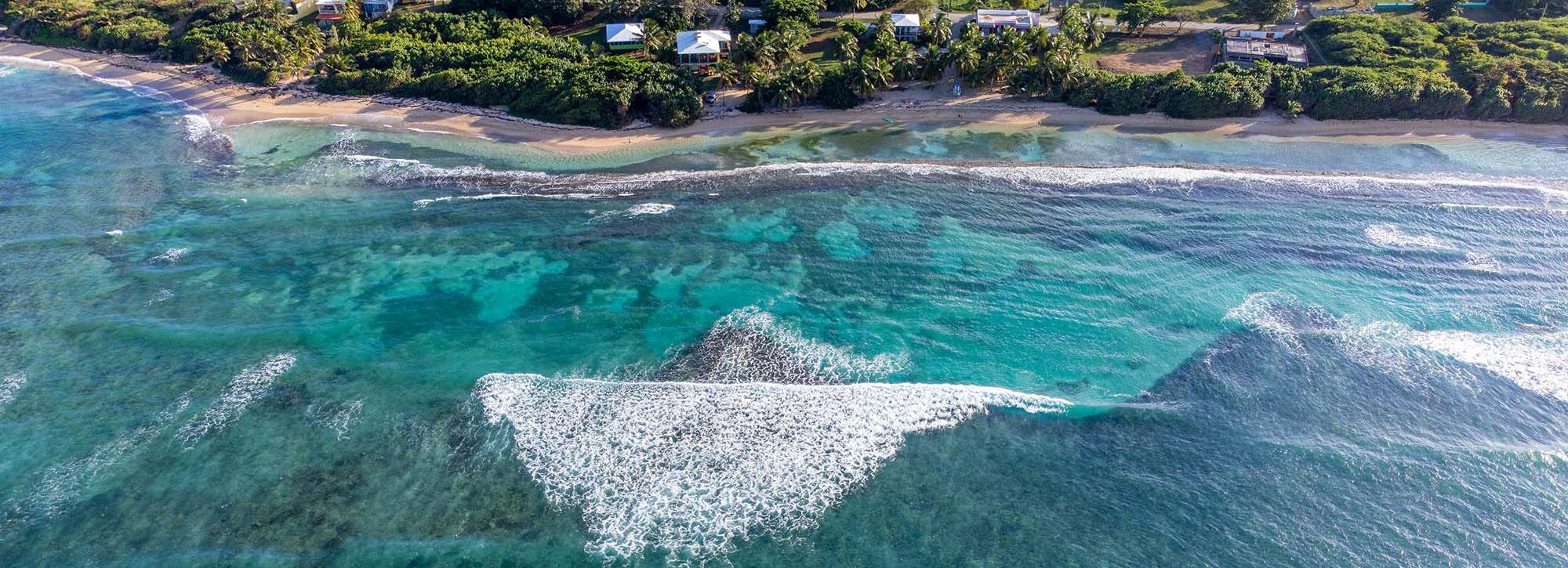
Coral reefs and mangroves help to protect communities in the Caribbean from coastal flooding. Insurance could help to manage the risks to these natural assets, but this requires an accurate economic quantification of their benefits. 

Our work with the World Bank explored the impact of nature-based solutions, and how they could be incorporated in to insurance products.

Coral reefs and mangroves offer protection against coastal flooding and wave impacts during storms. This is particularly important in the Caribbean, where tourism - a cornerstone of many economies in the region - relies on the health of these natural barriers. Insurance can play a pivotal role in managing the risks to both coastal assets and the reefs and mangroves themselves.

However, one of the main challenges in developing insurance products that consider the benefits of reefs and mangroves is accurately quantifying the economic risk reduction they provide to coastal infrastructure. To address this, we worked with the World Bank to create and test a framework for quantifying these benefits. We also worked with insurance experts to explore the feasibility of incorporating mangroves and reefs into various insurance products.
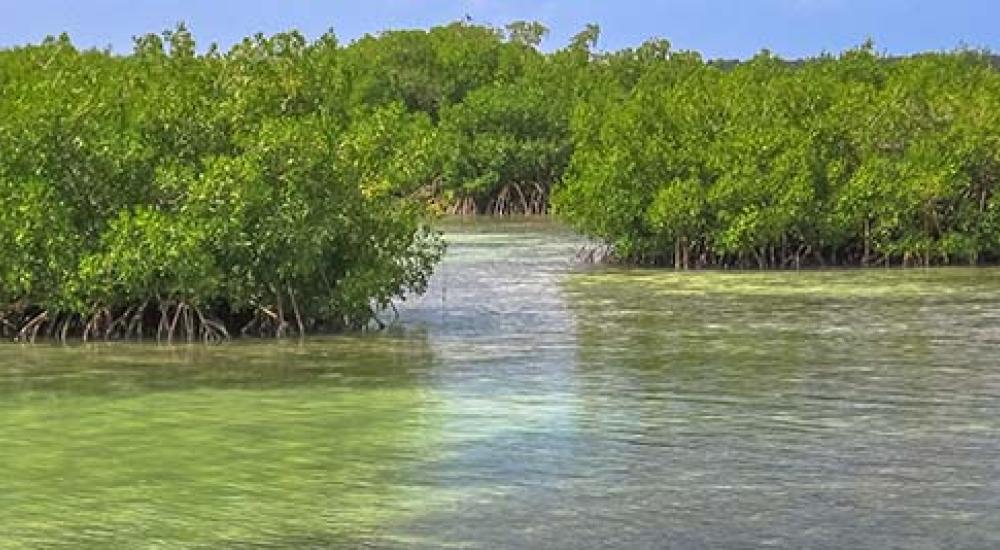
View of mangrove

Using hydrodynamic and flood risk models, we calculated the Expected Annual Damage for built assets in the Caribbean under different scenarios of reef and mangrove health and extent. Our findings highlighted that the health of a reef, particularly its roughness, is a key factor in its ability to reduce risk. However, the complex geometry of reefs means that site-specific modelling is necessary, making generalisation difficult.

Developing indemnity insurance products that account for these natural barriers would require significant updates to existing catastrophe models used by the insurance industry, as well as customisation for specific locations. However, parametric insurance products could offer a way to fund the restoration of damaged reefs and mangroves.

Our work provided valuable evidence on the benefits of reefs and mangroves and the potential for developing both indemnity and parametric insurance products. This will help the World Bank and other organisations to identify opportunities to integrate nature-based solutions into financial risk management strategies.

Contact our project lead

George Woolhouse
Principal Scientist
Contact Profile

Explore more

  • All
  • Project
  • Expertise
  • News
  • Insight
  • Facility
View of a dam breach experiment

Dam and levee models assessed for predicting internally initiated breaches

View of a dam breach experiment

Dam and levee models assessed for predicting internally initiated breaches

Drainage and Wastewater Management guidance

Rainwater Management Platform: transforming how the UK manages rainwater

SuDS iQ: a digital environment for evaluating and planning good SuDS

picture of white sandy Avalon beach

Modelling the burial and exposure of unexploded ordnance

Buscot Park lake: a heritage dam reinvented

Automating biodiversity impact assessments with Earth observation

Aerial view of a meandering river

A new Environmental Destination framework

view of people helping during a flood event

Empowering communities to manage local flood risk

Flood early warning system to support tropical cyclone relief

View of brown trout in river

Setting the standards for fish passes

We are global leaders and independent experts in how to live and work sustainably with water

Social media

  • BlueSky
  • LinkedIn
  • YouTube

Expertise

  • Coastal & marine
  • Energy transition
  • Water & climate
  • Software solutions
  • Equipment & technology

Company

  • About
  • Careers
  • News
  • Insights
  • Sustainability

Legal

  • Privacy & data protection
  • Policies
  • Modern slavery statement
  • Terms & conditions
  • Sitemap
© 2026 HR Wallingford
Contact