Secondary nav 2022

  • Equipment
  • Software
  • Training

Main navigation 2022

  • About
    • About HR Wallingford
    • Our leadership
    • Our people
    • Our impact
      • Annual report & financial statements
      • Gender pay
      • Social impact
      • Sustainability
    • Our story
    • News
    • Insight articles
    • Policies
  • Projects
  • Expertise
    • Coastal & marine sustainability
      • Coastal hazards & resilience
      • Coastal morphology & sediment dynamics
      • Dredging and sediment management
      • Marine & coastal environment
      • Ports, harbours and shipping
      • Subsea engineering
      • Waterfronts, marinas and resorts
    • Energy transition
      • Fixed offshore wind
      • Floating offshore wind
      • Liquified gas & transition fuels
      • Nuclear
      • Wave, tidal, solar & hydropower
    • Water & climate resilience
      • Dams & reservoirs
      • Freshwater environment
      • Integrated flood management
      • Surface water systems
      • Water management for climate resilient development
      • Water supply & drought resilience
  • Facilities
    • Explore our facilities
    • Ship simulation
      • Australia Ship Simulation Centre
      • UK Ship Simulation Centre
    • Physical modelling
      • Fast Flow Facility
      • Tsunami simulator
      • Volumetric flow flume
      • Wave basins
      • Wave flumes
      • Erosion rate measurement
      • Water rescue training
  • Careers
    • Careers overview
    • Working at HR Wallingford
    • Job opportunities
  • Contact
  • About
    • About HR Wallingford
    • Our leadership
    • Our people
    • Our impact
      • Annual report & financial statements
      • Gender pay
      • Social impact
      • Sustainability
    • Our story
    • News
    • Insight articles
    • Policies
  • Projects
  • Expertise
    • Coastal & marine sustainability
      • Coastal hazards & resilience
      • Coastal morphology & sediment dynamics
      • Dredging and sediment management
      • Marine & coastal environment
      • Ports, harbours and shipping
      • Subsea engineering
      • Waterfronts, marinas and resorts
    • Energy transition
      • Fixed offshore wind
      • Floating offshore wind
      • Liquified gas & transition fuels
      • Nuclear
      • Wave, tidal, solar & hydropower
    • Water & climate resilience
      • Dams & reservoirs
      • Freshwater environment
      • Integrated flood management
      • Surface water systems
      • Water management for climate resilient development
      • Water supply & drought resilience
  • Facilities
    • Explore our facilities
    • Ship simulation
      • Australia Ship Simulation Centre
      • UK Ship Simulation Centre
    • Physical modelling
      • Fast Flow Facility
      • Tsunami simulator
      • Volumetric flow flume
      • Wave basins
      • Wave flumes
      • Erosion rate measurement
      • Water rescue training
  • Careers
    • Careers overview
    • Working at HR Wallingford
    • Job opportunities
  • Contact
  1. Home >
  2. Projects >
  3. Sapphire: using AI to improve river and bathing water quality
Sapphire: using AI to improve river and bathing water quality

Share

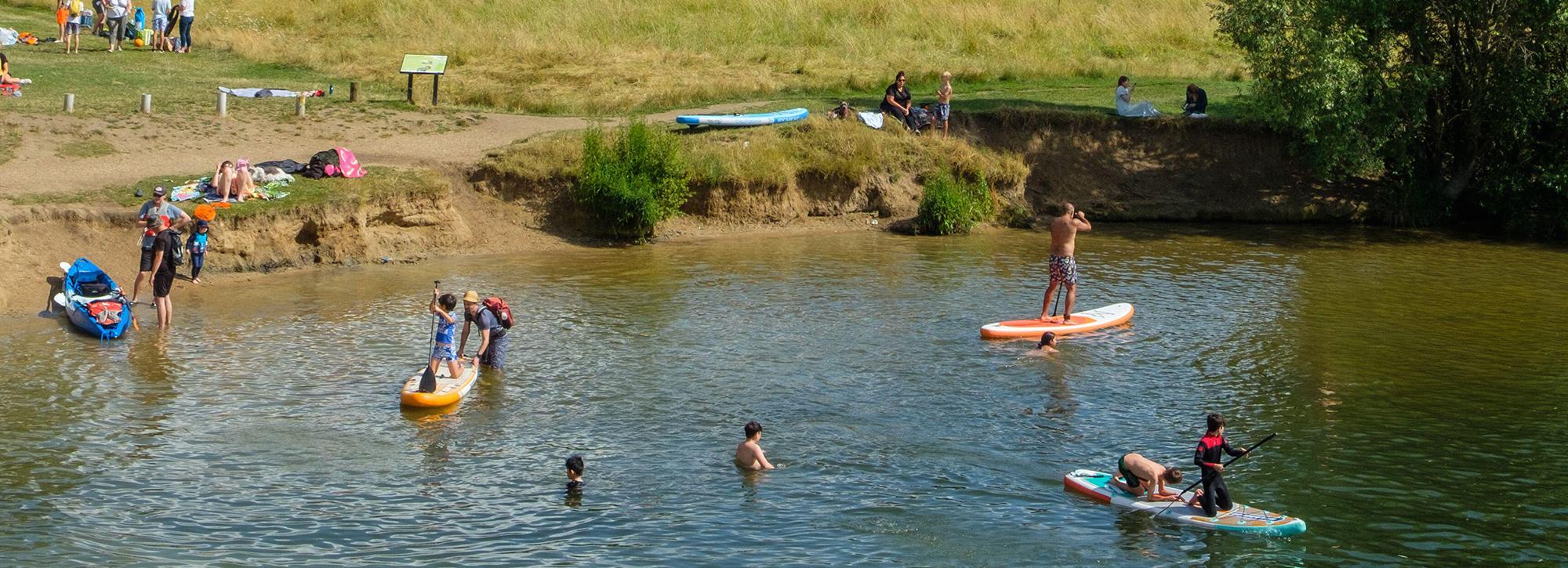
As one of the finalists for the Manchester Prize, our goal is to develop an AI tool to help alleviate water pollution stemming from storm overflows, agriculture, and urban areas. 

The state of health of the UK’s rivers and bathing waters has become a matter of public concern in recent years. Urbanisation and changes to rainfall patterns attributable to climate change are expected to exacerbate the problem, placing additional strain on existing drainage infrastructure. 

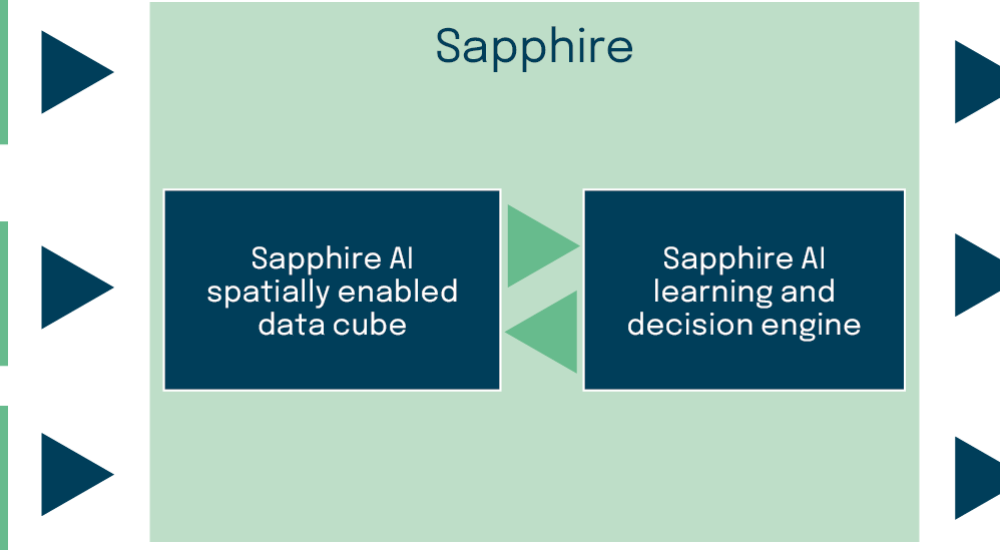
In response to this critical challenge, Sapphire aims to help reduce water pollution from storm overflows, agriculture, and urban spaces. By integrating observed data and computer model outputs into an AI platform, Sapphire will provide faster results and incorporate data on more sources of pollution than traditional methods. This will enable water companies to better understand the impact of storm overflows and manage flows more effectively, ultimately leading to improved water quality across the nation. 

Bringing clarity to operational decision making

The increasing urbanisation and changing rainfall patterns due to climate change have placed greater pressure on the UK’s wastewater networks, consequently impacting water quality in our rivers. It is imperative that we address this issue with urgency and innovation. Sapphire has been specifically developed to address the pressing challenge of water pollution from various sources. The use of AI in water quality management has the potential to revolutionise the way we approach environmental challenges. By harnessing the power of AI, we can make sense of the vast amount of environmental data being collected, thus bringing new clarity to operational decisions. 
A proactive approach to addressing water pollution

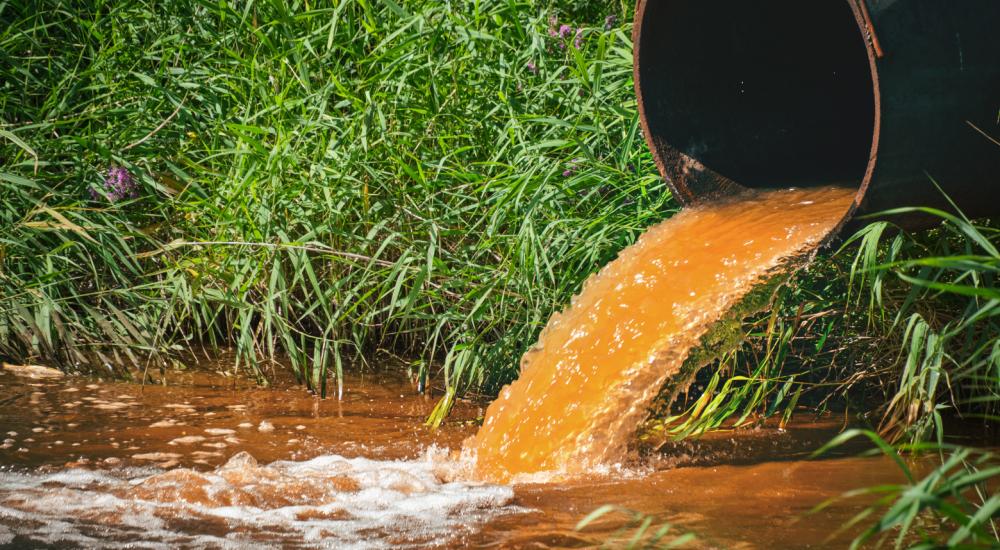
This is particularly crucial in the context of storm overflows, where the severity and frequency of storms, exacerbated by climate change, have caused thousands of sewage spills, presenting a complex challenge to control and predict. Sapphire aims to deliver a solution by utilising AI to analyse and interpret environmental data in a way that is not only rapid but also actionable. By producing rapid, actionable forecasts, our tool will significantly increase the opportunity for early intervention in addressing water pollution. This proactive approach to water quality management will enable water companies to make informed and timely decisions, ultimately leading to improved water quality in our rivers and along our coasts. 

Short-term and long-term benefits

In the short-term, Sapphire will use rainfall forecasts to predict whether these events will cause spills from wastewater networks, and whether water quality will fail thresholds, enabling preventative measures to be taken. It will also help with attributing pollution events to other sources. Taking a long-term view, Sapphire will aid with the design of upgrades to infrastructure by simulating future performance with different rainfall scenarios.

We believe that Sapphire could play an important role in improving water quality, drawing on our expertise and the advances in computer modelling and AI. We hope our tool will enable water companies to better understand the impact of their storm overflows and manage flows more effectively, as well as bringing insight into other sources of pollution; ultimately this knowledge will enable cross-cutting measures to be taken by stakeholders across all relevant sectors and industries. We need to look at pollution in a holistic way, so that everyone can work together to improve the environment, and Sapphire gives us an objective way to do that.
Looking to the future

The state of health of the UK’s rivers and bathing waters demands urgent attention and innovative solutions. The impact of urbanisation and changes to rainfall patterns as a result of climate change has only intensified the challenge. Sapphire, represents a pioneering solution to this pressing issue. By integrating observed data and computer model outputs into an AI platform, Sapphire will provide faster results and incorporate more sources of pollution than traditional methods, ultimately contributing to better water quality across the nation. 

Contact our project lead

Emma Brown

Technical Director
Contact Profile

Explore more

  • All
  • Project
  • Expertise
  • News
  • Insight
  • Facility

Drainage and Wastewater Management guidance

Rainwater Management Platform: transforming how the UK manages rainwater

SuDS iQ: a digital environment for evaluating and planning good SuDS

dolphin swimming next to big ship

SEUSS, innovative modelling to safeguard marine ecosystems worldwide.

Buscot Park lake: a heritage dam reinvented

Automating biodiversity impact assessments with Earth observation

Aerial view of a meandering river

A new Environmental Destination framework

Flood early warning system to support tropical cyclone relief

View of brown trout in river

Setting the standards for fish passes

Aerial view of St Kitts and Nevis Caribbean island

St Kitts and Nevis Climate Risk Intelligence Data Infrastructure

view of drought impacts in South Africa

Designing climate services in South Africa

Combating land degradation in Central Asia

We are global leaders and independent experts in how to live and work sustainably with water

Social media

  • BlueSky
  • LinkedIn
  • YouTube

Expertise

  • Coastal & marine
  • Energy transition
  • Water & climate
  • Software solutions
  • Equipment & technology

Company

  • About
  • Careers
  • News
  • Insights
  • Sustainability

Legal

  • Privacy & data protection
  • Policies
  • Modern slavery statement
  • Terms & conditions
  • Sitemap
© 2026 HR Wallingford
Contact