Tackling the technical challenges to scale up floating offshore wind
Floating offshore wind has the potential to make a significant contribution to net zero, with stronger and more consistent winds in deeper waters promising higher outputs. Countries around the globe, form Norway to Japan, are keen to explore this potential, setting up demonstrator sites and planning large scale deployment. The UK alone is aiming to install more than 2,000 huge turbines by 2050, generating up to 40GW in total.
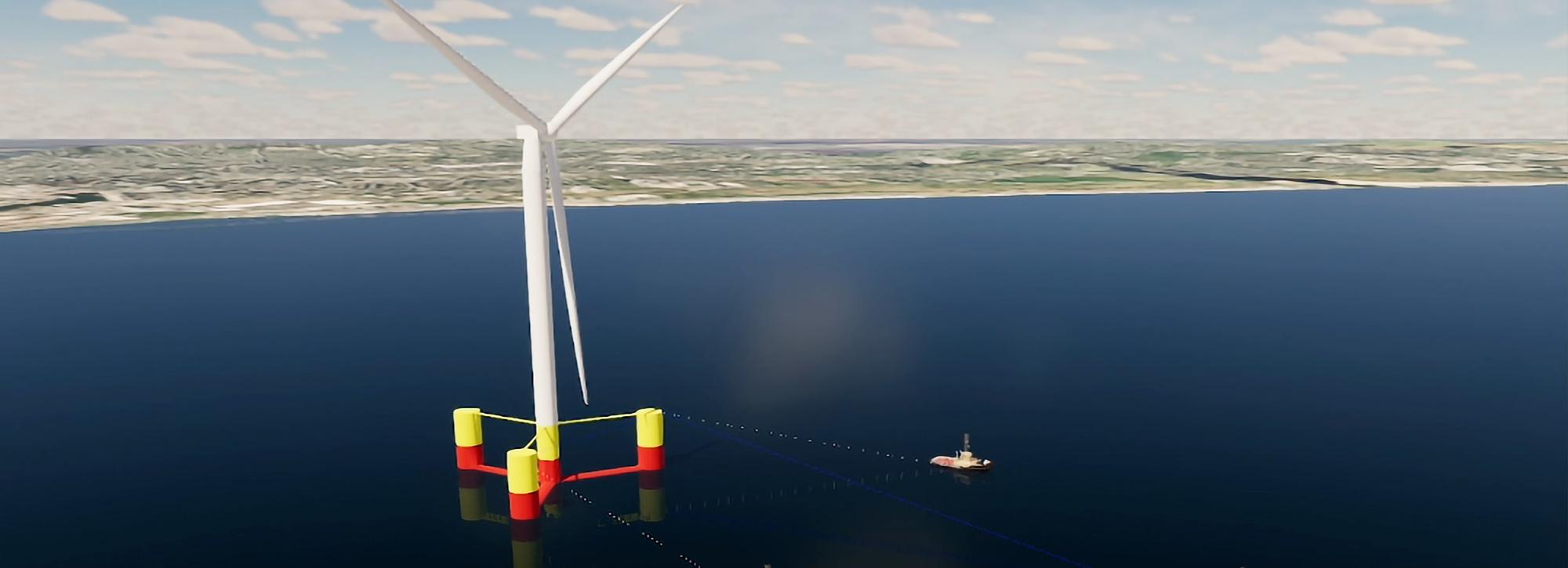
The ambitious proposals involve scaling up from current demonstrator sizes of 8MW turbines to much larger 15MW structures and beyond. Their base units will measure up to 120m x120m, each around the size of an oil rig’s platform. The turbines will be around 200m above sea level with a generator, gearbox and up to 150m long blades, making them geometrically unusual and hydrodynamically challenging
Manoeuvring such heavy and unusually shaped structures in deep seas with stronger winds brings technical challenges in ensuring their stability, safety and long-term resilience. Furthermore, deploying the proposed quantity of units presents new challenges around logistics, equipment and the sheer amount of space needed to assemble, store, transport and deploy them.
While the challenges may be larger or more complex than anything that has been attempted before, experience and skills used by other sectors can be applied to help solve them. For example, the industry can draw on: experience gained at HR Wallingford from towing caissons into place to create breakwaters; procedures and evaluation methods used to install oil and gas platforms; and scour techniques to secure fixed offshore wind cables.
To evaluate the reliability and safety of the designs, de-risking their development, engineers will need to conduct physical testing and computer modelling. They will also be able to use similar techniques to assess and advise on the procedures and planning required to support logistics, through from supplying parts to towing and operation.
Watch our people talk about how to tackle the challenges
Optimising platform design, while maintaining safety and reliability
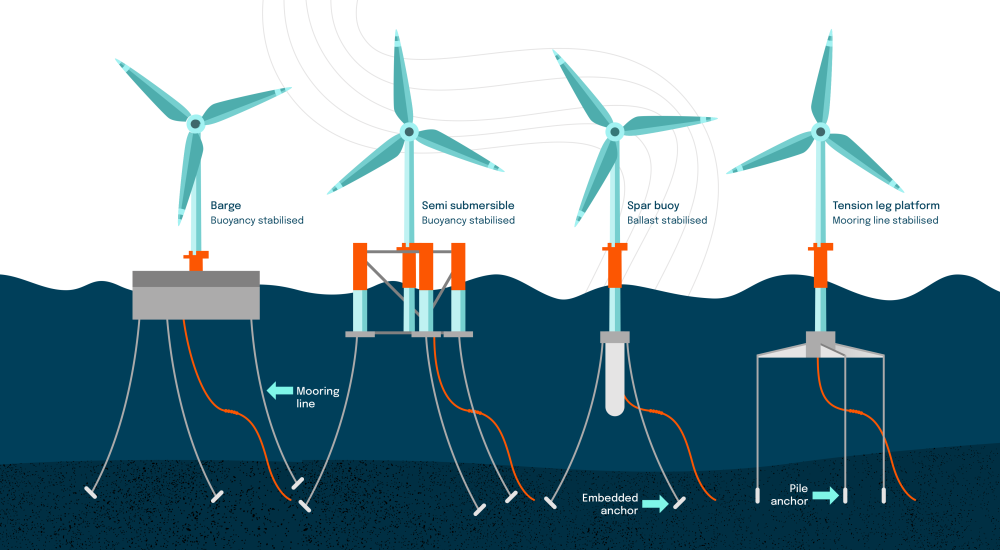
There are many types of floating platform concepts under development – some estimates suggest as many as 100. Platforms under development fall broadly into four main types: barge, semi-submersible, spar buoy and tension leg platform.
It is essential for safety and reliability that designs can withstand continuous exposure to forces from winds, waves and currents throughout their design life. Designers also need to pay detailed attention to marine operations, such as transit to site, installation, and mooring. In addition, they need a clear understanding on how to maintain the platform, and decommission it.
In the extreme environment of the deep sea, damage accumulates over time from the wave loads that repeatedly hit the floating wind platform, and this fatigue can potentially lead to mechanical failure of steel components or mooring lines. Accurate estimates of fatigue life not only help ensure safety but could also potentially reduce material costs. Designing and assessing platform designs for safety and reliability is essential, but it’s also important not to over-engineer designs in a sector where margins are narrow.
Research using physical and computer modelling can reduce the uncertainty related to the estimated wave loads that are used in the fatigue analysis of offshore fixed and floating wind structures.
Fatigue research to optimise design
Our project aims to accurately assess the fatigue life of floating substructures, enabling improved designs and potential cost savings.
Reducing risk using testing facilities
Reliability is key to the long-term viability of floating wind, and developers need to reduce risk in designs before deployment. Maintenance can be expensive and time-consuming, potentially requiring structures to be towed back to shore, exacerbating losses from energy generation downtime.
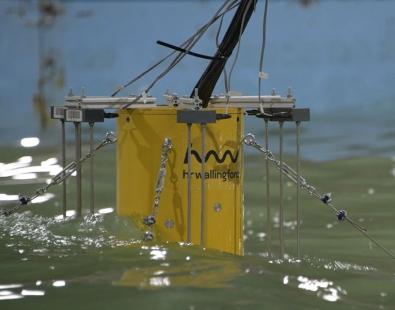
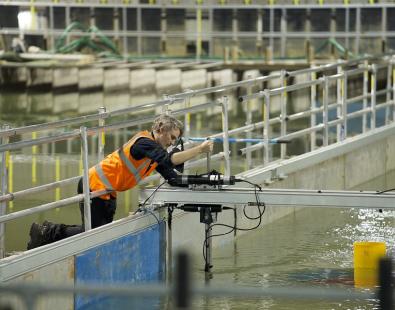
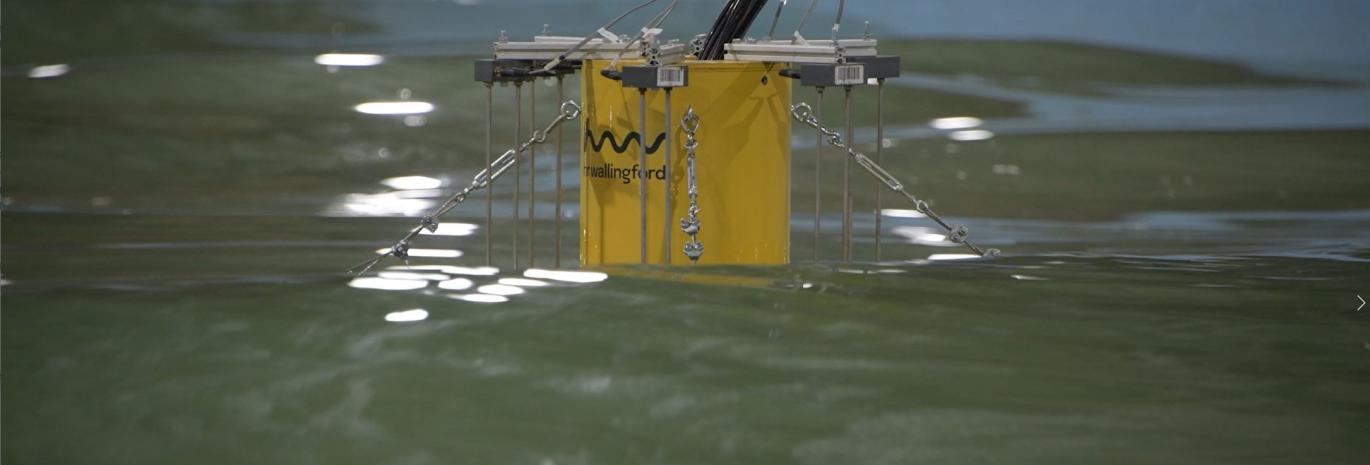
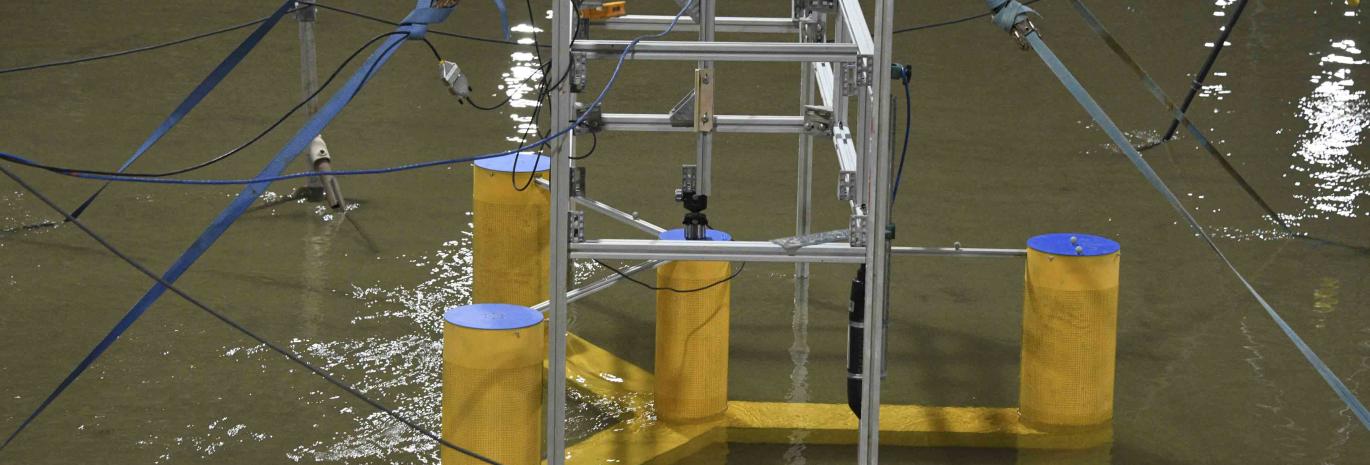
Upfront testing of floating platforms will help reduce the need for maintenance. By testing scale models of platforms and mooring lines in physical facilities, and using results to validate computational models, the industry should be able to reduce the frequency of failures.
Designing a deep water testing facility to support floating wind industry
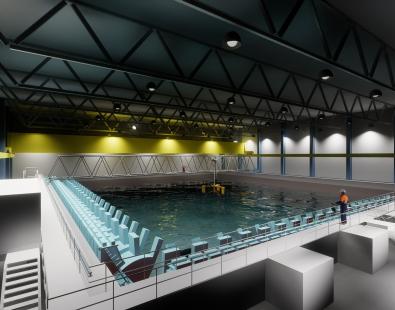
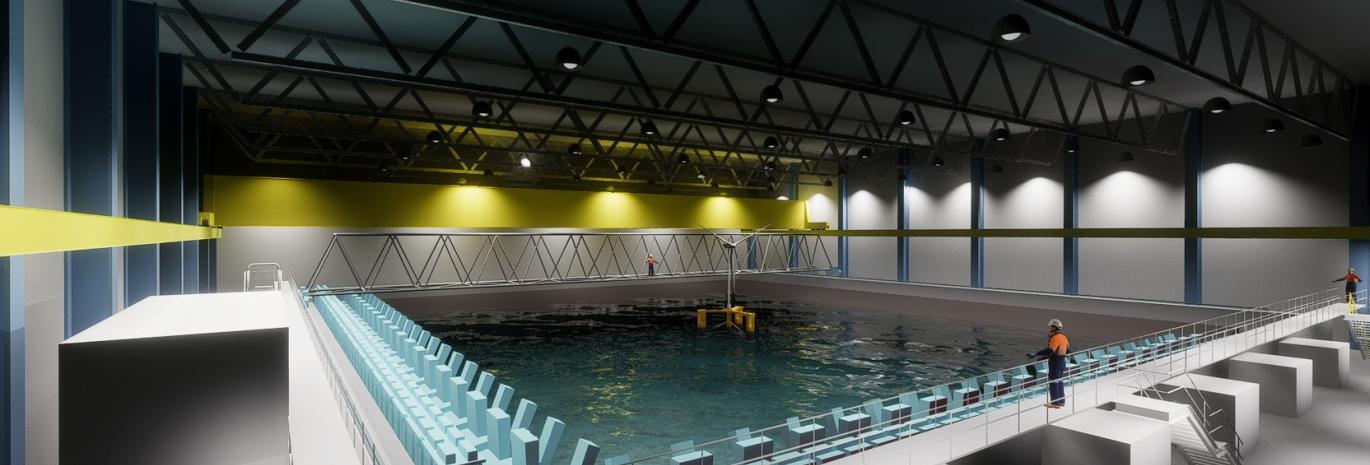
The UK’s Crown Estate’s Supply Chain Accelerator is funding a project which is allowing HR Wallingford to scope the design and cost of investing in and constructing a deep water testing facility, which is much needed for trials of floating offshore wind platforms and mooring lines.
This high-fidelity physical testing facility will be able to support full-scale platform certification and warranty testing for platforms and mooring systems, as well as trialling new platform design and mooring line configurations and materials.
Find out more about our deep water testing facility
Adapting ports to serve as floating offshore wind hubs
Fixed bottom wind turbines are usually assembled in situ at the wind farm, but the huge size of floating structures and the complexity of assembly makes it practically impossible to erect them in deep seas. Instead, the turbines need to be integrated and assembled in port, before being towed out to storage areas, awaiting the right meteorological conditions for transport to the wind farm and installation.
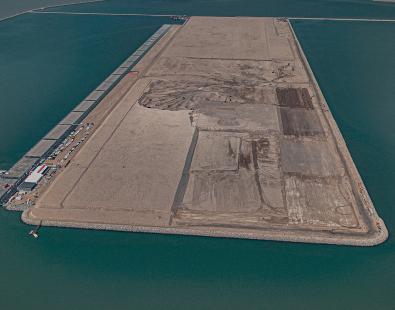
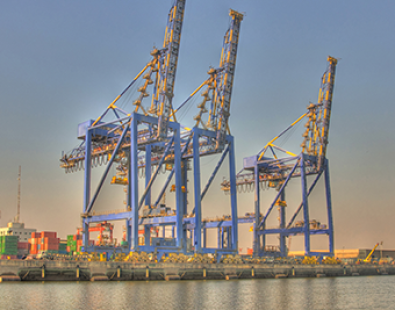
Ports are emerging as the most likely places for assembly and integration of floating offshore wind turbines. However, in order for ports to be able to serve floating offshore wind operations, they need sufficient space on land and in the water to be able to assemble and move numerous turbines and base units. They also need the right metocean conditions, and to be close to temporary storage and installation sites.
Checklist
To become hubs to serve the floating offshore wind industry, ports need to consider:
- Is water storage (circa 30ha) sufficient in the port, and landside?
- Can quays be made deep and long enough (up to 500m)?
- Are wind and wave conditions suitable for integrating and towing turbines?
- Can navigation channels be widened sufficiently?
- Are wet storage and installation sites within a sensible range?
If they meet all the necessary criteria, this is an unprecedented opportunity for ports
Master planning assists with costs, safety and efficiency
If a port is seeking to become a hub for floating offshore wind, master planning will help ensure they can provide safe and efficient operations, and understand the required capital and maintenance costs. Using intelligent software for master planning, such as our operational logistics simulation tool, FloatOps, will enable ports to examine capacity and facility layouts to inform marine logistics operations, and storage requirements.
In terms of facility layout, master planning will help ports assess how to adapt land and water areas to be able to receive components to assemble the integrated turbines, store them on site while being assembled, and transport them out of the port to a wet storage area. Ports may need to construct longer quays to move turbines into the water, and widen or deepen navigation channels to transport components and assembled turbines.
As the structures are so hydrodynamically unusual, assessing their navigation safety is essential. There are unique challenges to consider because of the turbines’ weight and geometry, which includes the deep draft and width of the substructure. The tall turbines with long blades must be able to pass other traffic and existing infrastructure which may be potentially hazardous, for example oil storage units.
Ports also need to incorporate tidal and metocean conditions and forecasting into their operational and economic planning. Wind and currents can have a significant impact on air draft, underkeel clearance, and towing. Our towing studies suggest that manoeuvres in and out of the ports can be particularly challenging if there is any significant flow across the entrance channels.
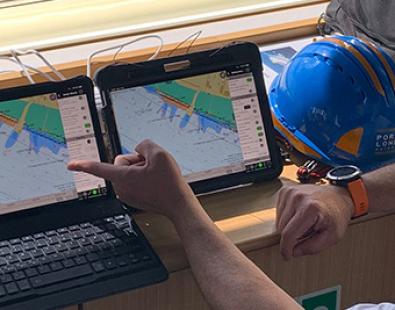
Navigation simulation tools can test proposed schemes before development, assessing transit under a range of tidal and metocean conditions. These can also cover climate change predictions, which could cause sea level rise, or larger waves. Using experienced tug masters as part of simulation exercises adds an extra layer of expertise to the assessments.
Engineers can also use modelling and simulations to help plan operations such as moving the integrated turbine from the quayside into the water. This could, for example, involve rolling the structure from the quay onto a semi-submersible ship. Structures with these sort of geometries and mass have never been loaded out regularly in a port, but the industry can learn from one-off cases of moving huge oil and gas platforms. Master planning can help set out the sequence and duration of such operations.
Milford Haven assessed for floating wind
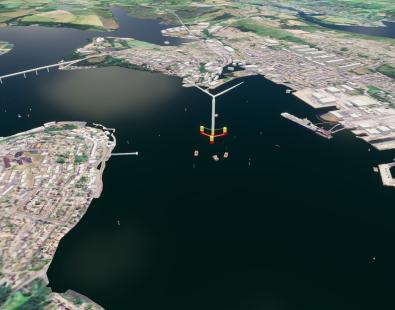
HR Wallingford undertook a high level review of navigation and towage issues to help the Port of Milford Haven determine whether safe and practical transit operations could be devised for a range of floating wind substructures. Our work included considering existing techniques for manoeuvring large floating assets, and the potential for towage and handling innovations.
Towing floating offshore wind turbines efficiently and safely
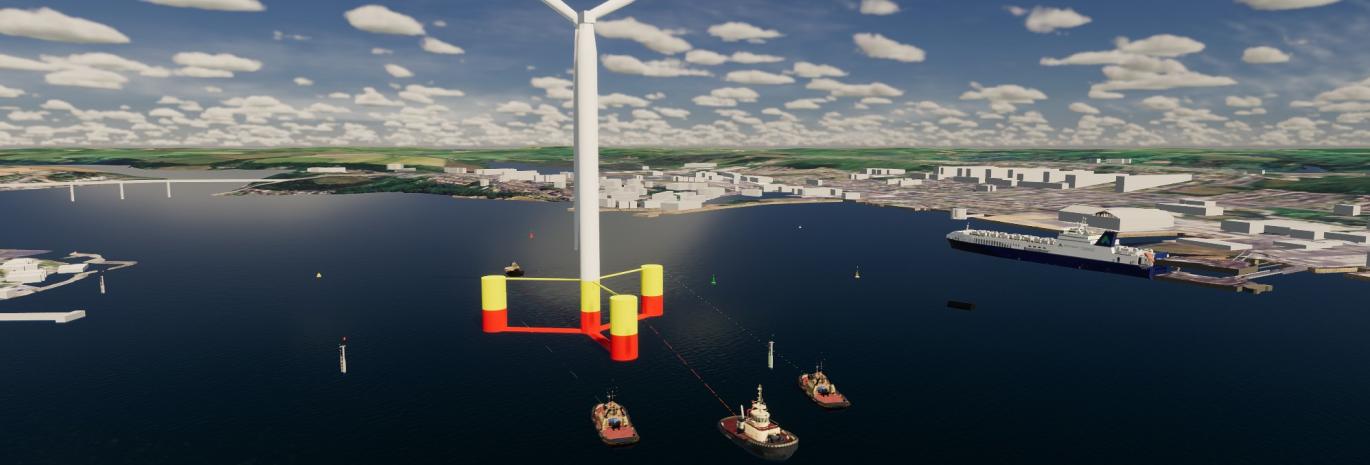
Towing is a complex task, given that the turbines are by their very nature designed to catch the wind, and are heavy and unusually shaped. It is essential to safely control the manoeuvre of the components and the integrated floating offshore wind turbines through port, and out at sea to wet storage sites and then onto the wind farms.
Procedures that have so far been used to tow floating offshore wind turbines have been highly conservative with operations being limited in number for demonstrator projects. Low towing speeds and operating limits have been adopted, which reduces the windows of operation. For Gigawatt scale projects it will be important to safely optimise these operational procedures and operating limits to ensure reliable installation of large numbers of turbines. The objective will be to widen the operational windows, reducing costs while maintaining safety standards, and contribute to a lower levelized cost of energy (LCOE).
We have conducted internally funded research to develop a generic modelling framework for floating offshore wind structures during tow out operations based on their physical characteristics. We have worked with UK ports to use these models in high level navigation simulation studies and hazard assessments. We fed these outcomes into port master planning activities and are planning further research to better understand how structures respond to towing forces and winds, waves and currents, in shallow and confined waters.
Project investigates towing and weather limits
HR Wallingford is part of the TOWIN project, which is researching whether towing speeds and weather limits can be increased. It is led by SINTEF and a group of research institutes and universities, with support from classification societies and industry partners.
The crucial role of wet storage in supporting floating offshore wind
The availability of wet storage near to assembly ports is important, as they themselves are unlikely to have the space to store many units. Sheltered wet storage is needed while assembly is being conducted, and then for holding assembled turbines while awaiting suitable conditions conditions for deployment in the field.
A joint venture study in the UK assessed sites that could be suited to wet storage. TS-FLOW™ JIP, delivered by Offshore Solutions Group and HR Wallingford, studied the suitability of temporary wet storage sites in the Celtic Sea and UK North (Scotwind/Intog) leasing zones in terms of a variety of criteria, including environmental and metocean conditions, distance from ports, competing users, and consent and licensing. Only a limited number of sites studied were deemed suitable for wet storage, demonstrating the difficulties in finding suitable areas, and the need to develop them early in the planning process.
Mooring systems should optimise performance and ensure safety
Mooring and anchoring systems have a crucial role in keeping floating offshore wind platforms stable, ensuring safety and optimum energy output. While the oil and gas sector has used mooring and anchoring systems for many years, floating offshore wind presents new challenges due to the number of floating structures that are planned. The industry is also considering deploying synthetic mooring lines, instead of the chain favoured by oil and gas platforms, because there may simply not be sufficient chain available for all of the proposed new turbines.
If a new type of material is deployed, it will be essential to calculate how robust it is in deep seas over a long period, taking into account metocean conditions, water depths, and motions for the selected type of platform and wind farm. Physical testing, along with computer modelling, will have an important part of play in calculating the fatigue of synthetic mooring lines and their configurations. Our proposed deepwater testing facility will enable high-accuracy scale modelling of a range of floating wind mooring configurations and materials.
Mitigating the impact on marine life when installing anchors
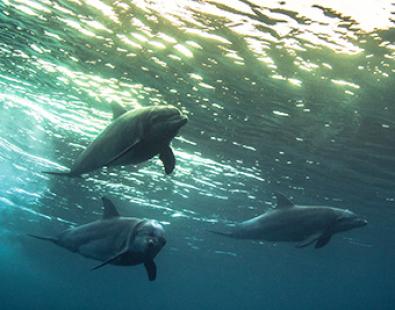
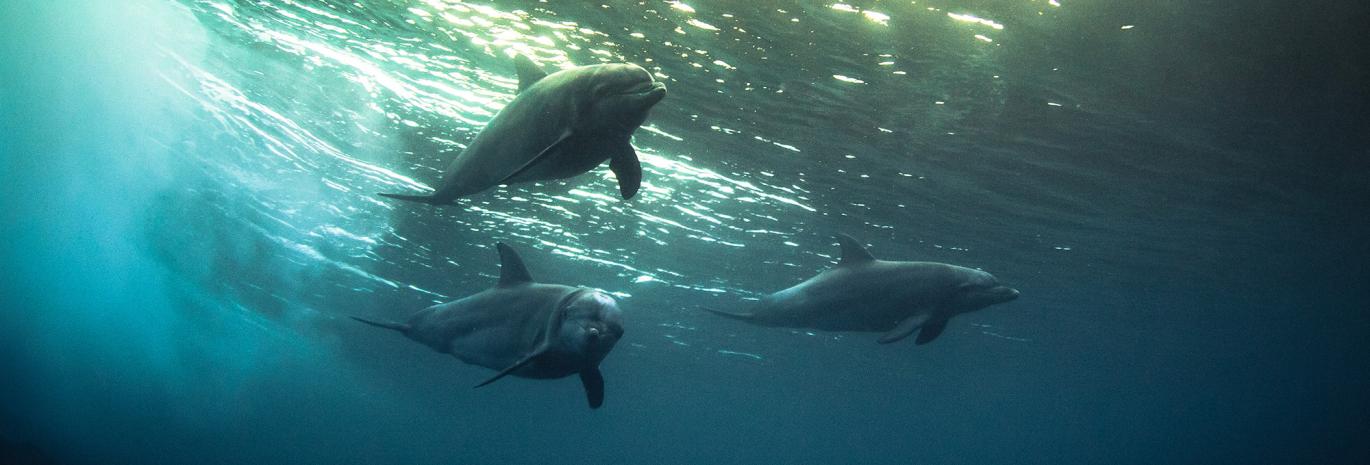
Mooring systems must be anchored securely to the seabed, and developers need to consider how to reduce the environmental impact during their installation. Certain methods of attaching lines, such as hammering pile anchors into the seabed, can generate noise that could be detrimental to the hearing of marine populations, which they use to communicate and detect prey and predators.
Ahead of installation, developers can use modelling to guide lower impact installation approaches. Modelling can show how sound propagates through the water, how this differs by methodology, and how noise could be reduced by using sound damping mitigation measures or using different piling methodologies.
Case study: sound modelling for a floating offshore wind developer
HR Wallingford supported a floating offshore wind developer to understand underwater noise from anchor pile installation. By modelling different installation scenarios, we enabled informed choices that reduce risks to marine mammals while supporting safe, efficient wind farm design.
Reducing failures of cables delivering energy
Underwater cable usage is already proving challenging for the fixed offshore wind industry, where the insurance industry is reporting a high rate of claims relating to cable failure. Cables delivering power from floating offshore platforms to the offshore sub-station also need to be resilient. As well as withstanding the impact from currents and waves, they need to cope with the added movement of the floating platforms themselves.
It is difficult to analyse the performance of cables at sea, and not practical to capture data dynamically during storms, nor make reliable and cost-effective observations. It will therefore be necessary to perform physical testing in conjunction with computer modelling to help evaluate new cable and cable protection systems designs.
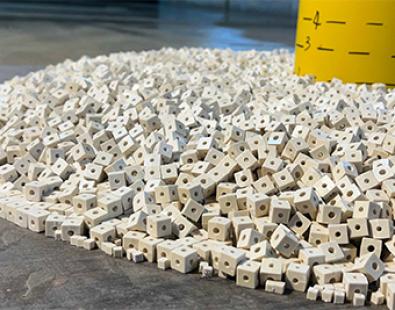
Scour protection systems also play an important role in cable protection, ensuring that cables and their protection systems stay in position, minimising potential damage from currents and waves. The floating offshore wind industry will be able to benefit from research into scour protection and cable stabilisation measures used for fixed turbine cables.
Being prepared for maintenance and inspection operations
Careful planning will be vital to inspect how the structures are withstanding wind and wave forces, and to carry out servicing and maintenance. Drones can be used in some instances for this work. However, if a physical team is required to access and assess the floating platform, a vessel will need to come alongside, which is a complex process in turbulent waters. Knowledge and skills gained from planning similar operations for LNG transfers with two vessels will be invaluable. Ship simulation techniques are ideal to help plan such activities.
When repairs or servicing cannot be conducted in situ, the industry needs to plan where these will take place. Wet storage site and ports are emerging as the most likely areas for maintenance work, which will require the structures to be towed there.
Industry-wide developments required to scale up floating wind
It is clear that the floating offshore wind industry must find solutions to a range of technical and logistical challenges to meet its ambitious targets of large-scale energy generation. To effectively design, move and operate huge integrated turbines, a range of expertise will be needed across the board. Being able to test and model new designs and procedures at early stages of development will be key to de-risking development, and ensuring the resilience and safety of the turbines.
Get in touch
Helen Wilcox