Richard Body
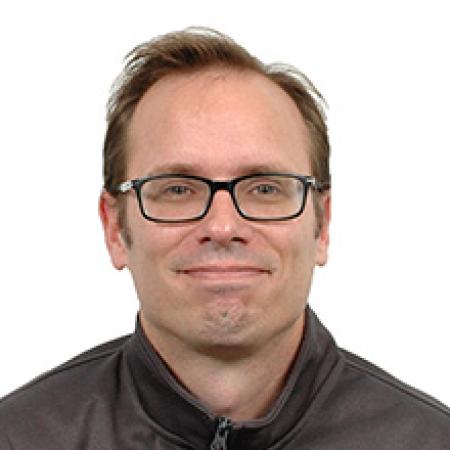
Richard Body is a Principal Scientist in our Water and Climate division. He has more than 20 years’ experience in river modelling and flood, operational forecasting and urban drainage modelling. He has worked on projects all over the world, notably in the UK, China, Japan and across Europe. He joined HR Wallingford in 2016.

What’s your background and area of specialisation?
I come from a background of river modelling and developing operational forecasting systems (I was part of the Innovyze team that developed ICMLive). At HR Wallingford, I wear many hats, I still specialise in flood forecasting but also in how water companies manage storm overflows
Why did you want to work for HR Wallingford?
I was looking to join an organisation that was seeking to work at the leading edge of the water world. Essential to the organisation was a friendly, people-based culture, and somewhere I that I felt I could make a difference.
What were your first impressions?
The warmth of the employees. The welcoming nature of the staff as well as the willingness to include me in things. A key thing is the knowledge sharing; people don’t like to exist in silos. HR Wallingford has a culture that welcomes your input; if you have an idea there are always listening ears.
Sometimes you have the glamour of presenting about state-of-the-art modelling at a conference, and sometimes you’ll be lifting the lid on a pipe at a sewage work, but it is always a genuinely interesting job, where you’ll make a difference.
Describe a typical day
I am a line manager, so making sure those I manage are supported is very important. The rest of the day will be dominated either by project work or by writing proposals. Currently, I am leading a team developing an inflow forecasting model for a large hydropower dam in Laos; recently, I was contributing text for several expressions of interest and proposals.
In addition there are always a number of other projects that I either manage or have a role in, and it’s important to keep one eye on these. I am also the chair of the Howbery Park Boat Club. We have 100+ members, and making sure the boats are working and that bookings are managed adds a little bit of time at the back end of the day. The plus side is that I get to spend time on the banks of the Thames.
Sometimes you have the glamour of presenting about state-of-the-art modelling at a conference, and sometimes you’ll be lifting the lid on a pipe at a sewage works, but it is always a genuinely interesting job, where you’ll make a difference.
Are there any projects you are particularly proud of?
I’m very proud of the work we did on the Littlestock Brook Natural Flood Management model for the Evenlode Catchment Partnership. This was a model that allowed the client to evaluate the benefits of natural flood management approaches in the catchment and demonstrate they worked. The project won a Flood and Coast award in 2021.
Another project which I found very rewarding was the development of a flood forecasting system in County Cork, Ireland, which I worked on 15 years ago in my previous job. Despite changing jobs, I have maintained the responsibility for supporting the system; it continues to operate and provides accurate flood forecasts.
What do you anticipate will be the new opportunities in your area?
We are in a world of, what feels like, intense change. Whether it is climate change, the advent of AI, or the Cunliffe Report that examined the UK water industry, we are having to adapt to a rapidly evolving landscape. We will have to be agile and adept in how we meet these challenges, but I also believe that we no longer have time on our side.
It is quite clear that the warming planet is having real impacts and at a faster rate than anticipated. In 2023, in my home town of Auckland, New Zealand, 250mm of rain was recorded in a single day, which was 80mm greater than the previous record. The European summers of 2025 and 2026 have had unprecedented heatwaves, which has resulted in urgent thinking in how we must adapt. While adaptation is always going to be hugely important, just as important will be the movement towards net zero.
AI - it’s an opportunity and a challenge! Already we’ve seen that AI has the potential to change the way we work but there are aspects to it that we need to work out, for example how we write. I’m one of those people that still enjoys the process of crafting a sentence; the choice of words is what makes writing unique and personal and that is something I don’t think AI can replicate. As we live in a world where the impacts of climate change are increasingly apparent it is increasingly important to understand our natural and built environment, and people, rather than machines, are really good at that.
For too long the water sector has operated in silos but managing water resources, floods, and storm overflows are all interlinked and all a rainwater management problem. The Cunliffe Report has shone a bright light on the water industry. Despite the scrutiny, I remain optimistic. I see great work being done by colleagues, both at HR Wallingford and in the wider sector, in relation to rainwater management.
Where I know we must do better, it communicating to the wider world. We’re the experts in this space and we need to be better at bringing stakeholders along with us.
In what ways have you had the chance to grow and develop at HR Wallingford?
In my previous job at a software firm I had the luxury of unlimited processing power, software licences and perfect data. Coming to HR Wallingford was a shock when I realised that the real world was far from perfect, so learning to deal with that has been a big part of my development. I’ve also had opportunities to do project management as well as delve into areas of the water industry, such as funding, probabilistic modelling etc that I hadn’t had the chance to do before. Possibly the most important thing I have learnt is the importance of communication and developing techniques around this.
Can you describe the working culture?
The people are, on the whole, absolutely lovely and a pleasure to work with. People work hard but they are also willing to drop things and help you out when you get stuck.
What is the best thing about working here, other than the people?
Well, we have a lovely site, and being able to go for a walk at lunchtime and be down by the Thames is a treat where, I think I mentioned this, we have boats for use.
Do you have any advice to people who may want to pursue a career in STEM?
Do it. Sometimes you have the glamour of presenting about state-of-the-art modelling at a conference, and sometimes you’ll be lifting the lid on a pipe at a sewage works. Whatever it is a career in STEM is a genuinely interesting job where you’ll make a difference. It’s a job that rewards the curious and should you wish you can take yourself to all parts of the world. As you move through your career, always remember that at the sharp end of your solutions and ideas are people, so make your solutions and ideas people focused.
Richard out and about
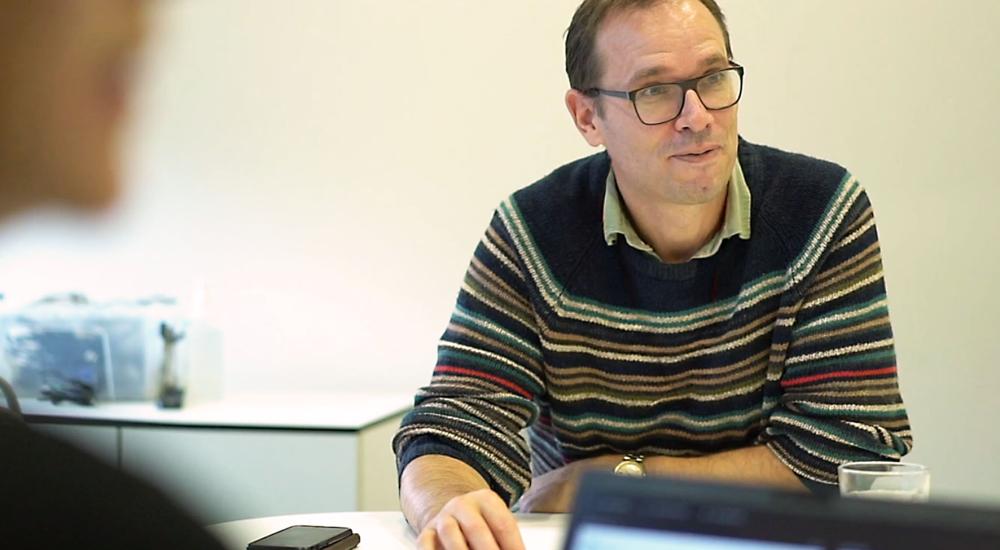
In the office
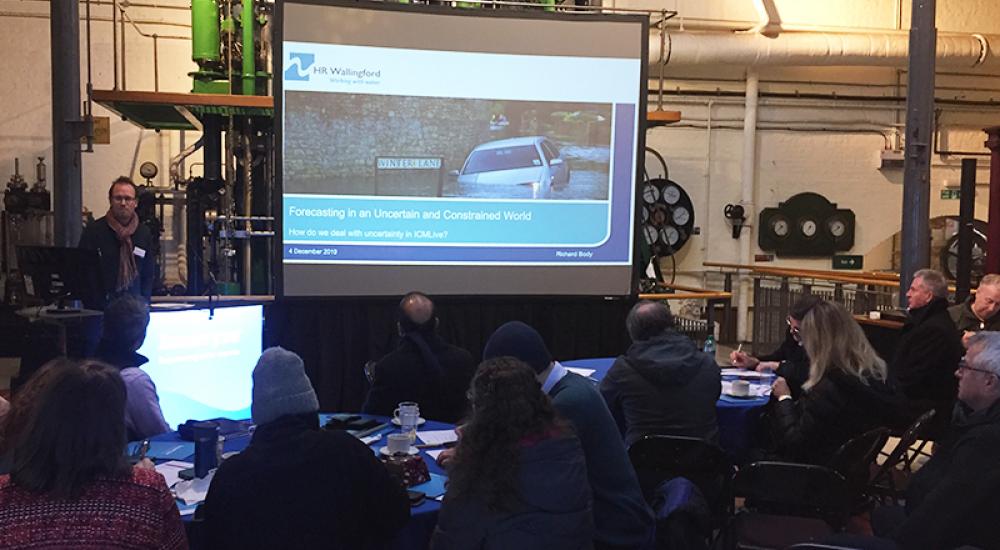
Presenting at software conference
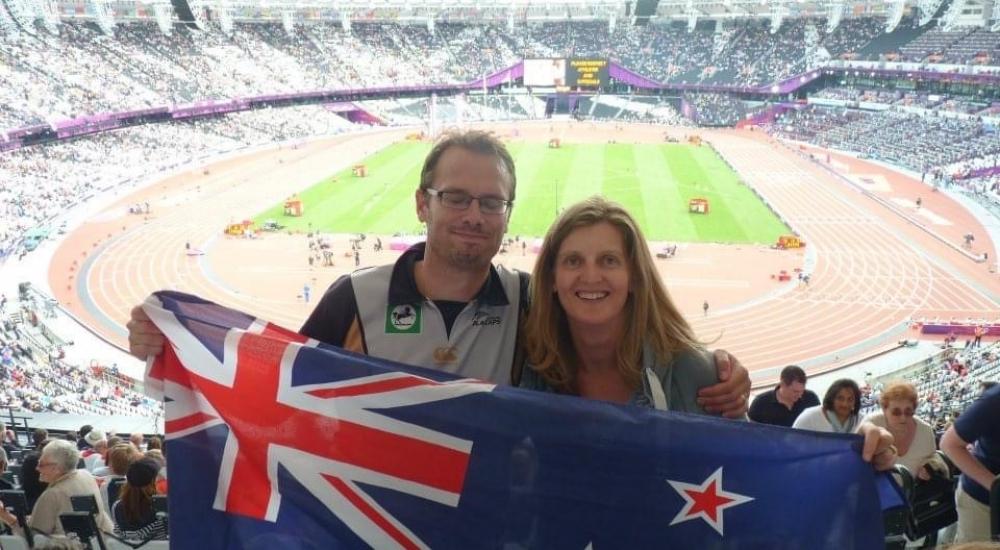
At the Olympics
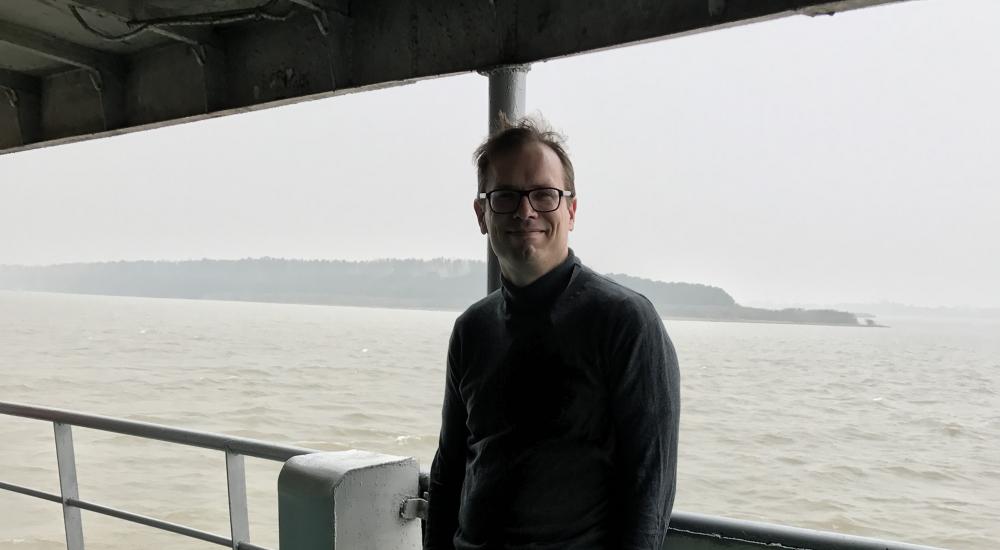
A trip on the Yangtzee