Secondary nav 2022

  • Equipment
  • Software
  • Training

Main navigation 2022

  • About
    • About HR Wallingford
    • Our leadership
    • Our people
    • Our impact
      • Annual report & financial statements
      • Gender pay
      • Social impact
      • Sustainability
    • Our story
    • News
    • Insight articles
    • Policies
  • Projects
  • Expertise
    • Coastal & marine sustainability
      • Coastal hazards & resilience
      • Coastal morphology & sediment dynamics
      • Dredging and sediment management
      • Marine & coastal environment
      • Ports, harbours and shipping
      • Subsea engineering
      • Waterfronts, marinas and resorts
    • Energy transition
      • Fixed offshore wind
      • Floating offshore wind
      • Liquified gas & transition fuels
      • Nuclear
      • Wave, tidal, solar & hydropower
    • Water & climate resilience
      • Dams & reservoirs
      • Freshwater environment
      • Integrated flood management
      • Surface water systems
      • Water management for climate resilient development
      • Water supply & drought resilience
  • Facilities
    • Explore our facilities
    • Ship simulation
      • Australia Ship Simulation Centre
      • UK Ship Simulation Centre
    • Physical modelling
      • Fast Flow Facility
      • Tsunami simulator
      • Volumetric flow flume
      • Wave basins
      • Wave flumes
      • Erosion rate measurement
      • Water rescue training
  • Careers
    • Careers overview
    • Working at HR Wallingford
    • Job opportunities
  • Contact
  • About
    • About HR Wallingford
    • Our leadership
    • Our people
    • Our impact
      • Annual report & financial statements
      • Gender pay
      • Social impact
      • Sustainability
    • Our story
    • News
    • Insight articles
    • Policies
  • Projects
  • Expertise
    • Coastal & marine sustainability
      • Coastal hazards & resilience
      • Coastal morphology & sediment dynamics
      • Dredging and sediment management
      • Marine & coastal environment
      • Ports, harbours and shipping
      • Subsea engineering
      • Waterfronts, marinas and resorts
    • Energy transition
      • Fixed offshore wind
      • Floating offshore wind
      • Liquified gas & transition fuels
      • Nuclear
      • Wave, tidal, solar & hydropower
    • Water & climate resilience
      • Dams & reservoirs
      • Freshwater environment
      • Integrated flood management
      • Surface water systems
      • Water management for climate resilient development
      • Water supply & drought resilience
  • Facilities
    • Explore our facilities
    • Ship simulation
      • Australia Ship Simulation Centre
      • UK Ship Simulation Centre
    • Physical modelling
      • Fast Flow Facility
      • Tsunami simulator
      • Volumetric flow flume
      • Wave basins
      • Wave flumes
      • Erosion rate measurement
      • Water rescue training
  • Careers
    • Careers overview
    • Working at HR Wallingford
    • Job opportunities
  • Contact
  1. Home >
  2. Projects >
  3. Flood risk management strategies for Moldova
Flood risk management strategies for Moldova

Share

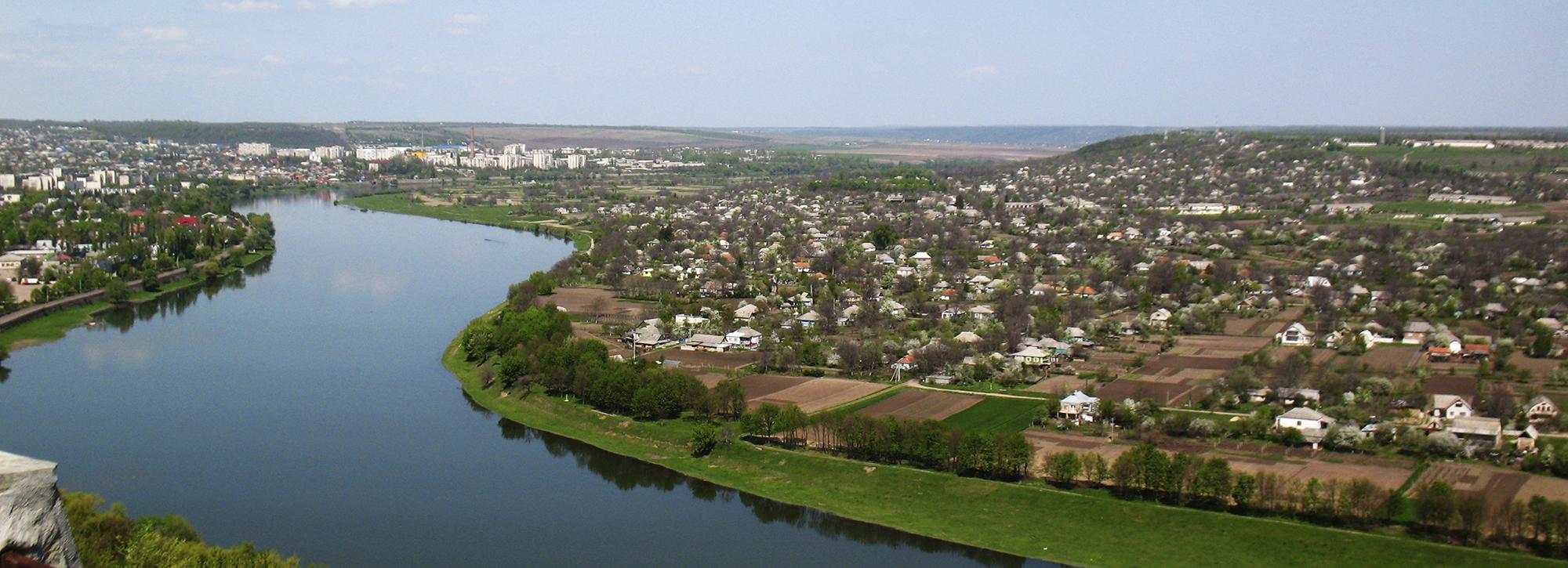
As part of the Moldova Flood Protection Project, we mapped hazards and developed strategies to help reduce and manage flood risk in Moldova.

Moldova’s economy, population, and environment is vulnerable to flooding and climate change is expected to increase flood risk. The Moldova Flood Protection Project puts in place measures to reduce and manage the flood risk at a national level. Our team was part of a consortium that identified programmes of flood management measures for the short (2014 to 2020), medium (2021 to 2025) and long (2026 to 2035) terms. Our expertise contributed to the flood risk assessment and flood mapping, dam break assessments, development of flood risk management objectives, and capacity building of flood risk staff in the country.

Flood risk assessment and flood mapping

Following the procedure required by the EU Floods Directive, the project team completed a preliminary Flood Risk Assessment to identify the areas of greatest flood risk. Using InfoWorks ICM, a national flood map was produced for the whole country which the team used to select the areas of greatest flood risk for more detailed study. The team then prepared flood hazard and flood risk maps for about 3,000 km of river covering the high risk areas. They used surveys of the river channels and flood banks as the basis for this mapping, as well as a LiDAR survey of the floodplains.

Dam break assessment

In addition to three major dams on the Prut and the Dniester, there are about 5,000 smaller reservoirs in Moldova. The flood risk assessment also took into account these dams and reservoirs. Our team modelled selected dams using our dam break modelling software, EMBREA.

Flood risk management objectives

The team developed and agreed flood risk management objectives with local stakeholders before developing  flood risk management strategies for each part of the river system. Options for these strategies include structural approaches (such as improving the defence system) and non-structural approaches (such as flood forecasting and warning together with emergency planning and response).

Capacity building

Our team supported staff in the Department of Environment in a programme of capacity building. This ensured that, by the end of the project, they were able to use the modelling and data systems, as well as undertake their own flood risk assessments.

Get in touch

Emma Brown

Technical Director
Contact Profile

Explore more

  • All
  • Project
  • Expertise
  • News
  • Insight
  • Facility
View of a dam breach experiment

Dam and levee models assessed for predicting internally initiated breaches

View of a dam breach experiment

Dam and levee models assessed for predicting internally initiated breaches

Drainage and Wastewater Management guidance

Rainwater Management Platform: transforming how the UK manages rainwater

SuDS iQ: a digital environment for evaluating and planning good SuDS

Buscot Park lake: a heritage dam reinvented

Automating biodiversity impact assessments with Earth observation

Aerial view of a meandering river

A new Environmental Destination framework

view of people helping during a flood event

Empowering communities to manage local flood risk

Flood early warning system to support tropical cyclone relief

View of brown trout in river

Setting the standards for fish passes

View of brown trout in river

Setting the standards for fish passes

We are global leaders and independent experts in how to live and work sustainably with water

Social media

  • BlueSky
  • LinkedIn
  • YouTube

Expertise

  • Coastal & marine
  • Energy transition
  • Water & climate
  • Software solutions
  • Equipment & technology

Company

  • About
  • Careers
  • News
  • Insights
  • Sustainability

Legal

  • Privacy & data protection
  • Policies
  • Modern slavery statement
  • Terms & conditions
  • Sitemap
© 2026 HR Wallingford
Contact