Darren Lumbroso

Dr Darren Lumbroso joined HR Wallingford in 2000 and is a Technical Director in the Water and Climate Division. With 30 years of experience, he specialises in flood risk and water resources management, early warning systems, climate change adaptation, and disaster risk reduction. His work spans both consultancy and research. He has delivered projects in around 50 different countries worldwide, from Antigua to Zimbabwe.

What do you enjoy most about working at HR Wallingford?
There is a unique combination of consultancy, research, technical excellence and meaningful impact. The consultancy work is focused on solving real-world challenges such as flooding, adapting to climate change, and reducing the effects of disasters.
Complementing this, the research provides the freedom to think creatively and explore innovative solutions. This research not only drives new ideas but can also inform and strengthen the consultancy, creating a powerful synergy between theory and practice.
What is your specialism and what attracted you to it?
I graduated with a Master of Engineering in Aeronautics and Astronautics from Southampton University before spending three years as Head of Science at a rural secondary school in Zimbabwe. Experiencing life without running water for such an extended period inspired me to pursue a career focused on water management.
After returning to the UK and completing a one-year master’s degree, I joined Gibb, a civil engineering consultant, in Reading. One of my earliest assignments involved two-dimensional flood modelling for a project in Jordan. Since then, I have continued to build and refine my expertise in flood risk management.
What have been your career highlights at HR Wallingford?
There have been numerous highlights. These include working in countries, such as Haiti, Iran and Samoa to name just three, that I wouldn’t in my wildest dreams have ever expected to have visited when I was a child; in fact I’m sure that as a young person I had no idea where these places were.
I have also been fortunate to work with a wide range of different people at HR Wallingford, who have acted as mentors over the years and from whom I’ve learnt a great deal.
It was also pleasing to become a Fellow of the Institution of Civil Engineers (ICE) in 2018, not something I’d envisaged when I was studying aerodynamics in the 1980s.
How do you deliver impact in your role?
I hope that my work contributes to building safer, more resilient communities worldwide, as well as improving the environment. At times, it’s hard to gauge the real impact of a report you’ve produced, and sometimes you find out much later about it.
For example, one of my earliest hydrological studies was for Otmoor, a wetland located about eight miles north-east of Oxford. Its grazing marshes provide a vital habitat for wading birds such as lapwings, snipes, and oystercatchers. The goal of the study was to regulate the hydrological regime to enhance conditions for these species.
Twenty years later, I happened to meet someone from the Environment Agency who told me they still regularly use that study to guide decision-making for this Site of Special Scientific Interest. Moments like that remind me of the lasting value our work can have, which isn’t always obvious.
Strong communication skills are just as important as technical expertise.
What excites you most about your work?
There is always something new to do and learn. As David Bowie said: “Always go a little further into the water than you feel you are capable of being in. Go a little bit out of your depth. And when you don't feel that your feet are quite touching the bottom, you are just about in the right place to do something exciting”.
How have you grown and developed with HR Wallingford?
In 2009, I was fortunate enough to be awarded a Global Research Award grant by the Royal Academy of Engineers, to carry out a 16-month secondment to the Laboratoire Central des Ponts et Chaussées in France to research flash floods with Dr Eric Gaume. Eric encouraged me to begin publishing in peer-reviewed journals, and since then I have aimed to produce two papers annually based on my research and consultancy projects.
This commitment has significantly enhanced and developed my technical writing skills. In addition, because HR Wallingford is an Affiliated Research Centre of The Open University, I was able to use some of these papers to complete a PhD by published works in 2024.
Do you have any additional work responsibilities?
Over the past 20 years, I’ve played an active part in the Chartered Institution of Chartered Water and Environmental Management’s (CIWEM) Central Southern branch organising a variety of online and in-person meetings.
I’ve also sat on the British Hydrological Society’s (BHS) committee where I played a part in evaluating applicants to the BHS’s scheme for funding MSc students.
In my spare time, I often carry out peer reviews for academic journals which helps me to keep abreast of the latest research in my fields of interest. I am also one of the editors of the Journal of Flood Risk Management.
What advice do you have for anyone starting out in their career?
Be tenacious and work hard. Strong communication skills are just as important as technical expertise; learn to explain your ideas clearly, both through writing and simple diagrams. Even the best research and models won’t make an impact if they aren’t understood. Take advantage of every opportunity that comes your way, and never give up.
What do you enjoy outside work?
I spend much of my free time on my mountain bike, immersed in music or attending live gigs. I also contribute music reviews to Americana UK (www.americana-uk.com). Recently, I’ve taken things a step further by organising UK tours for some of my favourite singer-songwriters. I’ve also joined a choir, which is way outside my comfort zone.
Darren in action
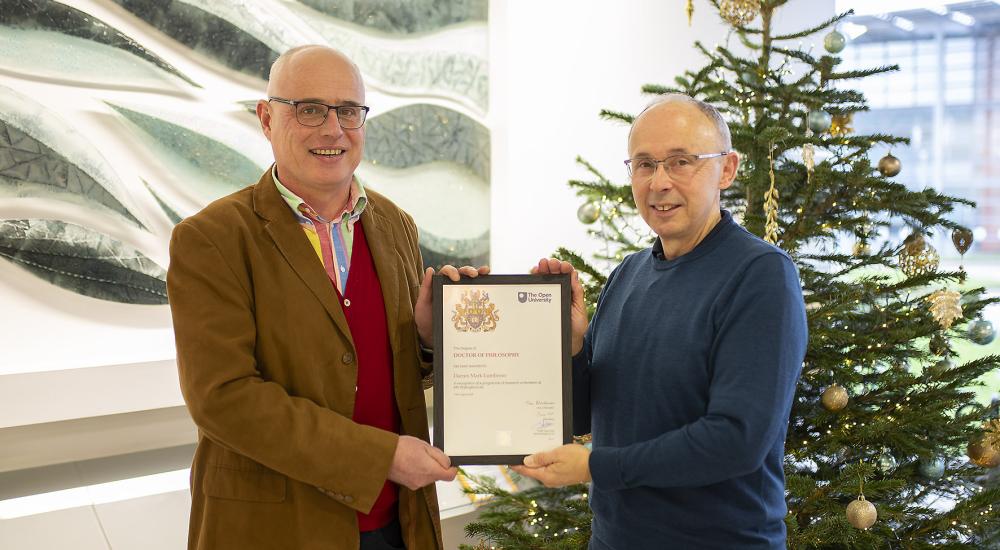
Darren receives PhD for flood emergency planning research
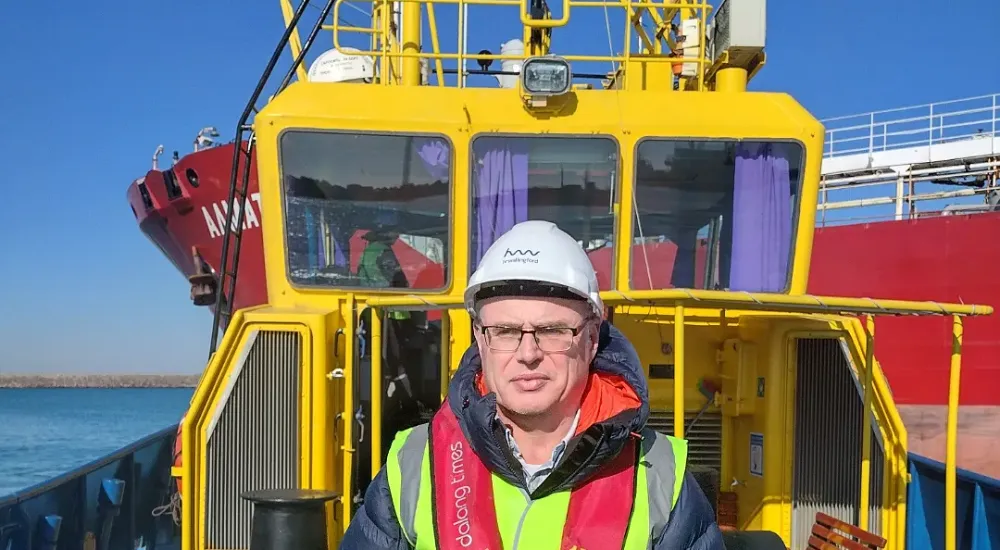
Darren in Kazakhstan.
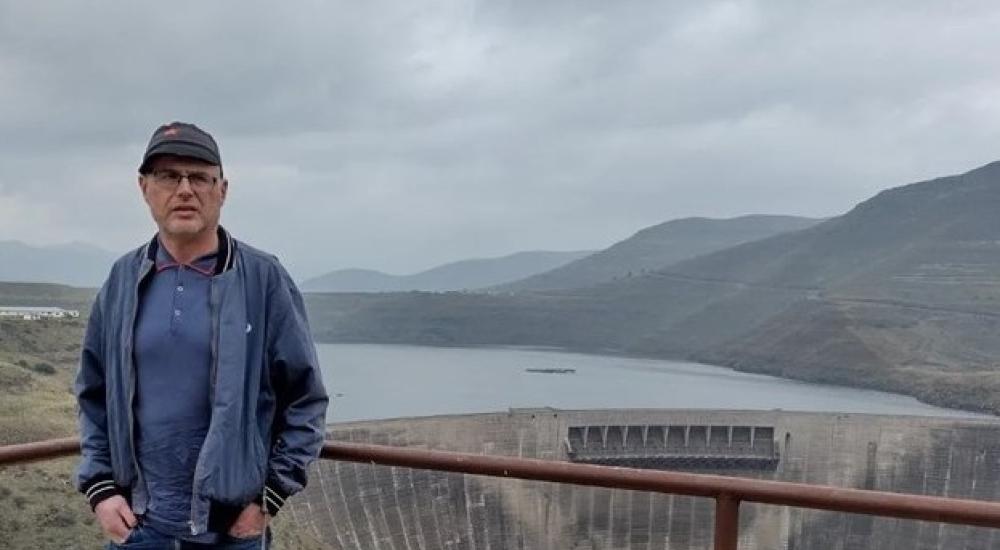
Darren at Katse Dam, Lesotho
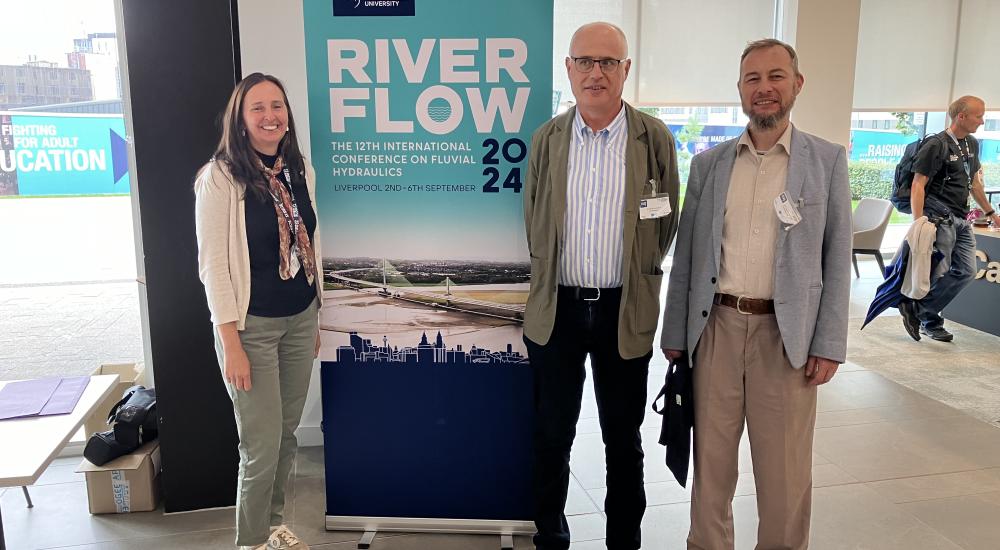
Darren and colleagues at the RiverFlow Conference in Liverpool, UK
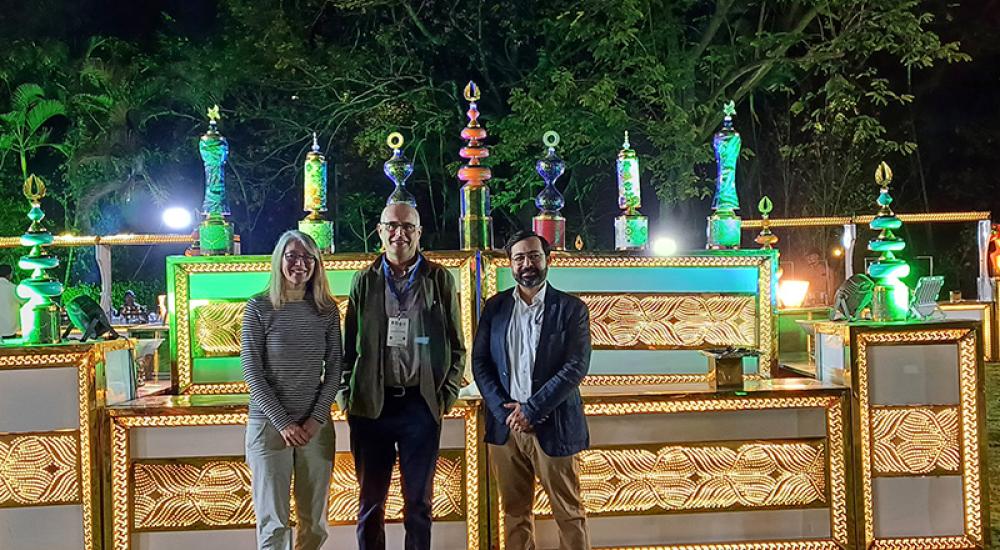
Darren at the 8th WMO International Workshop on Monsoons (IWM-8), the Indian Institute of Tropical Meteorology.